
Axel Carlson Artificial Reef
Axel Carlson Artificial Reef
- "small old wreck"
- Austin
- Barbara Ann
- Bay King
- big barge
- Brooklyn
- Manasquan Inlet Buoy
- Captain Bill
- Carrabassett
- Caterina.D
- Colleen
- crab barge
- Delaware
- Ed Schmidiger
- Glory Wreck
- Hail Mary
- Harbor Charlie
- Hillman III
- Jim Lynch
- Manasquan Inlet
- McGinty
- Megan Sue
- Middle Barge
- MRMTC 8
- MRMTC 9
- OWD III
- Patrick McHugh
- Riggy
- Rump
- Shark River Inlet
- Snug Harbor
- Swensen
2.0 Nautical Miles off Mantoloking, 5.19 sq miles
Depth: 65-80 ft [download]


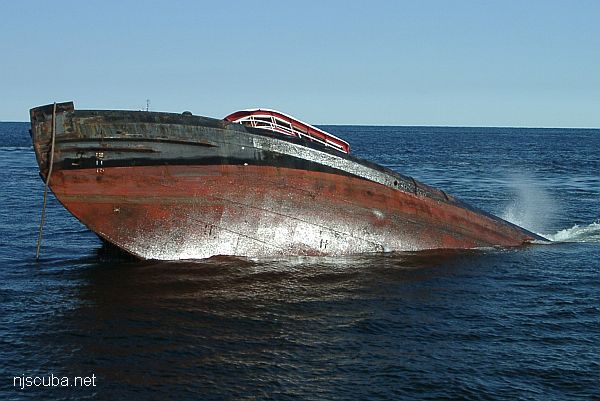
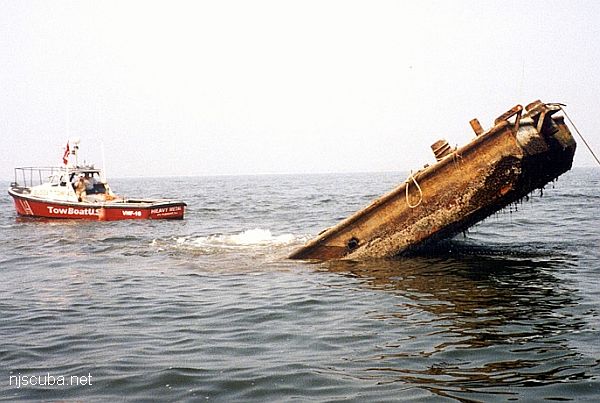
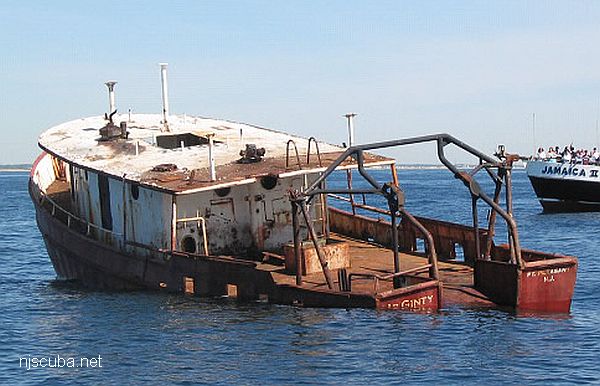
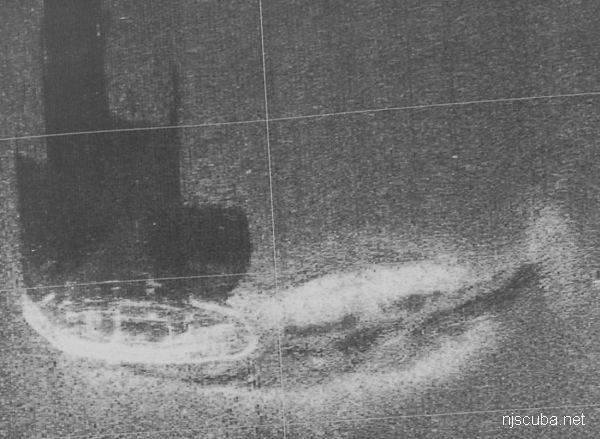
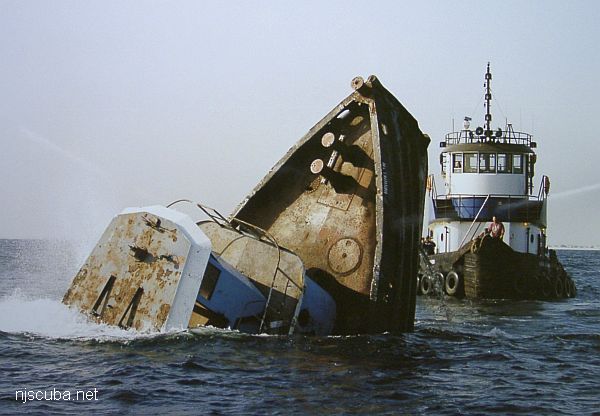
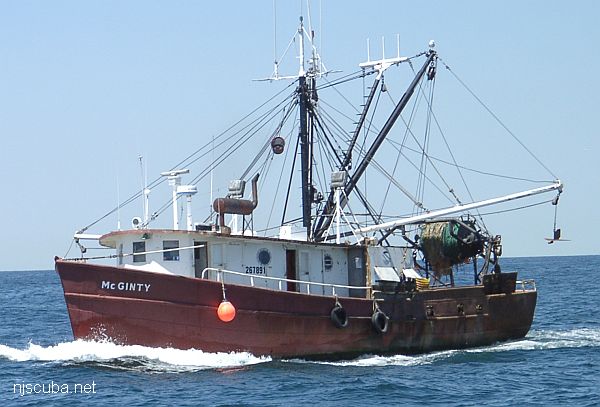
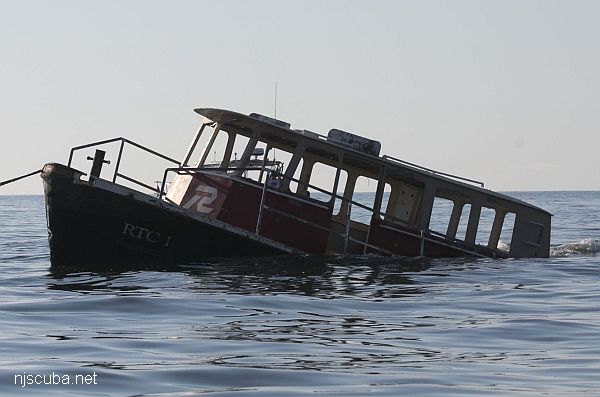
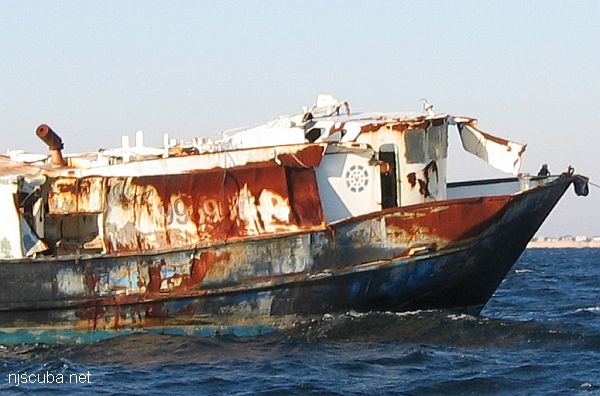
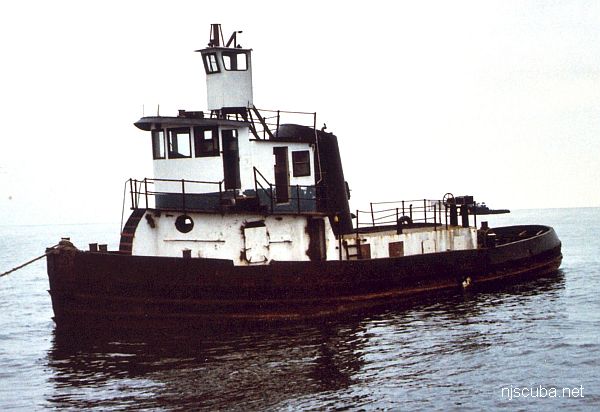
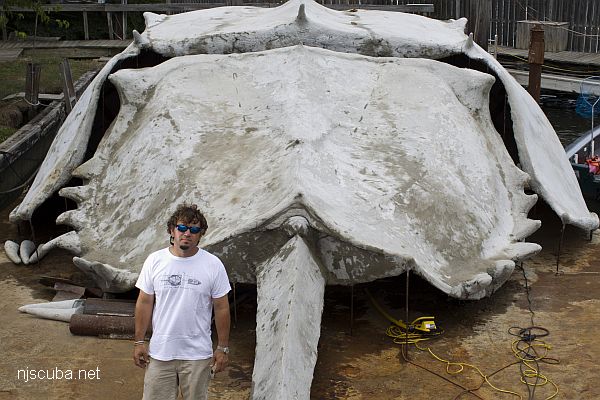
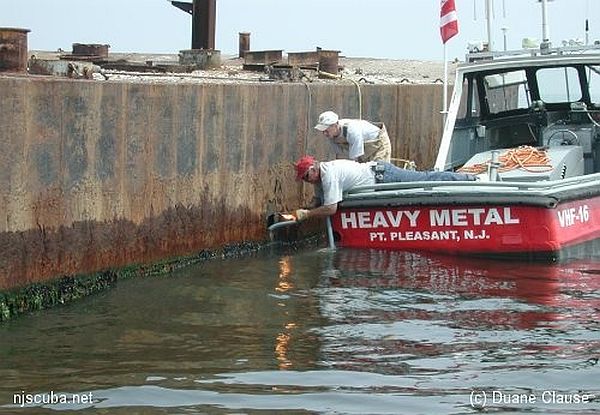
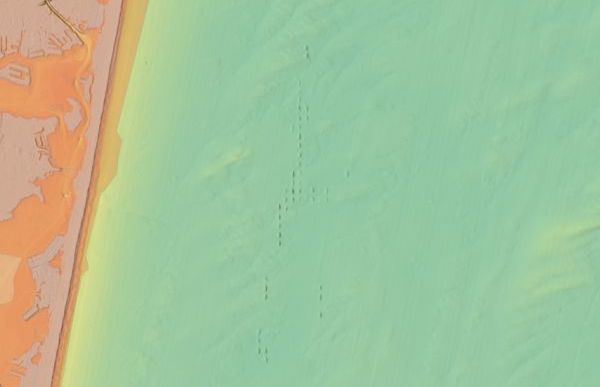
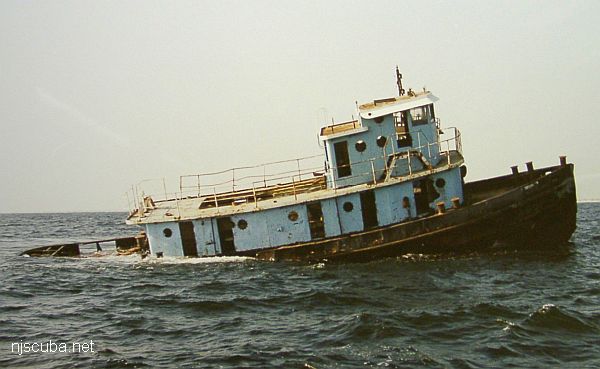
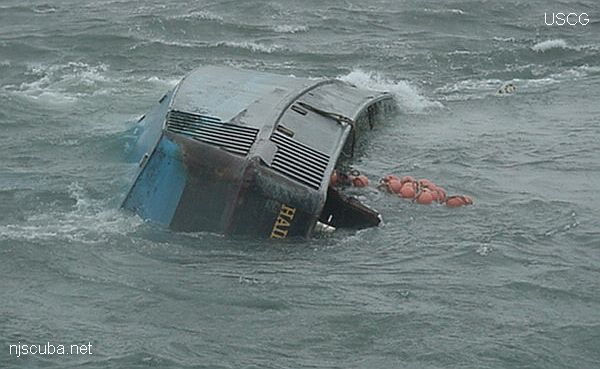
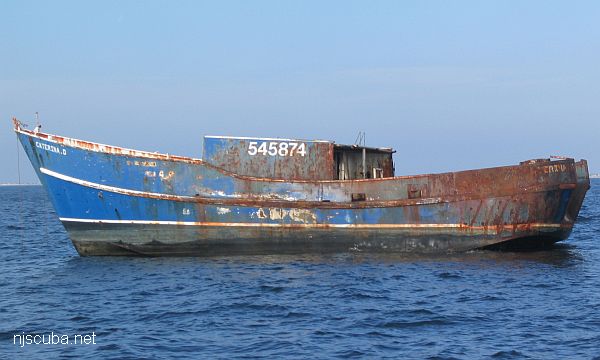
The Axel Carlson reef is situated in a trough next to an underwater hill known as the Manasquan Ridge. This is an area of silty mud bottom and usually has relatively poor visibility. Axel Carlson reef is sometimes referred to as the Mantoloking reef. It also contains a number of sunken army tanks ( not shown. ) Minimum clearance at mean low water is 40 feet.
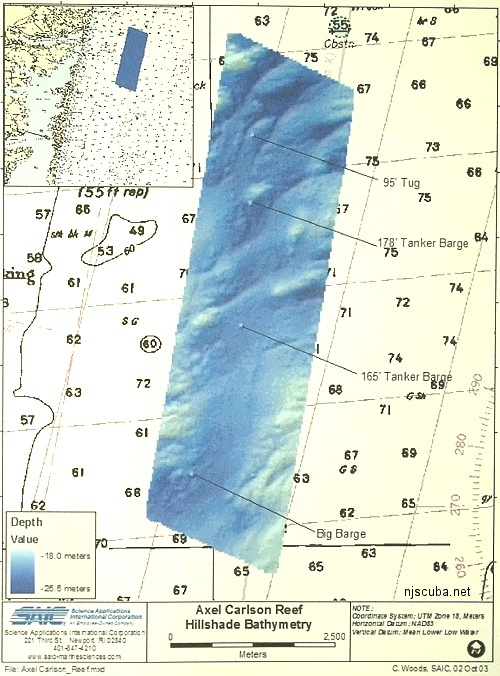
The pink areas on the chart are the "Full Access Zones", approximately 0.6 square miles. These are the areas where commercial fishermen will continue to be allowed to set their traps and lines as of 2015. For the rest of us, those are more like "No Access Zones," but some sort of fair compromise needed to be reached with the commercial fishermen, some of whom could legitimately claim to have fished those spots for generations.
The actual location of the Carrabassett is a secret.
NOAA
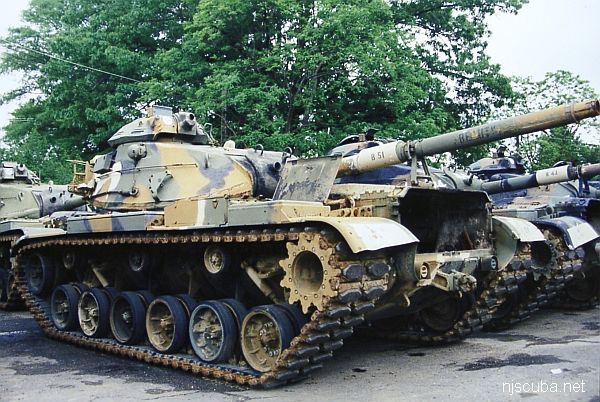
The Artificial Reef Program used four types of obsolete Army armored vehicles as artificial reef materials off the New Jersey coast. These were cleaned at local military bases, loaded onto barges for transport, and pushed off at their final destination. Once the Army had disposed of its excess inventory, the program ceased, around 1999. The Artificial Reef Program has sunk almost 400 tanks altogether, far too many to list them here in this website.
More: Army Tanks ...
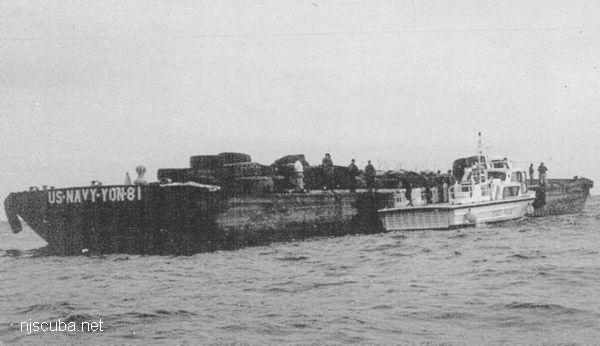
- Type:
- artificial reef, barge, tank, US Navy
- Built:
- 1942, Levingston Shipbuilding, Orange TX USA
- Specs:
- ( 174 x 40 ft ) 200 tons light
- Sponsor:
- Ocean Wreck Divers
- Sunk:
- Wednesday October 8, 1997 - Axel Carlson Artificial Reef
- GPS:
- 40°00.587' -73°59.391'
More: Ed Schmidiger YON-81 ...
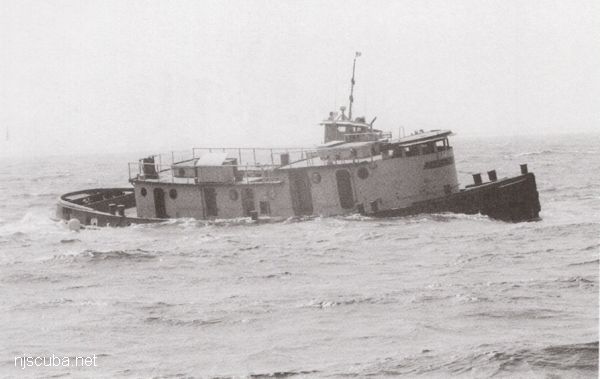
- Type:
- artificial reef, tugboat
- Built:
- 1951, Matton Shipyard, Cohoes NY USA as Edward Matton
- Specs:
- ( 85 x 23 ft )
- Sponsor:
- Ocean Wreck Divers
- Sunk:
- Tuesday September 12, 2000 - Axel Carlson Artificial Reef
- GPS:
- 40°02.473' -73°59.599'
- Depth:
- 80 ft, top at 60 ft
More: Patrick McHugh ...
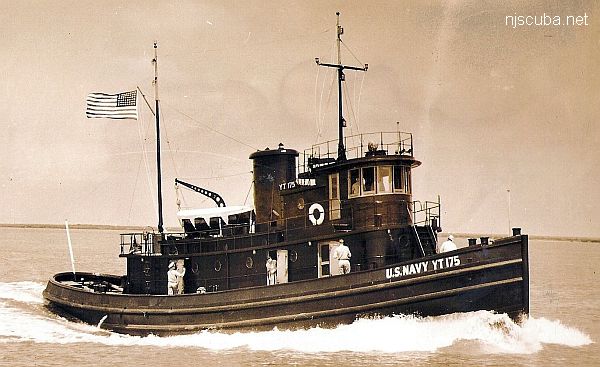
- Type:
- artificial reef, tugboat
- Built:
- 1941, Gulfport Shipbuilding, Port Arthur, TX, as YTB-175 USS Chekilli
- Specs:
- ( 96 ft )
- Sponsor:
- Manasquan River Marlin & Tuna Club, Ann E Clark Foundation
- Sunk:
- Sunday January 9, 2005 - Axel Carlson Artificial Reef
- GPS:
- 40°03.187' -73°59.283'
- Depth:
- 80 ft, top at 60 ft
More: Bay King YTB-175 ...
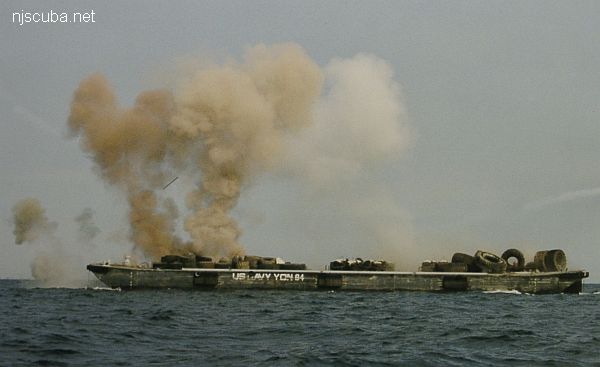
- Type:
- artificial reef, barge, tank, US Navy
- Built:
- 1942, Levingston Shipbuilding, Orange TX USA
- Specs:
- ( 174 x 40 ft )
- Sponsor:
- Ocean Wreck Divers
- Sunk:
- Wednesday October 8, 1997 - Axel Carlson Artificial Reef
- GPS:
- 40°00.587' -73°59.391'
More: Ocean Wreck Divers III YON-84 ...
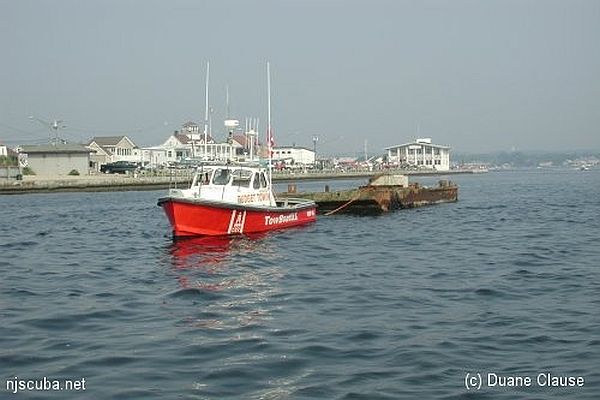
- Type:
- artificial reef, barge
- Built:
- 1970
- Specs:
- ( 50 x 16 ft )
- Sunk:
- Friday June 27, 2003 - Axel Carlson Artificial Reef
- GPS:
- 40°03.585' -73°59.391'
- Depth:
- 80 ft
More: Swensen barge ...