
Pinta (1/3)
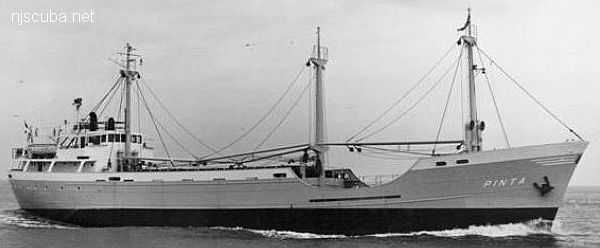
- Type:
- shipwreck, freighter, Netherlands
- Name:
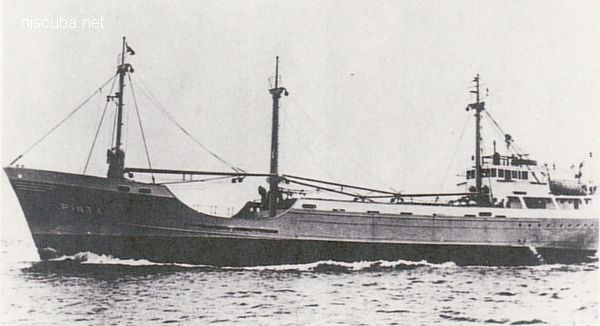
- The Pinta was one of three sister ships named for Columbus' original three vessels, the Nina, the Pinta, and the Santa Maria.
- Built:
- 1959, Denmark
- Specs:
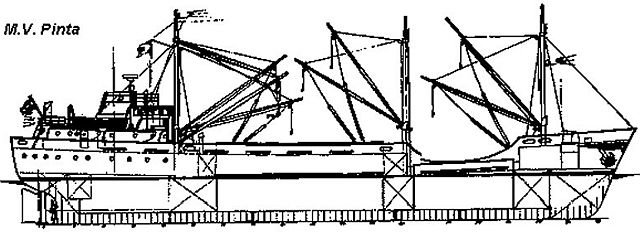
- ( 194 x 31 ft ) 1000 gross tons, 12 crew
- Sunk:
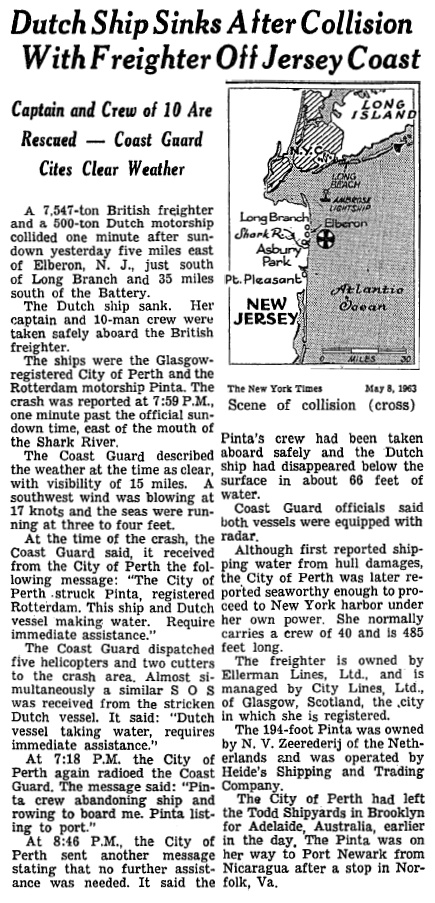
- Wednesday May 8, 1963
collision with freighter City of Perth ( 7547 tons) - no casualties - GPS:
- 40°13.827' -73°50.625' (AWOIS 1988)
- Depth:
- 85 ft, starts at 55 ft
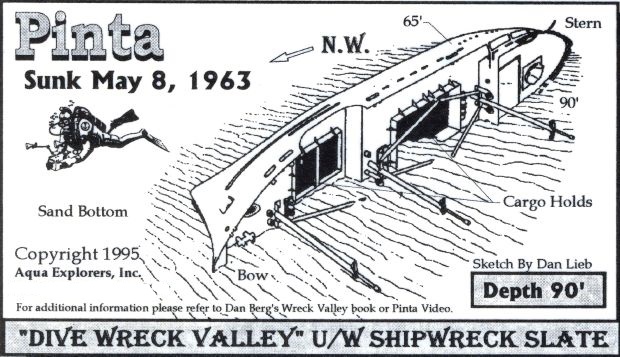

How two ships in the age of radar and on a clear day could collide on the open sea is a mystery. Nonetheless, we now have the Pinta as one of the best dive sites in New Jersey. This relatively small vessel lies on its port side on a clean sandy bottom. It is still quite recognizable as a ship, and is the perfect size for sightseeing - you can swim from end to end several times on a single tank of air. It also makes a good multi-level training dive.
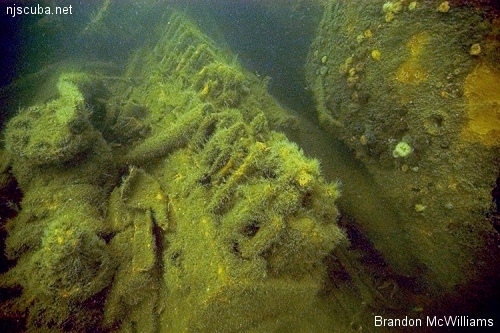
The first time I saw the Pinta in 1995, the hull was still pretty much intact ( as illustrated above ), but it is now really beginning to decay. The bow is still in good shape, but the rest of the wreck is wrecked. Most of the hull has collapsed. The stern is exploded, and I believe the engine room is now open.
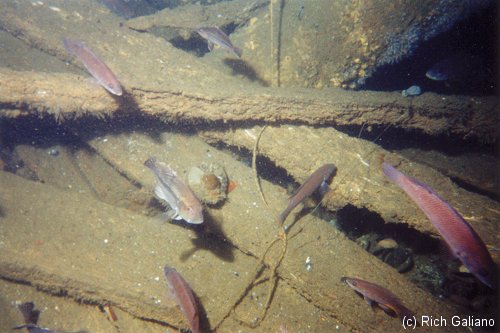
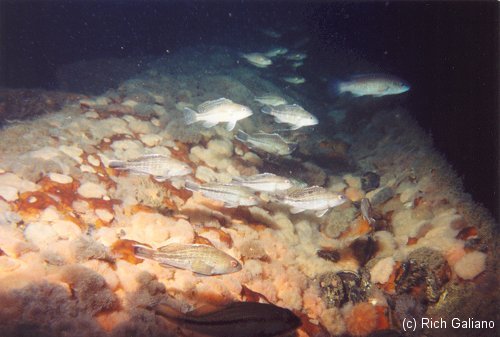
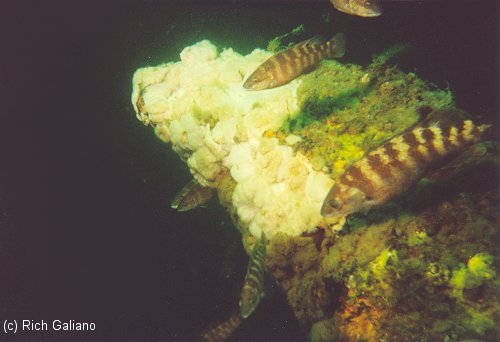
On the back side of the wreck, the bottom of the ship is covered with nice mussels, while the top of the wreck is covered with beautiful anemones and hydroids. Fish abound, some large ones, and lobsters can be found in the spaces between the wood planks, although this small wreck can and does get fished out pretty quickly.
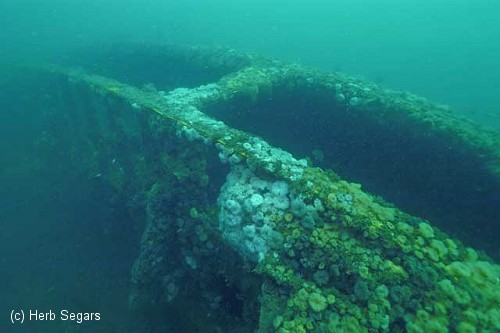
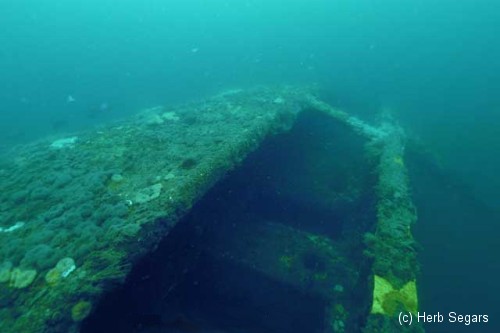
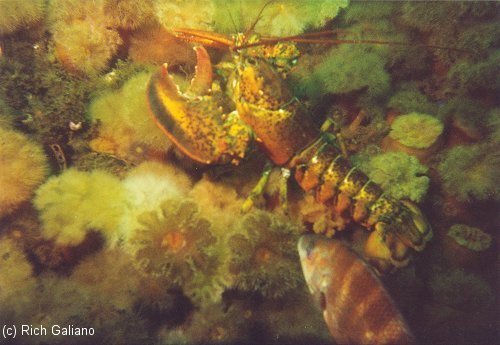
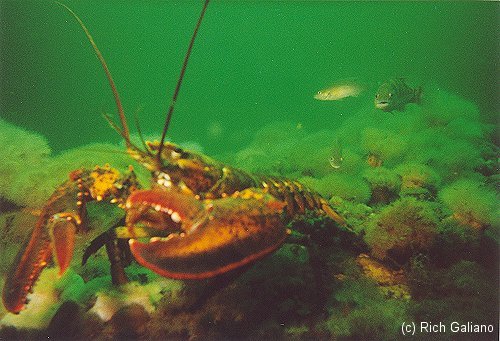
I caught this little lobster in the sand around the back side of the wreck, and carried him up to the top where the light is better. Lobsters don't have much stamina, and after a few minutes of tickling, it thrashed itself into exhaustion and became an obliging photo subject. I set him down in a nice patch of anemones, took a few shots, and then let him disappear into a crack in the hull.
Although it's not far offshore, the Pinta is a relatively long drive from any port. If it turns out to be occupied, there are few alternates to choose from in the area, so you may get a "New Deal".
Questions or Inquiries?
Just want to say Hello? Sign the .