Squids
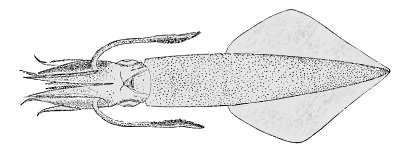
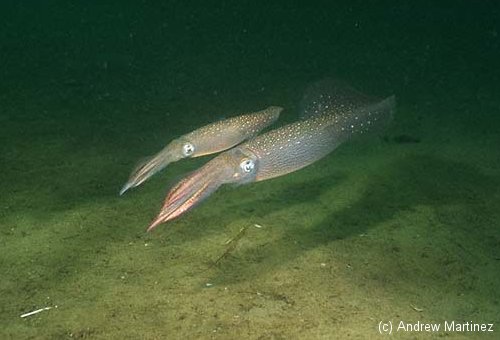
Loligo pealei
Size: to 17"
Habitat: Generally deep waters, but moves inshore in the summer. I have seen small ones at depths of 50-70 ft and babies in the rivers.
Notes:
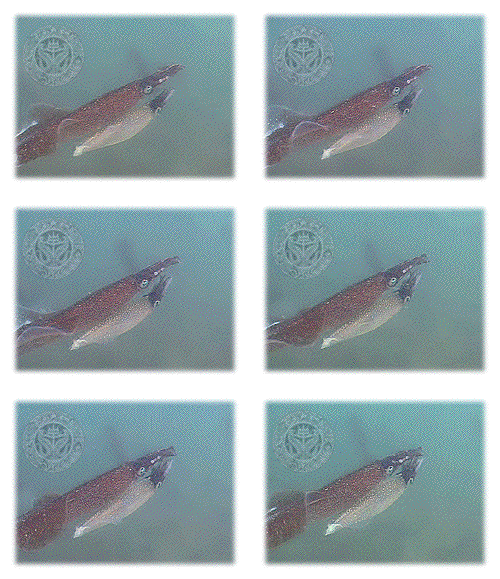
The squid is a mollusk, related to snails and clams. These animals travel in schools, swimming backwards by jet propulsion. Small specimens are nearly transparent except for the eyes. Tropical squids can show considerable intelligence and curiosity, but northern versions are, well, just stupid. I have seen huge schools of small transparent squids offshore, just their eyes visible, like black marbles. In the rivers, I have seen small schools of purple squids, and tiny colorless babies drifting in the current. All are predatory.
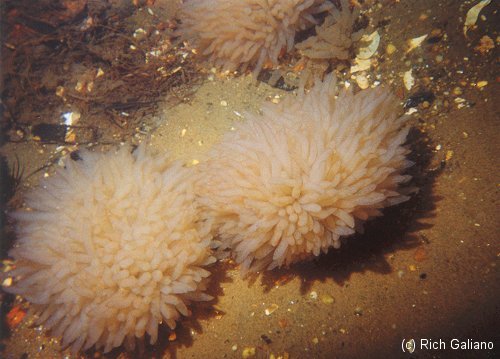
Squids spawn en masse. Each finger in these egg clusters was produced by a single female. Northern Squid live less than a year and die after spawning. Better not to be a squid! ( photo on the Mohawk )
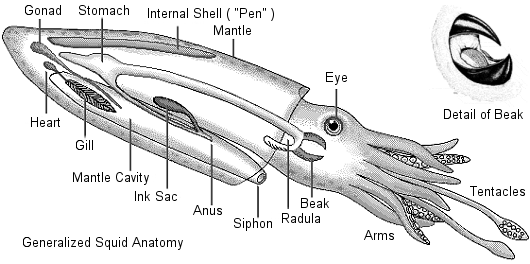
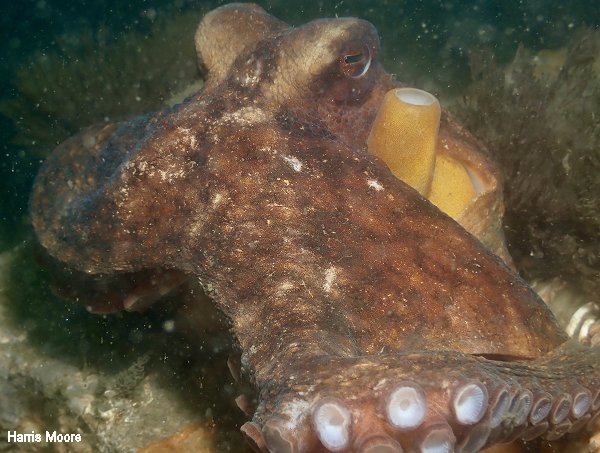
Squids and octopuses are cephalopods ( Latin: "head-foots". ) They are extremely evolved mollusks. The shell is internalized as a support structure in squids, or completely absent, as in octopi. There are probably more squids than fish in the sea, both by numbers and by mass.
More: Squids & Octopus ...