
August 28, 2026
Finally Catching Up With AI
August 28, 2026
I asked ChatGPT and Gemini to write me stories about New Jersey Artificial Reefs, and here is what they came up with:
ChatGPT:
The Reefs Nobody Could See
When Eli Mercer was thirteen, he learned that the sea kept secrets better than people did. It began with a school project about coral reefs. Eli discovered that artificial reefs could be made from concrete structures, retired boats, specially designed modules—almost anything sturdy enough to give marine life somewhere to cling. He became obsessed.
By sixteen, Eli had convinced the town council that an artificial reef program would restore fish habitat, attract divers, create jobs, and make the declining waterfront famous. The grants arrived first. Then the charitable donations. Then the public money.
Everyone loved Eli. He gave speeches beneath banners that said OUR OCEAN, OUR FUTURE. He posed for photographs beside pallets of reef modules. Local newspapers called him a visionary. And, to be fair, he actually built the reefs. Dozens of them.
Fish gathered around the concrete towers. Lobsters disappeared into their crevices. Divers reported seeing enormous schools of silver minnows swirling above the structures like living clouds.
There was only one problem. Eli never published the locations. He claimed it was for conservation. "Too many visitors could damage the habitats," he explained.
The official maps showed broad protected zones but no coordinates. The government database contained vague rectangles of ocean. The charity's glossy brochures featured photographs of beautiful underwater life without saying where the photographs had been taken.
But Eli had a private map. So did his friends. On summer weekends, Eli and his little circle would load their charter boats with fishing gear and head offshore. They knew exactly where the reefs were because Eli had quietly marked them on GPS devices.
The public had paid for the reefs. The public couldn't find them. Eli's friends called it the best-kept fishing secret on the coast. They caught grouper, snapper, black sea bass, and lobster. They bragged about their secret spots at parties, lowering their voices whenever anyone else entered the room.
Then one winter, a fisherman named Rosa Alvarez found something strange. She was checking her nets when her sonar showed a structure where the charts said there was nothing. She returned the next morning. There it was again.
Rosa contacted the harbor authority. An inspector eventually went down and confirmed it: one of Eli's reefs. Then another fisherman found one. Then another.
Soon people began comparing notes. The mystery unraveled quickly. Someone obtained an old contractor's invoice. Someone else found a photograph with a GPS screen reflected in a boat window. A former employee admitted that the private reef coordinates had been circulated among Eli's friends.
The story exploded. At the town meeting, Eli stood before hundreds of angry residents. "But the reefs are working," he said. Nobody disagreed. That was the strangest part. The reefs were magnificent. They had become thriving underwater ecosystems exactly as Eli had promised.
A woman in the back of the room stood up. "Then why couldn't we find them?" Eli had no answer. Another person shouted, "We paid for them!" Someone else yelled, "So did the people you wouldn't let fish them!" Eli looked toward his friends. For the first time, they weren't smiling.
Within weeks, the maps were released. The coordinates went online. Divers arrived. Scientists arrived. Fishermen arrived. Families arrived with cameras and children in bright yellow life jackets. The reefs became what Eli had originally promised: a shared public resource.
Years later, marine biologists still praised the project. They wrote papers about its ecological success. They measured fish populations. They studied the new habitats. They called the reefs a remarkable example of restoration.
But whenever the project appeared in the newspapers, Rosa would shake her head. "The reefs weren't the scandal," she'd say. "The secret was." And somewhere offshore, beneath twenty fathoms of blue water, the concrete towers remained covered in coral and sponges, surrounded by fish that had never cared who paid for their home—or who thought they owned the map.
Gemini:
The Philanthropist's Catch
Eli was hailed in the coastal town of Oakhaven as a visionary philanthropist. When he launched the "Blue Horizon Initiative," he appeared driven by pure altruism, raising millions through public grants, local tax subsidies, and a massive wave of charitable donations. His stated mission was noble: restore the collapsing local marine ecosystem, revive the depleted fish populations, and protect the eroding coastline.
The town council praised him daily. The local paper printed glowing headlines. But Eli's vision had a sharp, self-serving edge.
Behind the facade of civic duty, Eli was a charter boat owner who resented sharing the water with anyone else. While the public funded the concrete barriers, limestone formations, and sunken steel skeletal domes meant to foster marine life, Eli's private construction crew was under strict, heavily paid orders. Every single artificial reef module was meticulously mapped using classified, high-precision GPS coordinates that only Eli possessed.
Within three years, the blueprints came to life beneath the grey-green Atlantic waves. Massive underwater labyrhetine towers bloomed off the coast, quickly colonised by barnacles, kelp, and swarms of blackfish and striped bass.
The moment the reefs were officially signed off as completed, Eli locked down the data. He formed a tight, exclusive clique known locally as "The Helm"—a rotating circle of select cronies, wealthy investors who looked the other way, and corrupt harbor officials who enjoyed first-class access to the ocean's best-kept secrets.
The Exclusivity: Ordinary fishermen and charter boat captains wondered why the coastal waters directly above the new reefs yielded nothing while surrounding areas remained barren.
The Secret: Only Eli and his inner circle slipped out past the breakwater in the dead of night or the grey haze of dawn, anchoring silently over coordinates unknown to any nautical chart.
The Spoils: They pulled record-breaking catches from the depths—massive sea bass and heavy cod—laughing over bourbon while the townspeople thanked Eli for "bringing the sea back to life" from the docks.
Eli stood on his charter boat one crisp morning, staring out at the empty horizon where the secret wealth lay submerged. He had used the public’s coin to build a private underwater kingdom, and as long as the town kept thanking him for the conservation effort, his private paradise would remain entirely undisturbed.
What aspect of Eli's secret operation would you like to explore next—the moment a suspicious local starts getting too close to the truth, or a look inside one of his exclusive fishing trips with his cronies?
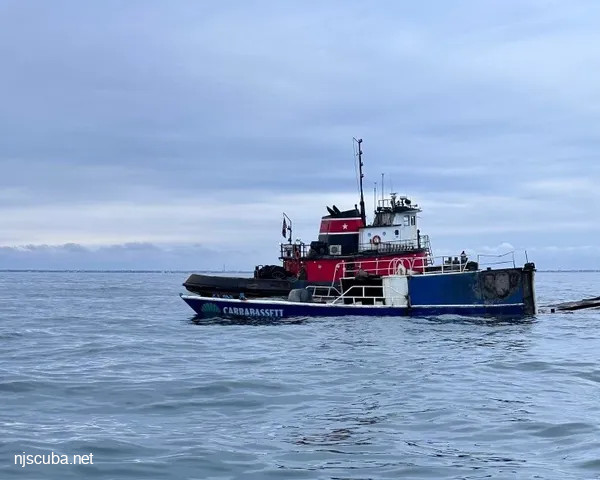
Boy, that Eli - what a scalawag! But we all know this sort of thing would never happen in real life. Just another example of AI hallucinations. I added some random pictures to dress up the page. What do you think of AI's fiction? Leave your comments below.
Questions or Inquiries?
Just want to say Hello? Sign the .