
Delaware (1/3)
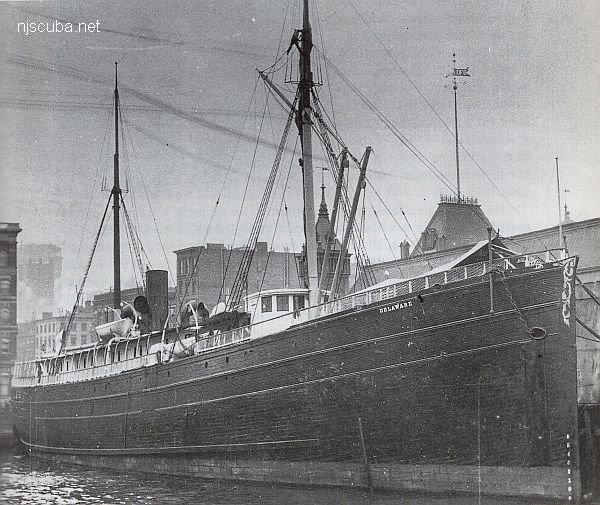
- Type:
- shipwreck, steamer, USA, Clyde Lines ( see Mohawk )
- Built:
- 1880, Hillman Ship & Engine Building, Philadelphia PA USA
- Specs:
- ( 250 x 37 ft ) 1646 gross tons, 66 passengers & crew
- Sunk:
- Saturday July 9, 1898
fire below decks, burned to waterline - no casualties - Depth:
- 75 ft

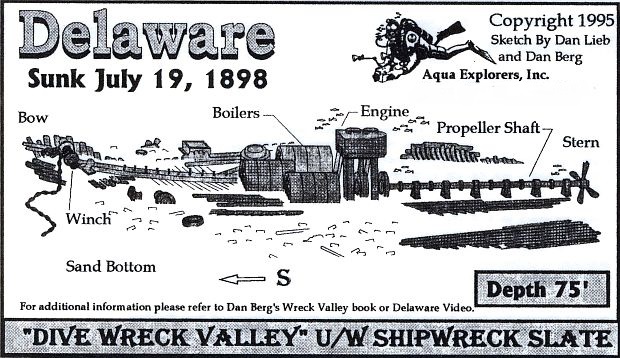
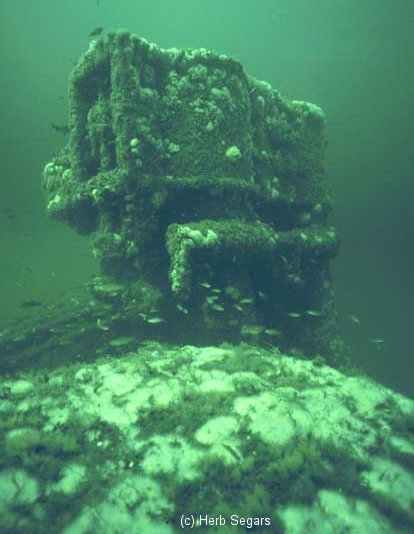
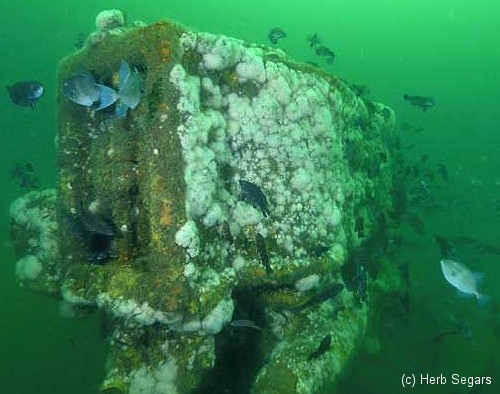
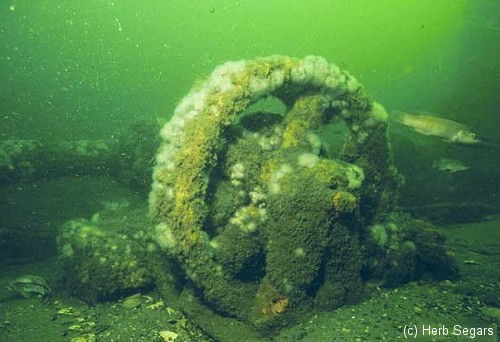
There is actually quite a bit of this old wooden steamer left. A linear array of rather large but low pieces is clearly recognizable as the remains of a ship, beginning with the bow and anchor assembly, back through the boilers, engine, drive shaft, and propeller, with hull ribs, copper sheathing, and other wooden remains throughout.
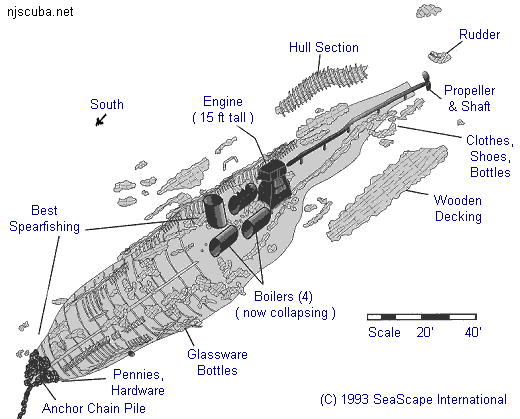
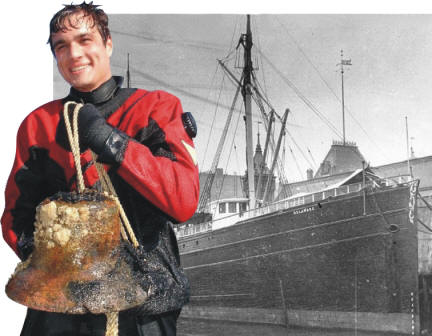
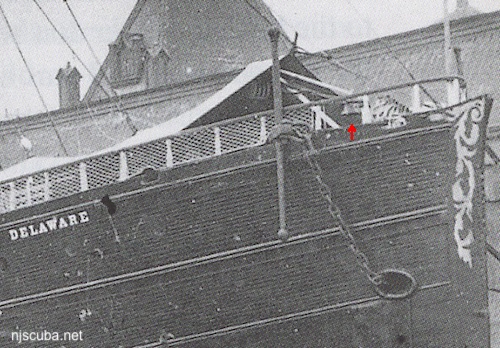
Depending on how the sand shifts, you may find a long chain extending from the bow, ending in a rusted clump, but no anchor. This is perplexing, since a large mass of chain and ( until recently ) the ship's anchor and are still evident on the bow structure. The explanation is this:
The morning after the fire, the burned-out hulk was found and taken in tow by salvagers. It promptly sank, at which point the salvagers would have had no choice but to let loose their end of the tow chain. As the extra chain rattled overboard, it would have sank and formed a pile at the end of the tow.
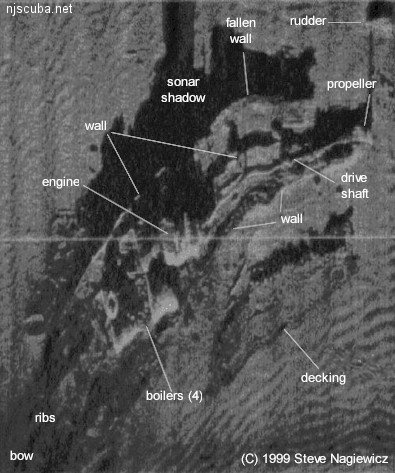
Conditions tend to be murky and dark ( bring a good light ), and there is usually a moderate current present. Several large sections of decking lie off the main axis of the wreck, and if you unknowingly stray onto them you can find yourself lost. Otherwise, navigation is not difficult, as the main wreckage is fairly straight and contiguous.
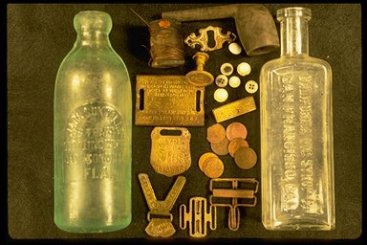
Jacksonville Steam Bottling Works (left) - the most often-found bottle on the wreck. Other cargoes include 'dry goods' like pipes, suspender clips in several different styles, and buttons. The square bottle at right is California Fig Syrup.
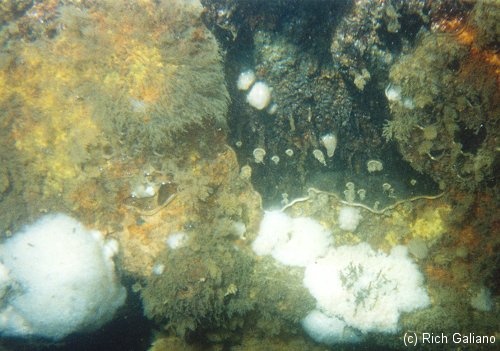
Lobsters disappear very quickly from this often-visited wreck, but there are still a few good ones, strategically located out of reach. The Delaware is usually crawling with big crabs, Sea Bass and Blackfish. The alley between the boilers is especially productive for spearfishing. Oddly, the last time I was on it, I could not find one single sea anemone, although the wreck is fairly well covered with white coral.
Small brass artifacts, primarily hull spikes, are still recovered, but the easy ones are long gone, so bring a hammer and chisel. Capt Steve adds: "You can still find pennies, brass suspender clips, bullets, and assorted smallish trinkets in her bow sections, with a lot of patience and fanning the sands. In her stern, you can still find Jacksonville Steam Bottling Works soda bottles, olive jars, and lineament bottles, and even a case or two of old leather shoes; not for the fashion-minded however." the best digging is between the chain pile and the boilers.
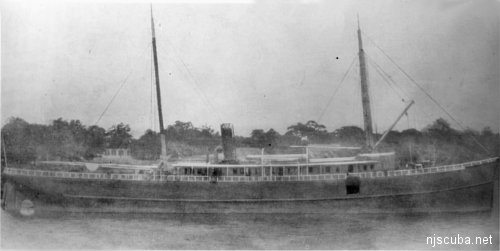
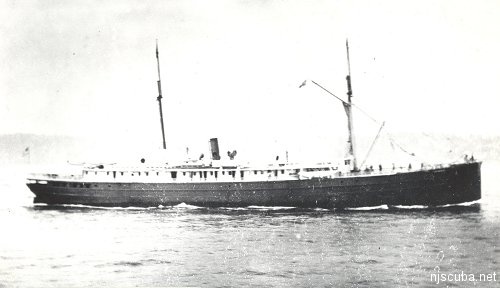
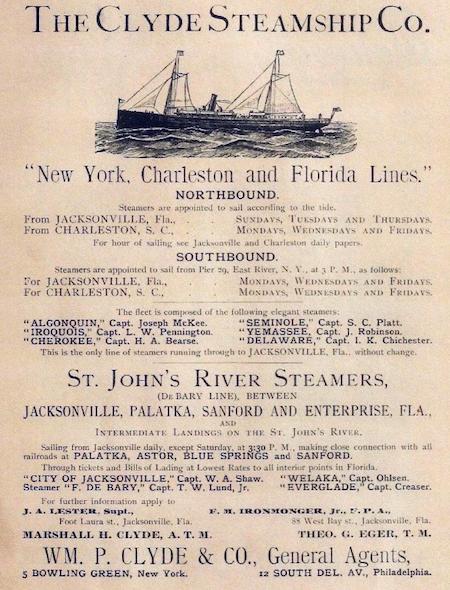
Clyde Lines apparently built a new Delaware to replace this one, since a New York pilot boat is listed as having been run down by such a vessel in 1912. Pilot boats were small sailing craft in those days, nothing like the Sandy Hook.
Side-scan sonar image, diagram, and comments courtesy of Capt. Steve Nagiewicz.
Dive Sites, Manasquan Dive Sites, New Jersey Dive Sites, Steamers,
Manasquan Chart
- Barge #10
- 120 Wreck
- 3 Sisters
- Ambrose Buoy
- A Street - Shark River
- Across
- Adele
- Ajace
- Alex Mac
- Allenhurst Jetty
- Anastasia
- Antioch
- Arnoff
- Arundo
- Asfalto
- Aurora
- Ayuruoca
- BA Wreck
- Shark River - Back Bay
- Balaena
- Bald Eagle
- Barnegat Inlet
- BD1738
- USS Benson
- Beth Dee Bob
- Blue Boy
- Bonanza
- Brick barge
- Bronx Queen
- Brunette
- Cecilia M Dunlap
- Cornelius Grinnell
- Catherine Jackson
- Chauncy Jerome
- Caddo
- Cadet
- Capt Smitty
- Catamount
- Charlemagne Tower
- Chaparra
- Chesapeake
- Choapa
- clam boat
- Continent
- crane barge
- Creole
- Daghestan
- Delaware
- drydock
- Dryland
- dump
- Duncan
- Edmund Phinney
- Elberon Rocks
- Emerald / USS Hibiscus
- Eureka
- Francis A Perkins
- William R Farrell
- FF Clain
- Finance
- Fort Victoria
- Gassoon
- German
- Lady Gertrude
- GL78
- Glen II
- Glory Wreck
- I.P. Goulandris
- Granite Wreck
- Great Isaac
- Gulftrade (stern)
- Gulftrade (bow)
- Gypsy
- Horseshoe Cove
- Alexander Hamilton
- Hankins (Big)
- Hankins (Offshore)
- Hankins 3
- Happy Days
- Cornelius Hargraves
- Harry Rush
- Harvey's Schooner
- Thomas Hebert
- Ida K
- Immaculata
- Inshore barge/tug
- Irene/Truro
- Irma C
- John Minturn
- Jack I
- Joan La Rie III
- Klondike Rocks
- Lizzie H. Brayton
- Lana Carol
- Larsen
- Lavallette Wreck
- Leon Walter
- Lillian
- Lizzie D
- Long Branch locomotives
- Logwood
- H.W. Long
- Macedonia
- Mahogany
- Malta
- Manasquan Inlet
- Marion
- Maurice Tracy
- Mediator
- Meta
- Middle Barge
- Mistletoe
- R.C. Mohawk
- Mohawk
- Manasquan Wreck
- Nautilus
- Navesink River
- Northeast Sailor
- New Reef
- New Deal
- New Era
- NW Barges
- Olsen
- HMS Pentland Firth
- Park City
- Peerless
- Persephone
- Long Branch Pier Rubble
- Pinta
- Pliny
- Plymouth
- Pocopson
- Remedios Pascual
- Ruth Shaw
- Ramos
- Ranger
- Reliable
- Relief Lightship
- Rickseckers
- Ridge Schooner
- Riggy
- Rjukan
- Rockaway Belle
- Roy's barge
- RP Resor
- Manasquan River Railroad Bridge
- Rudder Wreck - Pocono
- Rump
- Rusland / Adonis
- Scotland Buoy
- San Saba
- Sandy Hook Pilot Boat
- SC-60
- Sea Girt Inlet
- Sea Girt Wreck
- Sea Hag
- Seaside Crane Barge
- Shark River Inlet
- Shrewsbury Rocks
- Simala
- Spring Lake Sailor
- Steel Wreck
- Stolt Dagali
- Sumner
- Southwest Mohawk
- Sylvanus
- Tampa III
- Thurmond
- Tolten
- Train Wheel
- Troop Carrier
- USS Turner
- AWOIS 8087
- AWOIS 8097
- u11
- AWOIS 7509
- AWOIS 7932
- AWOIS 9768
- AWOIS 12966/11422
- AWOIS 1609
- AWOIS 8084
- AWOIS 7940
- AWOIS 7938
- AWOIS 8076
- AWOIS 4600
- AWOIS 8075
- Valerie E
- Vega
- Vivian
- Vizcaya
- Warrior
- Western World
- Edward W Winslow
- Yankee (G+D)
- Yellow Flag
- ZPG-3W
More: Manasquan Dive Sites Chart ...
Axel Carlson Artificial Reef
- "small old wreck"
- Austin
- Barbara Ann
- Bay King
- big barge
- Brooklyn
- Manasquan Inlet Buoy
- Captain Bill
- Carrabassett
- Caterina.D
- Colleen
- crab barge
- Delaware
- Ed Schmidiger
- Glory Wreck
- Hail Mary
- Harbor Charlie
- Hillman III
- Jim Lynch
- Manasquan Inlet
- McGinty
- Megan Sue
- Middle Barge
- MRMTC 8
- MRMTC 9
- OWD III
- Patrick McHugh
- Riggy
- Rump
- Shark River Inlet
- Snug Harbor
- Swensen
2.0 Nautical Miles off Mantoloking, 5.19 sq miles
Depth: 65-80 ft [download]
More: Axel Carlson Artificial Reef ...
Manasquan Artificial Reef
2 miles off Manasquan Inlet, 0.99 sq miles
Depth: 67-74 ft [download]
More: Manasquan Inlet Artificial Reef ...
While looking over an old hard drive, I found this newspaper article ...
Secrets of the Deep
The Times [Trenton]
01/13/02
By JEFF TRENTLY
Staff Writer
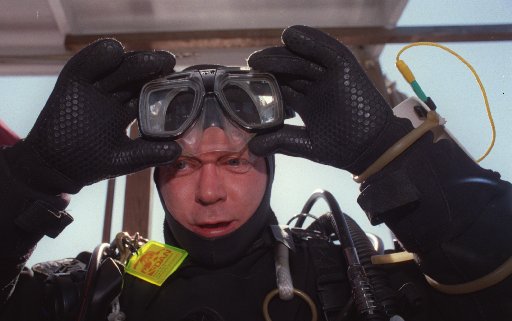
They peel off their shoes, strip off their socks, their shirts, their pants.
More: The Good Old Days ...
Questions or Inquiries?
Just want to say Hello? Sign the .