
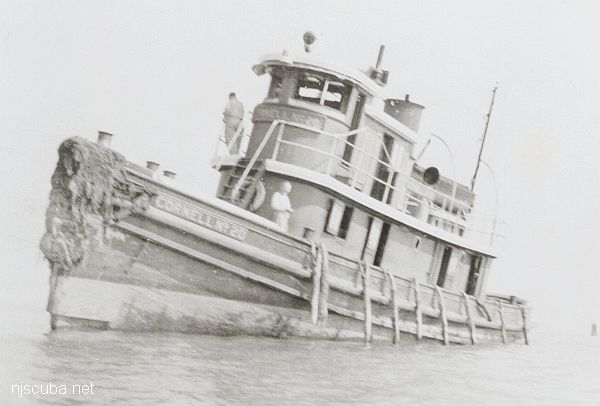
Glen II

Shipwreck Glen II
As Cornell No. 20 ( see Rockland County )
Type:
shipwreck, tugboat
Specs:
( 83 ft ) 68 tons
Sunk:
Saturday January 31, 1953
Depth:
80 ft

from AWOIS: 1588

NM 7/53 -- LTD WK BUOY ESTABLISHED TO MARK WRECK OF A TUG IN 78 FT OF WATER WITH 38 FT OF WATER OVER IT; IN PA LAT 40-25-25N, LONG 73-54-01W.

H10224/86 -- OPR-C121-WH-86; WRECK WAS LOCATED, 191M SE OF SUNKEN WRECK RAMOS; 55-60 FT WRECK IN AT LEAST TWO SECTIONS ON A SILT BOTTOM; METAL CROWS NEST WITH METAL RUNGS COLLAPSED ON TOP OF WHEELHOUSE; STANDING 10-14 FT OFF THE BOTTOM; PART OF MAIN MAST STILL BRACED TO UPPER WHEELHOUSE; WHEELHOUSE SUPERSTRUCTURE STOOD 8-10 FT ABOVE THE MAIN DECKING; MAIN PROPULSION SHAFT, 1 1/2-2 FT IN DIAMETER, FOUND AFT OF DEBRIS AT END OF SITE; PART OF THE TRANSOM WAS INTACT WITH A SINGLE 8 FT 3-BLADE PROPELLER FOUND AT THE STERN; THREE WOODEN BEAMS CLUSTERED TOGETHER STANDING 4-5 FT OFF THE BOTTOM AT A 45 DEGREE ANGLE AT THE SOUTHERN END OF WRECK; BOW STEM STANDING 6 FT ABOVE THE BOTTOM; BOW BROKEN OFF; APPROXIMATELY 14 FT REMAIN INTACT; STEEL HULLED WITH DETERIORATED WOOD DECKING; PNEUMATIC DEPTH GAUGE LEAST DEPTH OF 67 FT.; (UPDATED MSD 4/91)

24 NO.1025; TUG; SUNK BY MARINE CASUALTY; POSITION ACCURACY WITHIN 1 MILE; LEAST DEPTH 49 FT. (FE101)
Comments on Glen II

Questions or Inquiries?

Just want to say Hello? Sign the .

Submit a Comment

Your email address will not be published. Required fields are marked *


Click image to replace if unable to read.

Enter the digits from the image above, except for the last one:

This site uses Akismet to reduce spam. Learn how your comment data is processed.


The Mullica River

Chapter 4

Hidden History of Maritime New Jersey

The Mullica River Shipwrecks and the Revolutionary War

reprinted from
Hidden History of Maritime New Jersey
Steve Nagiewicz

New Jersey has commonly been known as the "Crossroads of the American Revolution." So many of the major Revolutionary War battles were fought here at places that jump off the pages of our history textbooks, like the Battles of Monmouth, Princeton, and Trenton and, of course, the iconic Delaware Crossing on Christmas Day by General George Washington in 1776. Washington and his main army, it seems, had spent more time in New Jersey than any other place. Of course, New Jersey's geographic position between New York and Philadelphia was a large part of that "Crossroads" title. Not surprisingly, the ocean provided another type of crossroad - one that was faster, more direct, and with the ability to send large amounts of supplies and troops by sea and along our coastline.