Sandy Hook Pilot Boat

Shipwreck Sandy Hook - Pilot Boat
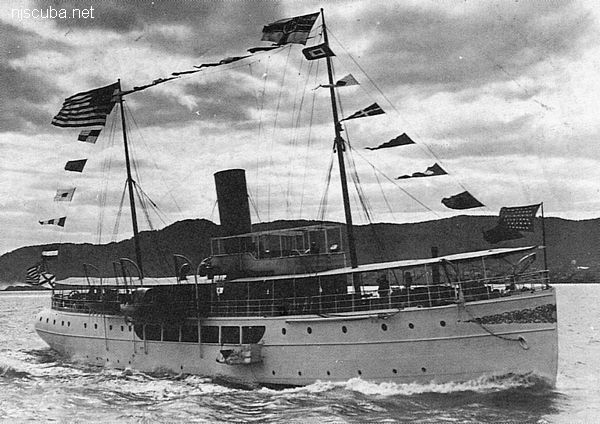
The Sandy Hook as a private yacht, early in her career.
Type:
shipwreck, pilot boat, converted yacht, USA
Built:
1902, Bethlehem Elizabethport, Elizabeth NJ USA, as Anstice, later Privateer
Specs:
( 168 x 24 ft ) 361 gross tons, 26 crew & harbor pilots
Sunk:
Thursday April 27, 1939
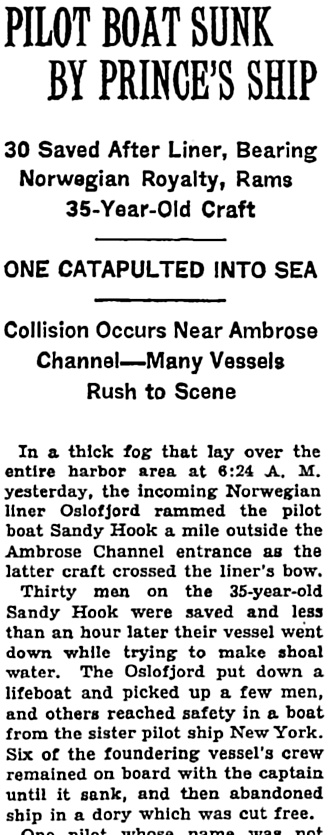
collision with tanker Oslofjord ( 16500 tons) - no casualties
GPS:
40°27.556' -73°49.490' (AWOIS 1986)
Depth:
100 ft
Shipwreck Sandy Hook - Pilot Boat

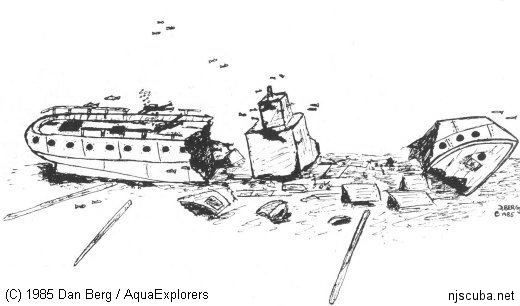
The drawing above pretty much sums it up. The bottom is extremely silty, and visibility is usually poor. Many small lobsters, but very few big ones. Lots of skates and ling on the day I went there, but little else in the way of fish otherwise.
Shipwreck Sandy Hook - Pilot Boat
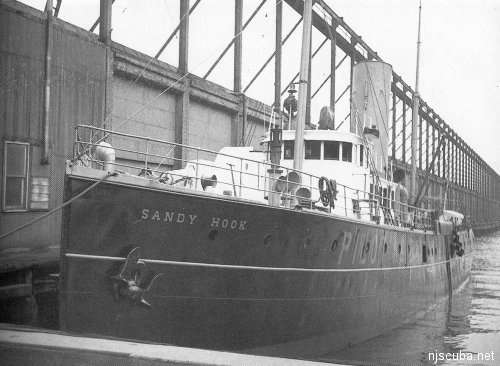
The Sandy Hook as New York Pilot Boat.

Although I am told this is a great dive if you catch it on a rare clear day, I think this wreck is more interesting from a historical perspective than for the diving. In fact, I thought the surface interval was more interesting than the dive. The site is right at the convergence of all three shipping lanes with the main channel, and all day enormous container ships, tankers, cruise liners, and even the odd Navy vessel pass by. The view of New York and the surrounding areas is excellent.
Shipwreck Sandy Hook - Pilot Boat

Comments on Sandy Hook Pilot

Questions or Inquiries?

Just want to say Hello? Sign the .

Submit a Comment

Your email address will not be published. Required fields are marked *


Click image to replace if unable to read.

Enter the digits from the image above, except for the last one:

This site uses Akismet to reduce spam. Learn how your comment data is processed.


Type:
shipwreck, barge
Sunk:
March 2004
foundered under tow
Depth:
60 ft

This medium-sized crane barge sank under tow in March 2004. The barge is upside-down, but propped up at a 30-degree angle by the crane, rising 30 feet off the bottom at the highest point. The crane is a large rotating affair that is permanently mounted on the barge. It is not the crumpled arm of the crane that supports the hull, but the central cab, so the wreck is stable, and it is safe to explore the cavernous dark space below. The bottom is coarse sand and pea gravel. Eventually, the wreck will crush flat, but that will probably take several years, and until then this is a fun and interesting site. Big eels, Sea Bass, and even one or two lobsters can be found here.