
Cadet - John H. Winstead
- Type:
- shipwreck, schooner barge
- Built:
- 1922, Baltimore MD USA as John H Winstead
- Specs:
- ( 215 x 36 ft ) 1160 tons
- Sunk:
- Monday December 5, 1927
foundered in storm - no casualties - Depth:
- 80 ft
The John H Winstead was under tow in a string with the Millville and another barge when the Millville began to sink in rough seas. The towing tug immediately released all the barges to pick up the crew of the Millville, which sank soon after. The remaining two barges rode out the storm at anchor, but the Winstead sank the next morning.
Together with a completely erroneous listing for the ship Valparaiso, and perhaps confused by the proximity of the Brunette, these became known as the "Three American Barges." Despite the well-documented sinkings, the original names were mostly forgotten as the wrecks took on a host of nicknames until Dan Lieb of the NJHDA straightened it all out. However, this popular dive site will surely continue to be known as the Cadet; also sometimes known as "Cramer's".
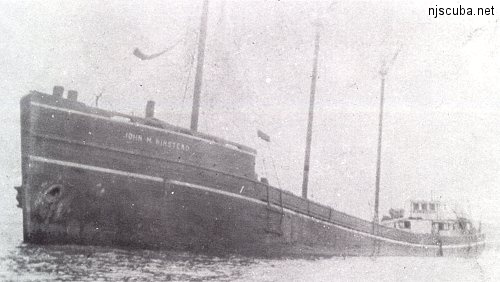
There is still coal to be found among the wooden ribs. Fishing is usually excellent; lobstering is much less so. The bottom is silty, and visibility is often poor.
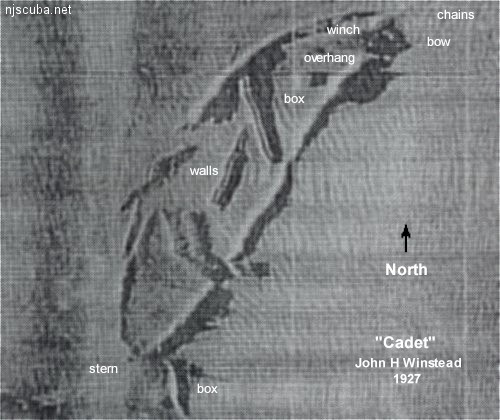
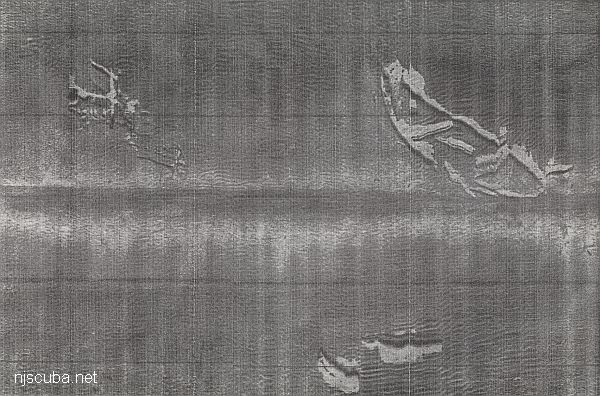
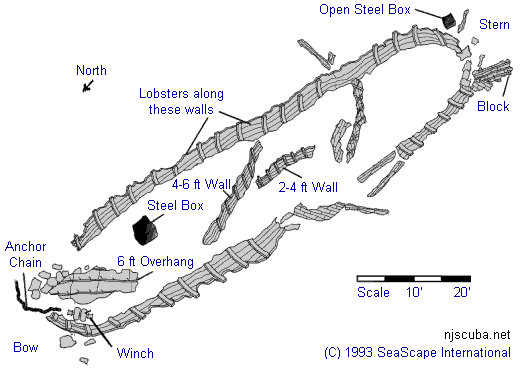
Side-scan sonar image and diagram courtesy of Capt. Steve Nagiewicz.

Dive Sites, Manasquan Dive Sites, New Jersey Dive Sites, Schooner Barges,
Manasquan Chart
- Barge #10
- 120 Wreck
- 3 Sisters
- Ambrose Buoy
- A Street - Shark River
- Across
- Adele
- Ajace
- Alex Mac
- Allenhurst Jetty
- Anastasia
- Antioch
- Arnoff
- Arundo
- Asfalto
- Aurora
- Ayuruoca
- BA Wreck
- Shark River - Back Bay
- Balaena
- Bald Eagle
- Barnegat Inlet
- BD1738
- USS Benson
- Beth Dee Bob
- Blue Boy
- Bonanza
- Brick barge
- Bronx Queen
- Brunette
- Cecilia M Dunlap
- Cornelius Grinnell
- Catherine Jackson
- Chauncy Jerome
- Caddo
- Cadet
- Capt Smitty
- Catamount
- Charlemagne Tower
- Chaparra
- Chesapeake
- Choapa
- clam boat
- Continent
- crane barge
- Creole
- Daghestan
- Delaware
- drydock
- Dryland
- dump
- Duncan
- Edmund Phinney
- Elberon Rocks
- Emerald / USS Hibiscus
- Eureka
- Francis A Perkins
- William R Farrell
- FF Clain
- Finance
- Fort Victoria
- Gassoon
- German
- Lady Gertrude
- GL78
- Glen II
- Glory Wreck
- I.P. Goulandris
- Granite Wreck
- Great Isaac
- Gulftrade (stern)
- Gulftrade (bow)
- Gypsy
- Horseshoe Cove
- Alexander Hamilton
- Hankins (Big)
- Hankins (Offshore)
- Hankins 3
- Happy Days
- Cornelius Hargraves
- Harry Rush
- Harvey's Schooner
- Thomas Hebert
- Ida K
- Immaculata
- Inshore barge/tug
- Irene/Truro
- Irma C
- John Minturn
- Jack I
- Joan La Rie III
- Klondike Rocks
- Lizzie H. Brayton
- Lana Carol
- Larsen
- Lavallette Wreck
- Leon Walter
- Lillian
- Lizzie D
- Long Branch locomotives
- Logwood
- H.W. Long
- Macedonia
- Mahogany
- Malta
- Manasquan Inlet
- Marion
- Maurice Tracy
- Mediator
- Meta
- Middle Barge
- Mistletoe
- R.C. Mohawk
- Mohawk
- Manasquan Wreck
- Nautilus
- Navesink River
- Northeast Sailor
- New Reef
- New Deal
- New Era
- NW Barges
- Olsen
- HMS Pentland Firth
- Park City
- Peerless
- Persephone
- Long Branch Pier Rubble
- Pinta
- Pliny
- Plymouth
- Pocopson
- Remedios Pascual
- Ruth Shaw
- Ramos
- Ranger
- Reliable
- Relief Lightship
- Rickseckers
- Ridge Schooner
- Riggy
- Rjukan
- Rockaway Belle
- Roy's barge
- RP Resor
- Manasquan River Railroad Bridge
- Rudder Wreck - Pocono
- Rump
- Rusland / Adonis
- Scotland Buoy
- San Saba
- Sandy Hook Pilot Boat
- SC-60
- Sea Girt Inlet
- Sea Girt Wreck
- Sea Hag
- Seaside Crane Barge
- Shark River Inlet
- Shrewsbury Rocks
- Simala
- Spring Lake Sailor
- Steel Wreck
- Stolt Dagali
- Sumner
- Southwest Mohawk
- Sylvanus
- Tampa III
- Thurmond
- Tolten
- Train Wheel
- Troop Carrier
- USS Turner
- AWOIS 8087
- AWOIS 8097
- u11
- AWOIS 7509
- AWOIS 7932
- AWOIS 9768
- AWOIS 12966/11422
- AWOIS 1609
- AWOIS 8084
- AWOIS 7940
- AWOIS 7938
- AWOIS 8076
- AWOIS 4600
- AWOIS 8075
- Valerie E
- Vega
- Vivian
- Vizcaya
- Warrior
- Western World
- Edward W Winslow
- Yankee (G+D)
- Yellow Flag
- ZPG-3W
More: Manasquan Dive Sites Chart ...
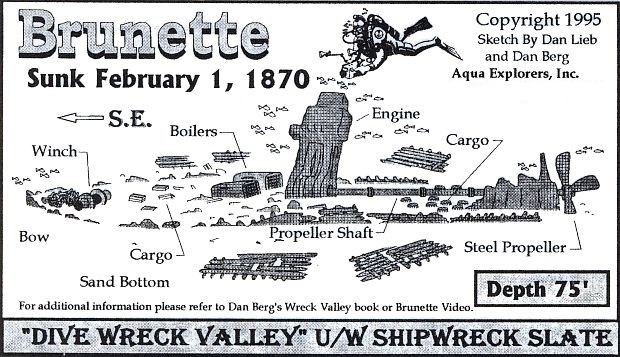
- Type:
- shipwreck, steamer, USA
- Built:
- 1867, Pusey & Jones, Wilmington DE USA
- Specs:
- 274 tons (?), 9 crew
- Sunk:
- Tuesday February 1, 1870
collision with steamer Santiago de Cuba ( 1627 tons) - 2 casualties - Depth:
- 75 ft
More: Brunette ...
Manasquan Artificial Reef
2 miles off Manasquan Inlet, 0.99 sq miles
Depth: 67-74 ft [download]
More: Manasquan Inlet Artificial Reef ...
Questions or Inquiries?
Just want to say Hello? Sign the .