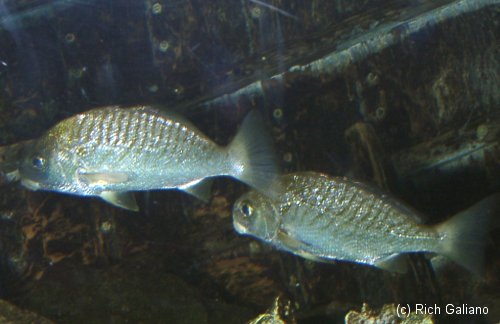
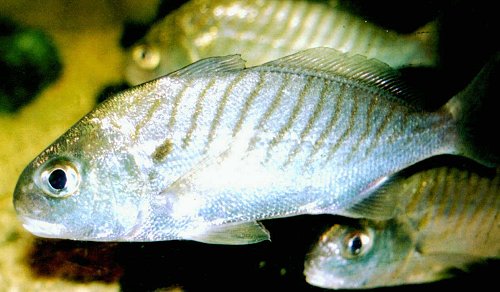
Spot
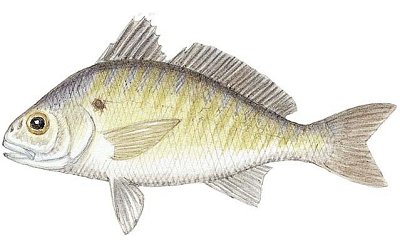
Leiostomus xanthurus
Size
to 14"
seldom that big
Habitat
Shallow coastal waters, bays, estuaries.
Description
These diminutive drums form an important fishery, both commercial and recreational.
Spot migrate seasonally, entering bays and estuaries in the spring where they remain until late summer or fall when they move offshore to spawn. When mature, spot are between 2-3 years of age and 7-8 inches long.
Spawning takes place in the ocean from fall to early spring, and the post-larva move into estuaries, utilizing low salinity tidal creeks where they develop into juveniles. As they grow, they move toward higher salinity areas during the summer and early fall and offshore in the fall as water temperatures decrease. Those that summered in the northern portion of their range also move south in autumn.
Spot prey on bivalves and tube-building polychaetes, often nipping bivalve siphons and polychaete tails. Additionally, adult spot feed on small crustaceans, small fish, and plant material. They eat by grabbing a mouthful of sediment, chewing, and then spitting out unwanted matter.
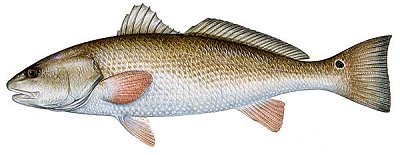
Red Drum is similar and related, but typically much larger.