
Sea Girt Artificial Reef
Sea Girt Artificial Reef
- Boy Scout Reef
- car float
- Carlson II
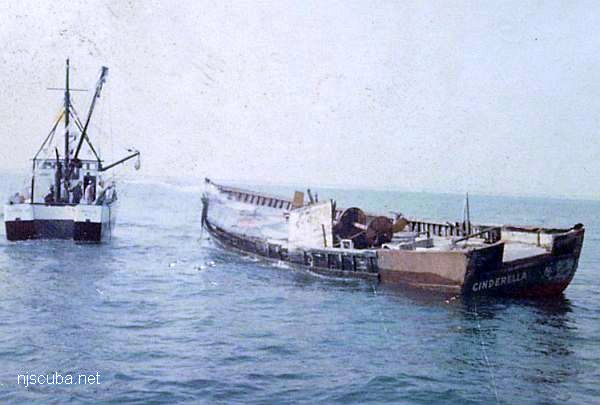
- Cinderella
- Cranford
- drydock
- DVD Barge
- Dykes
- Captain Etzel
- Fisherman Barge
- Golden Eagle
- Horseshoe Wrecks
- Kiley B
- Lewis F Boyer (Travis)
- Liberty Barge 1
- Liberty Barge 2
- Liberty Barge 3
- Liberty Barge 4
- Manasquan Inlet
- Marion
- Matt Turecamo
- Morania 180
- OWD IV
- PATH subway cars
- Railroad barge
- Response
- Restorer
- Rockland County
- Ronde Joyce
- Shark River Inlet
- Smoke II
- Spartan
- Swenson I
- Swenson II
- army tanks
- Wedding Barge
3.6 Nautical Miles off Sea Girt, 1.33 sq miles
Depth: 60-75 ft [download]


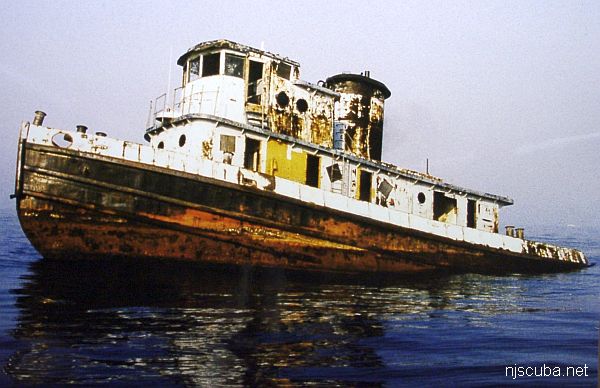
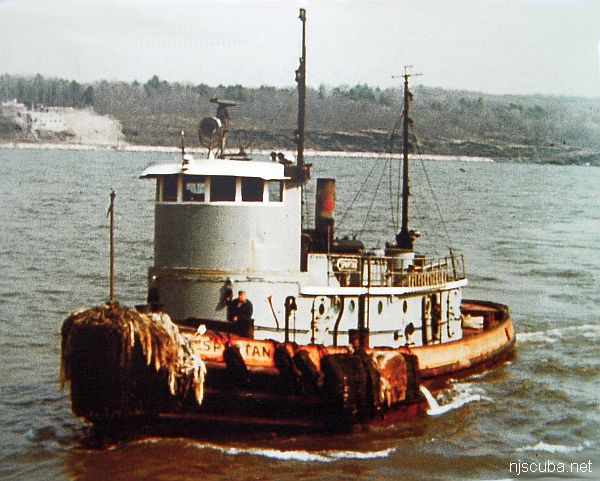
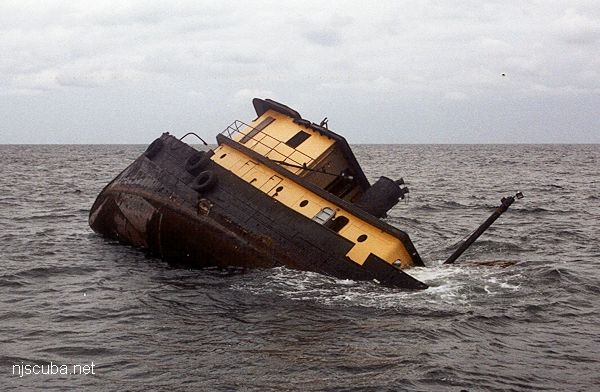
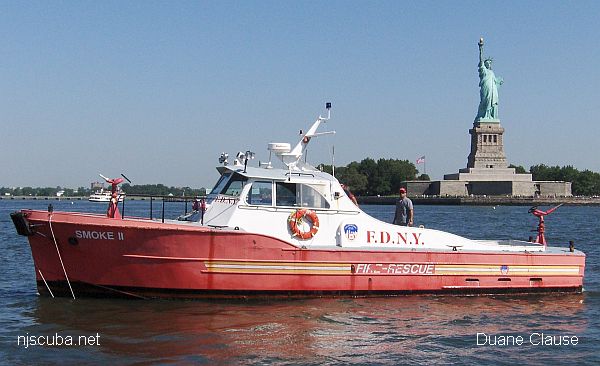
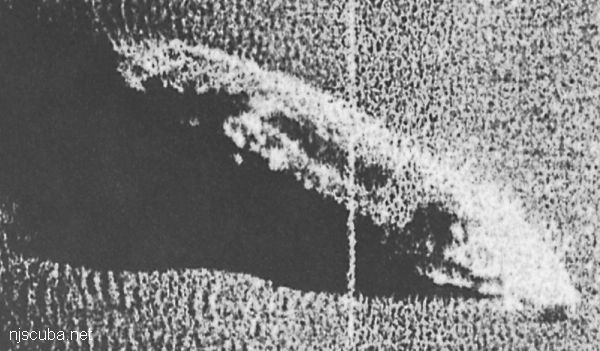
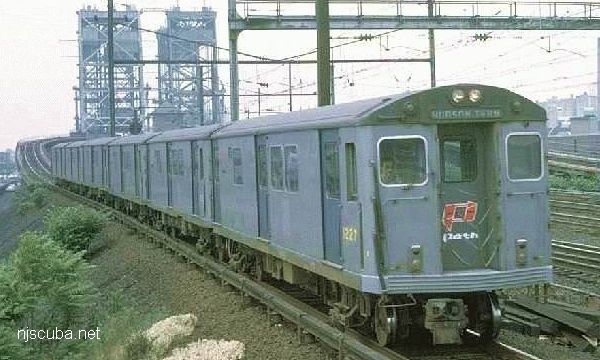
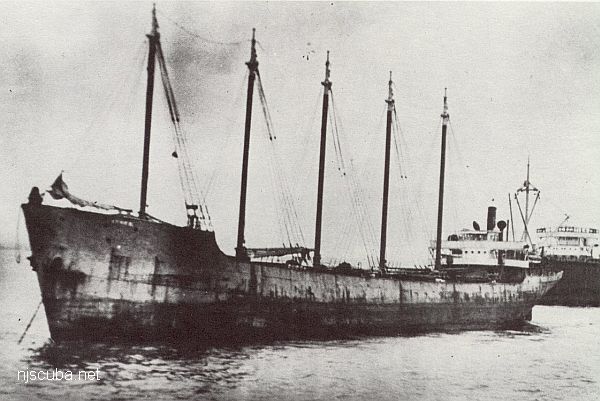
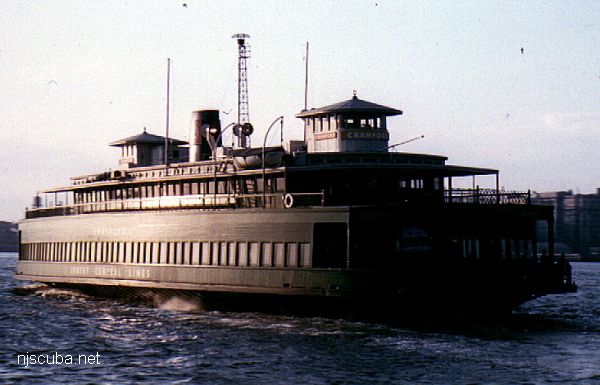
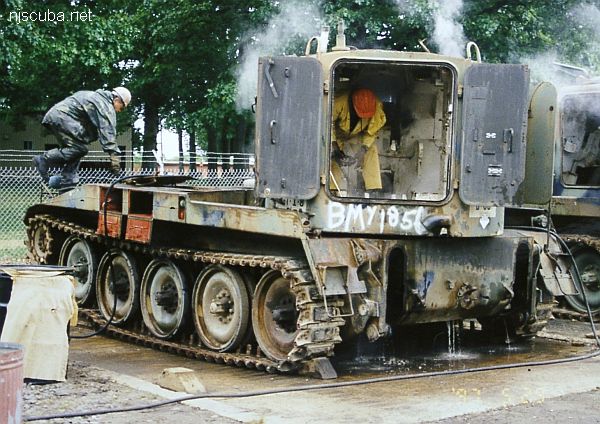
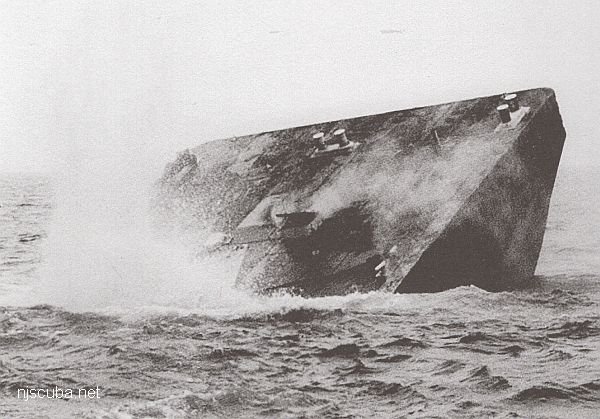
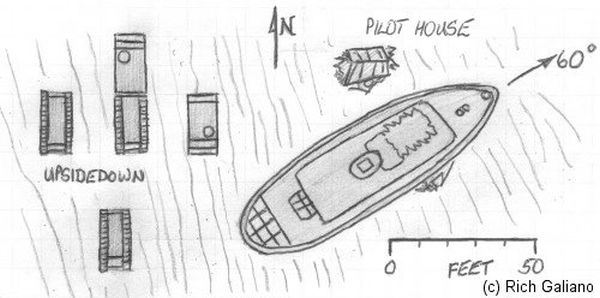
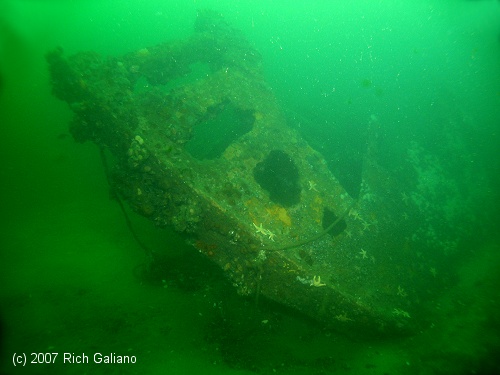
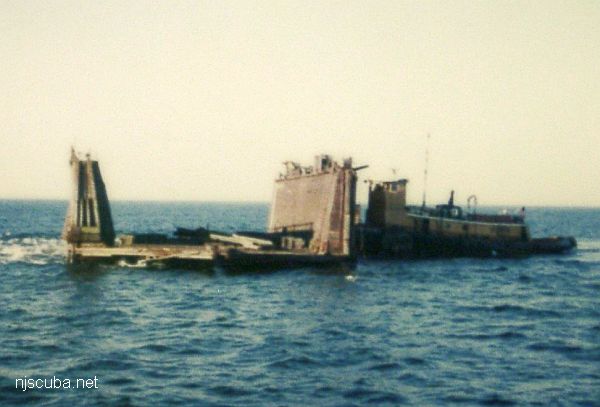
The Sea Girt reef is located atop an underwater ridge known as the "Klondike". This is an area of clean sandy bottom and usually has relatively good visibility. Fish life abounds on all sites in this reef, although lobstering is slim. There are many more Army tanks than shown here, as well as quite a bit of concrete rubble scattered throughout the reef. The Sea Girt Reef is one of the oldest artificial reef sites in New Jersey. Reef-building activities at this site date back to 1937. Minimum clearance at mean low water is 50 feet.
If you look at the state's official record, linked above, the four older sites that are outside the official reef boundaries are not listed.
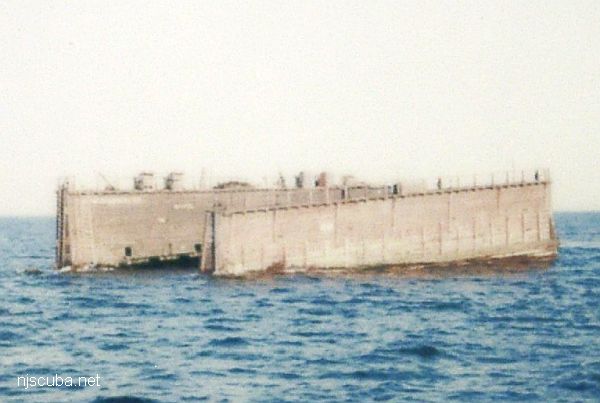
- Type:
- artificial reef, drydock barge
- Specs:
- ( 100 ft )
- Sunk:
- February 1979 - Sea Girt Artificial Reef
- Sponsor:
- Artificial Reef Committee
- Depth:
- 75 ft
- GPS:
- 40°07.759' -73°56.384'
More: drydock ...
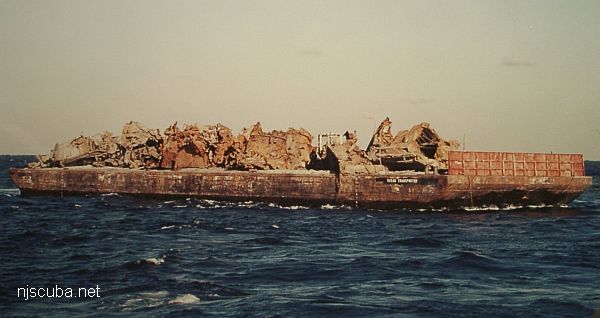
- Type:
- artificial reef, barges, tugboat
- Specs:
- ( huge junk pile )
- Sunk:
- Sunday December 23, 2012 - Sea Girt Artificial Reef
- GPS:
- 40°08.203' -73°55.779'
- Depth:
- 80 ft
More: Horseshoe Wrecks ...
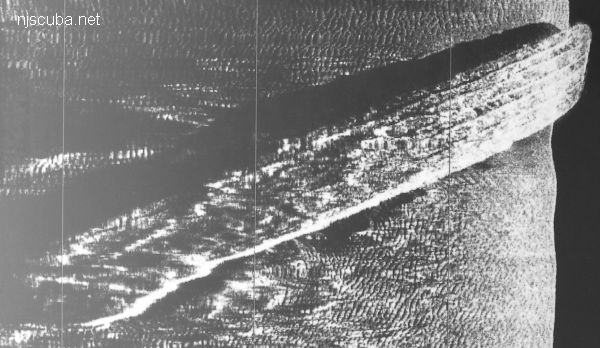
- Type:
- artificial reef, barge
- Specs:
- ( 200 ft )
- Sunk:
- 1977 - Sea Girt Artificial Reef
- Sponsor:
- Artificial Reef Committee, Weeks Marine Co.
- GPS:
- 40°06.986' -73°56.868'
- Depth:
- 70 ft
More: railroad barge ...
- Type:
- artificial reef, trawler
- Built:
- 1964, DESCO Marine, St. Augustine FL ?
- Specs:
- ( 70 ft )
- Sunk:
- Tuesday March 15, 1983 - Sea Girt Artificial Reef
- Sponsor:
- Artificial Reef Committee
- GPS:
- 40°06.777' -73°56.860'
More: Cinderella ...
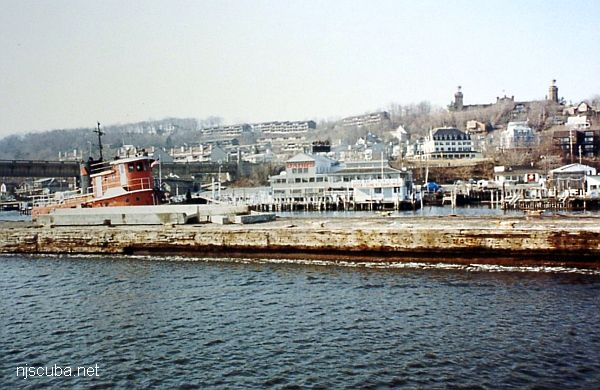
- Type:
- artificial reef, barge
- Specs:
- ( 270 x 39 ft )
- Sponsor:
- East Coast Tender Services
- Sunk:
- Wednesday February 10, 1988 - Sea Girt Artificial Reef
- GPS:
- 40°07.135' -73°56.919'
More: car float barge ...
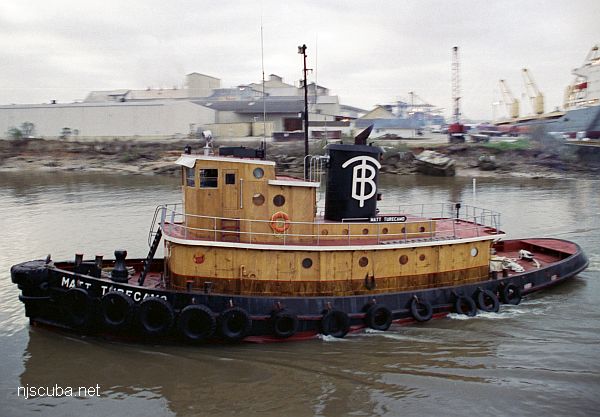
- Type:
- artificial reef, tugboat, U.S. Navy
- Built:
- 1943, Lawley & Sons, Neponset, MA as DPC-14, later Matt Turecamo
- Specs:
- ( 86 x 24 ft ) 146 GT, 9 crew
- Sponsor:
- Sean Maubray, FCO
- Sunk:
- Thursday October 17, 1996 - Sea Girt Artificial Reef
- GPS:
- 40°07.514' -73°56.465'
- Depth:
- 80 ft, main deck at 65 ft
More: Matt Turecamo DPC-14 ...