
Hail Mary II (1/3)
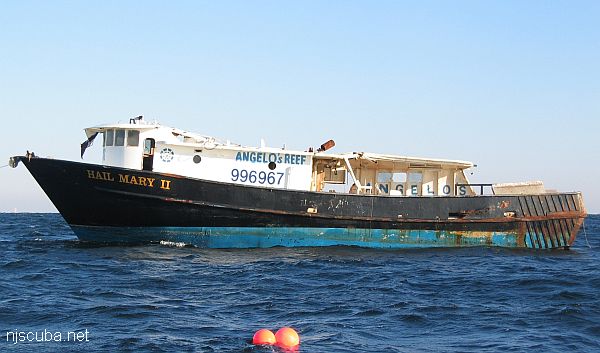
- Type:
- artificial reef, trawler
- Built:
- 1993, Duyen Van Tran, Gautier MS USA as St. Martin IV
- Specs:
- ( 63 ft ) 79 tons
- Sponsor:
- Greater Point Pleasant Charter Boat Association
- Sunk:
- Saturday November 4, 2006 - Axel Carlson Artificial Reef
- GPS:
- 40°02.641' -73°59.218'
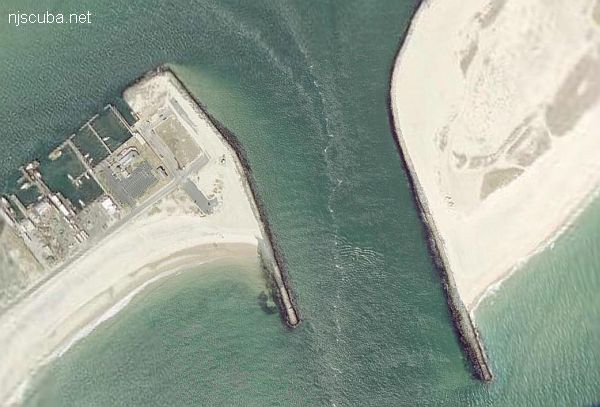
The Hail Mary II capsized about 30 yards from the Soleaus fishing dock in Shinnecock Bay, January 4, 2006. It is thought that rough seas in the inlet caused her 30,000 pound catch of squid to shift in the cargo hold, unbalancing her. As the vessel approached the docks at about 5AM, the captain retracted one of the heavy "bird" outriggers or booms, unknowingly increasing the unbalance to the point where the boom on the other side, still extended, caused the vessel to roll over.
All three of the crew were safely rescued, but the Hail Mary was swept out by the tide, by noon coming to rest just inside the tip of the west jetty. At this location, almost completely submerged, she was pounded against the rocks by the stormy sea. By the time a salvage could be mounted four days later, the vessel was too far gone to be repaired and was subsequently "reefed" in New Jersey since New York state's own reef program was snarled up in paperwork and permitting issues with the ACOE at the time.
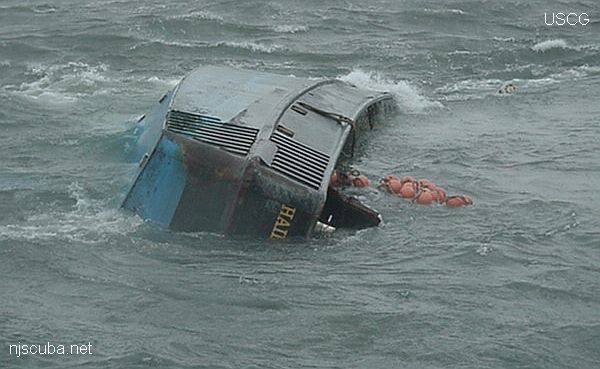


The salvage was handled by Gladsky Marine:
A commercial fishing vessel loaded with 30,000 pounds of squid sank in rough, winter weather as she approached the dock. The currents swept the vessel out of the bay, through the inlet, and into rough coastal waters by the time the Ovus arrived. These currents further complicated the job by making it hard on divers and adding strain to the tow. Two tugs towing in series were required to move the Ovus and the wreck. We hooked up the Hail Mary 2 and towed her into calmer waters, set her on the mud, and then re-rigged and fully raised her. Hundreds of residents watched the operation from the jetty.
https://gladskymarine.com
Questions or Inquiries?
Just want to say Hello? Sign the .