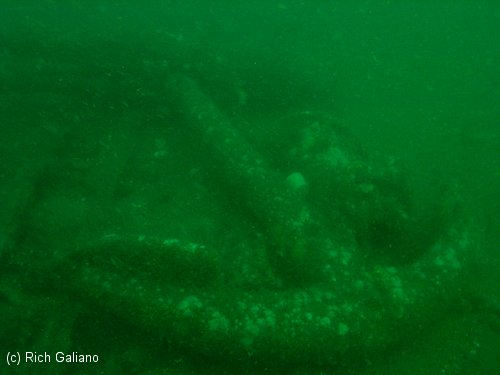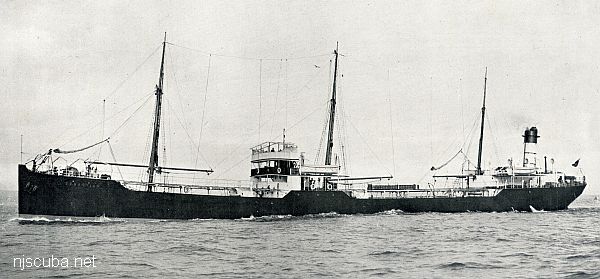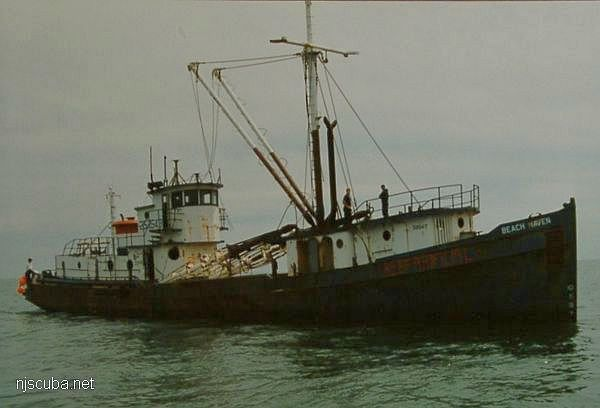
- Type:
- shipwreck, clam dredge, USA
- Built:
- 1949, RTC Shipbuilding, Camden NJ, USA
- Specs:
- ( 120 ft ) 177 GT
- Sunk:
- August 1990
- Depth:
- 65 ft
intact, upright, steel hull
More: Sea Girt ...
A ship is a large watercraft that travels the world's oceans and other sufficiently deep waterways, carrying goods or passengers, or in support of specialized missions, such as defense, research, and fishing. Ships are generally distinguished from boats, based on size, shape, load capacity, and tradition.
More: Gallery of Ships ...
intact, upright, steel hull
More: Sea Girt ...
A large wooden sailing ship, more intact than most. The hull is almost complete, 8-10 feet high, with a Navy-style stockless anchor in one side of the bow, and bowsprit lying in the sand below. The bowsprit indicates that this was a true sailing ship and not a schooner barge. I saw no sign of towing bits, bow, or stern. The stern is broken down.
More: Sea Hag ...
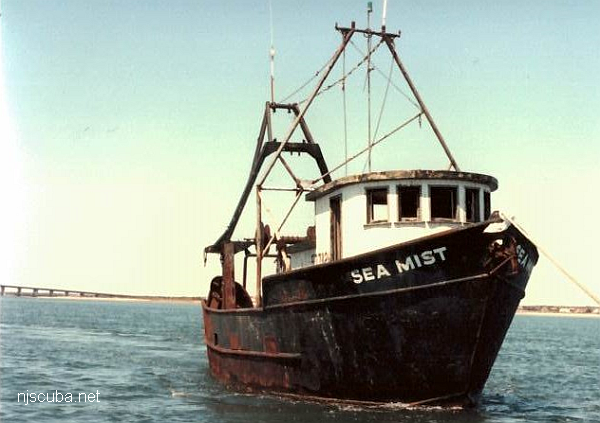
More: Sea Mist ...
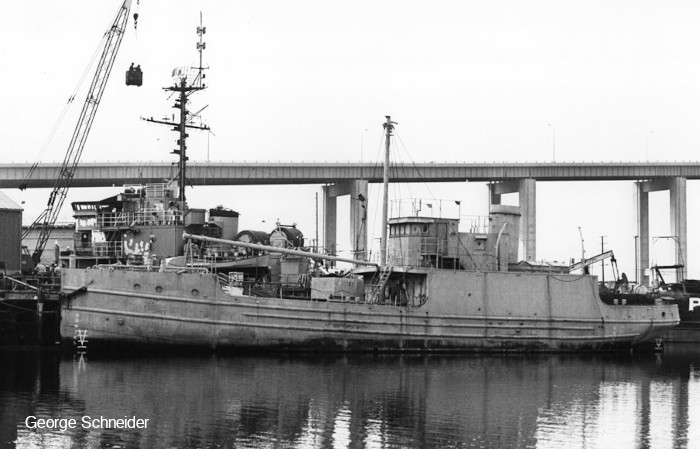
More: Sea Transporter YF-879 ...

A very large intact steel deck barge, lying upright, north-south. The southern end is partially collapsed and opened up, allowing easy access to at least part of the inside. Rust holes in the deck let light in throughout the rest of the interior, although they are too small to fit through. A great spearfishing site, and not bad for lobsters. The crane lies about 1/4 mile away.
More: Seaside Crane barge ...
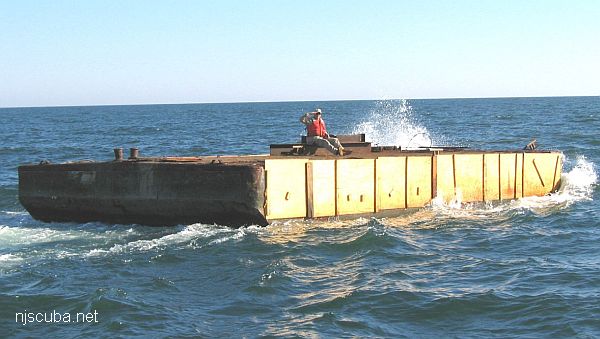
More: Shamrock ...
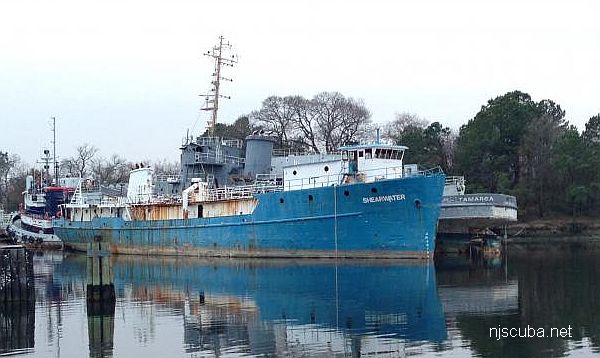
More: Shearwater FS-411 ...
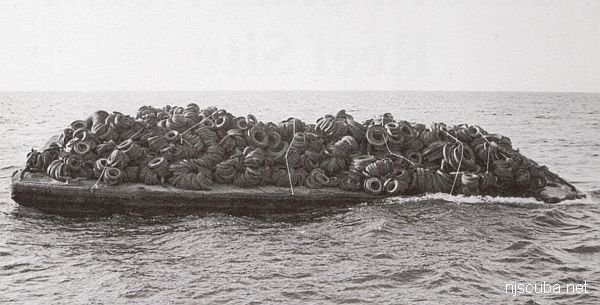
More: Shirley Ann ...

The United States Coast Guard has donated a number of vessels as artificial reefs over the years. They seem to be sensitive about having their vessels shown in a "bad" way, and typically paint out all the markings before turning them over.
More: Coast Guard Artificial Reefs ...