Ships (27/50)

A ship is a large watercraft that travels the world's oceans and other sufficiently deep waterways, carrying goods or passengers, or in support of specialized missions, such as defense, research, and fishing. Ships are generally distinguished from boats, based on size, shape, load capacity, and tradition.

 1  26 27 28  50  


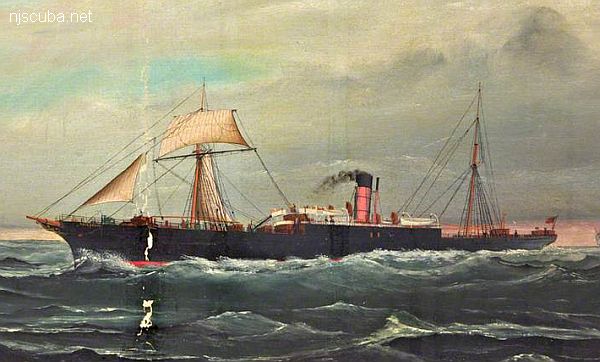
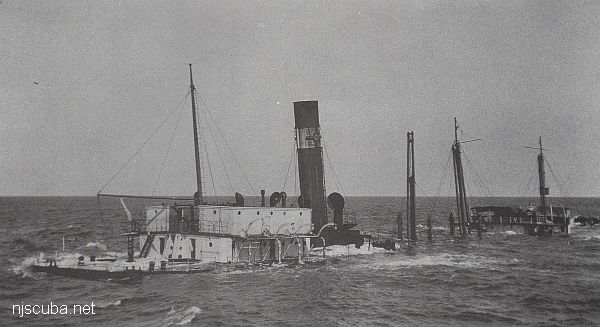
Shipwreck Macedonia
I found this old painting labeled "Macedonia" and "1894". This certainly could be the same ship. Another Macedonia enters the records in 1900, just a year after this one was lost.
Type:
shipwreck, steamer, Germany
( at time of loss chartered to Ward Lines, see Mohawk )
Name:
Macedonia is a region in the southern Balkans, adjoining Greece, and formerly part of Yugoslavia.
Built:
1894, England
Specs:
( 280 x 41 ft ) 2268 gross tons, 19 passengers & crew
Sunk:
Tuesday June 13, 1899
collision with liner Hamilton ( 3127 tons) - 1 casualty
GPS:
40°21.418' -73°56.153' (AWOIS 1991)
Depth:
60 ft


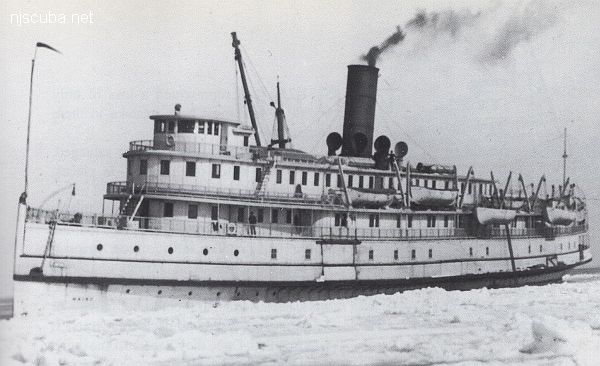
Shipwreck Maine
Type:
shipwreck, steamer, USA
Built:
1891, Harlan & Hollingsworth, Wilmington DE USA
Specs:
( 310 x 44 ft ) 1505 gross tons
Sunk:
Wednesday February 4, 1920
pushed onto rocks by pack ice - no casualties
Depth:
15 ft

low debris field


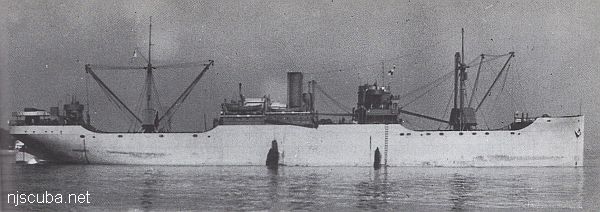
Shipwreck Malden
The Malden had seen better days.
Type:
shipwreck, freighter, USA
Built:
1907, Bethlehem Quincy, Quincy MA USA
Specs:
( 373 x 52 ft ) 5054 gross tons, 42 crew
Sunk:
Sunday September 19, 1921
collision with SS Jonancy - no casualties
Depth:
40 ft

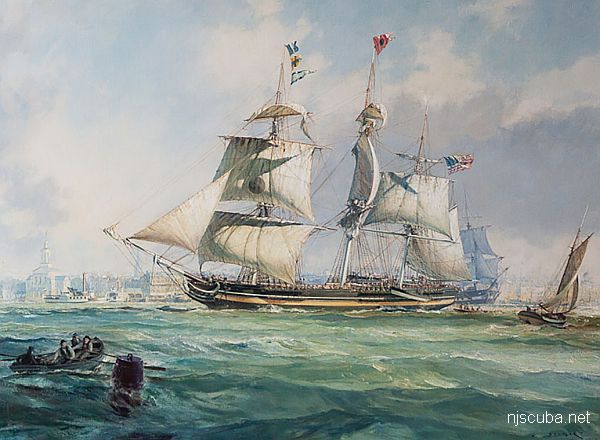
Shipwreck Manasquan Wreck
A Black Ball packet ship ( Orpheus ) leaving New York, 1835. Note the Black Ball insignia on the fore-topsail.
Type:
shipwreck, sailing ship, USA
Built:
1816, New York NY, USA
Specs:
382 tons
Sunk:
Saturday April 24, 1824
ran aground in a fog - no casualties
Depth:
30 ft


Type:
shipwreck, sailing ships
Sunk:
Sunday April 16, 1854
foundered in storm
Depth:
35 ft

The packet ship Manhattan sank with eight of her nine crew. In the same storm, the 200 ft schooner Powhattan was also lost nearby, with over 350 immigrants on board and no survivors. Neither wreck has been positively identified, although there are several candidates, including one old wooden hull buried up to the gunwales in the sand.


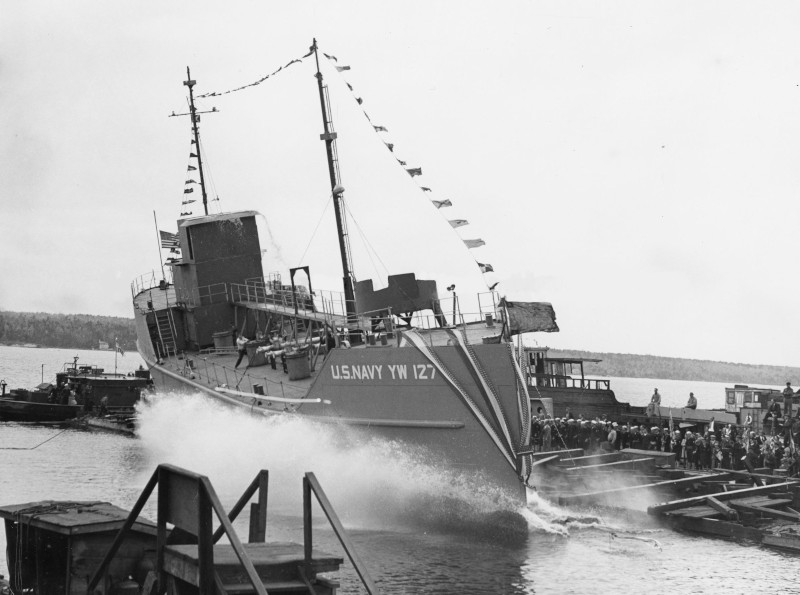
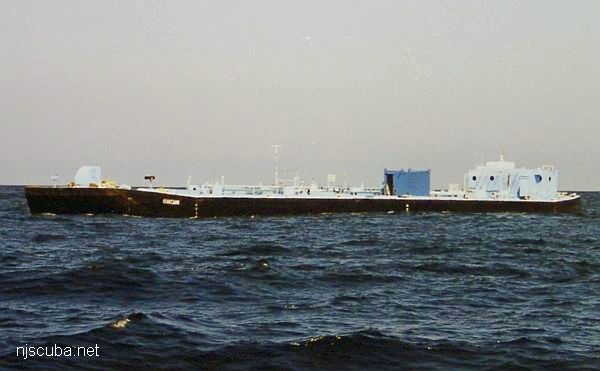
Mantank reef
Type:
artificial reef, barge
Built:
1950, Dravo Corporation, Wilmington, DE USA
Specs:
( 224 x 38 ft ) 997 GT
Sponsor:
BassBarn.com, Ann E Clark Foundation, PSE&G Habitat Restoration Fund
Sunk:
Thursday Sept 5, 2002 - Deepwater Artificial Reef
GPS:
39°58.688' -74°11.410'
Depth:
120 ft


drysuit

Serious New Jersey divers wear drysuits. A drysuit is a waterproof suit with built-in feet that seals around your neck and wrists ( some have built-in water-tight gloves and/or hoods as well, ) and a waterproof zipper to close it up. The idea is that although you are underwater, you don't get wet, but this is not entirely true. No seal is perfect, and certain actions will let small amounts of water leak in past the seals. However, most of the moisture that accumulates in a drysuit comes from its occupant, in the form of perspiration. If water can't get in, then it can't get out either. Perhaps these should be called dampsuits instead of drysuits.

Still, in cold water, a drysuit is much warmer than a wetsuit. This is because you maintain a constant layer of air between you and the cold, and air is an excellent insulator. While air is also the insulating factor in wetsuits, there is a difference. With either suit, the volume of air, and therefore the amount of insulation, compresses as you go deeper. With a wetsuit, there is nothing you can do about this, but with a drysuit, simply tap the inlet valve, and compressed air will flow from your tank into the suit, and puff it up again, keeping you warm. An added benefit is that by keeping the suit inflated to a constant volume, you maintain constant buoyancy, from the surface to the bottom, which can actually reduce the amount of lead you need to carry. Some divers even dispense with the BCD, considering that a drysuit can be thought of as a full-body BCD, but this is not recommended, and it is convenient to use the BCD as a quick trimming device and for surface flotation.