Steamer or Steamship

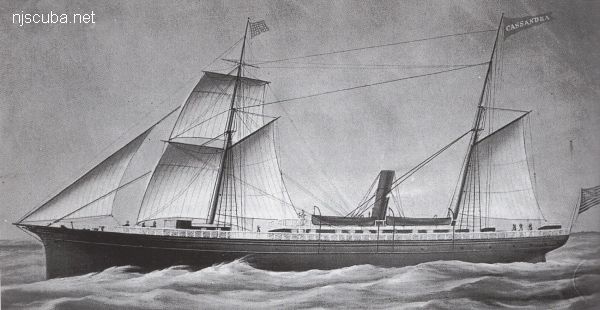
Steamer is an early term for any vessel power by a steam engine rather than sails.
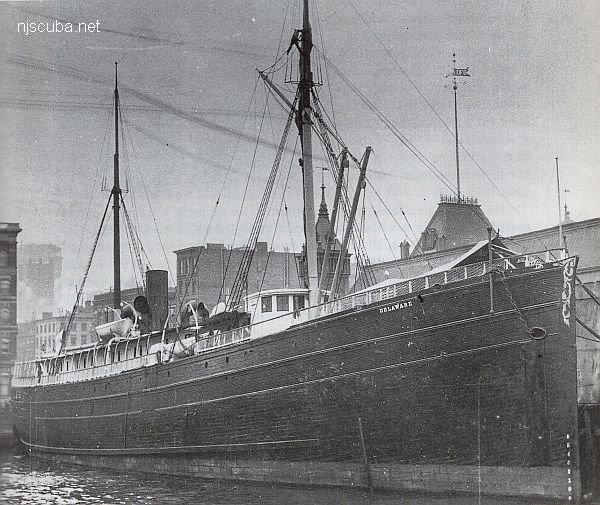
Shipwreck Delaware
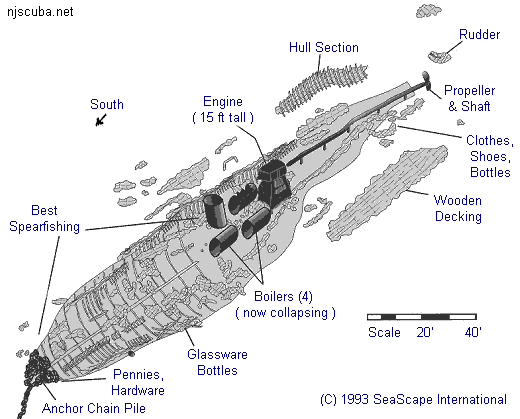
The Delaware, an 1880s screw steamer

Early steamers were propelled by large paddlewheels. "Side-wheelers", with the paddlewheels on each side, were more seaworthy, and therefore more common in ocean waters, while "stern-wheelers", with a single large paddlewheel at the back, were more common as riverboats. Later, these were replaced by more efficient screw (or propeller) vessels.
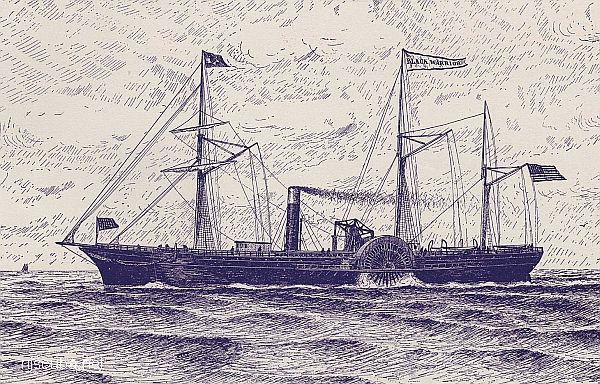
Shipwreck Black Warrior
The Black Warrior, an 1850s side-paddlewheel steamer. There are no stern-wheelers in the region that I know of.
Click
This sketch of the Delaware shows the remains that you can expect to find of such a vessel.

Of note is the universal pattern of:

< bow - boilers - engine - drive shaft - propeller - rudder/stern )

and the fact that the boilers are always in front of the engine. Identify any one of these features on the wreck, and you can orient yourself in even the murkiest conditions.
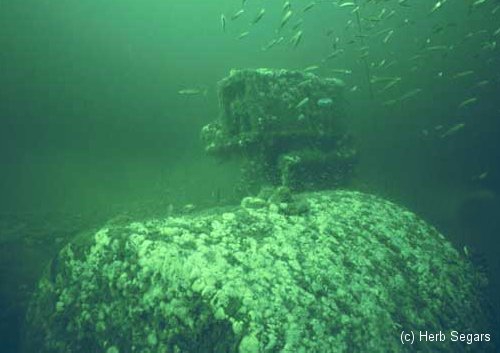
Shipwreck Delaware boiler
Boilers on the Delaware. In the foreground is an intact one. Next to that is a collapsed one; there are four altogether. In the background is the engine.
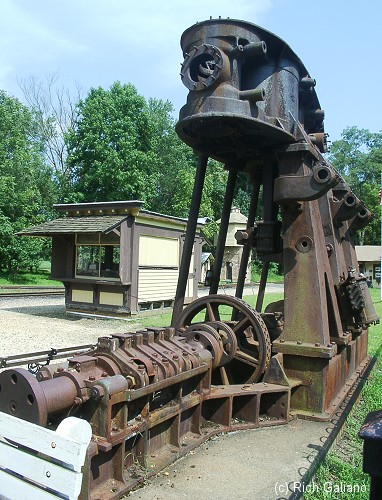
steam engine
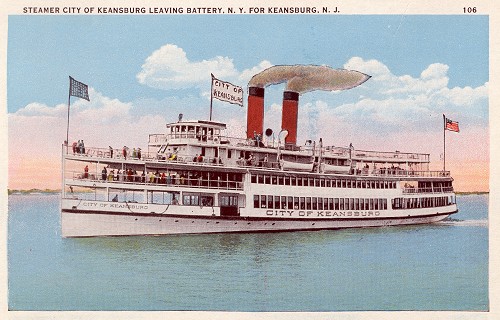
An old postcard of the City of Keansburg, the last of the New York commuter ferries, and one of the last steamships to ply local waters - until 1968.
steam engine
One of the Keansburg's two triple-expansion steam engines, at Allaire State Park.

Shipwreck Maine
Type:
shipwreck, steamer, USA
Built:
1891, Harlan & Hollingsworth, Wilmington DE USA
Specs:
( 310 x 44 ft ) 1505 gross tons
Sunk:
Wednesday February 4, 1920
pushed onto rocks by pack ice - no casualties
Depth:
15 ft

low debris field


Shipwreck Macedonia
I found this old painting labeled "Macedonia" and "1894". This certainly could be the same ship. Another Macedonia enters the records in 1900, just a year after this one was lost.
Type:
shipwreck, steamer, Germany
( at time of loss chartered to Ward Lines, see Mohawk )
Name:
Macedonia is a region in the southern Balkans, adjoining Greece, and formerly part of Yugoslavia.
Built:
1894, England
Specs:
( 280 x 41 ft ) 2268 gross tons, 19 passengers & crew
Sunk:
Tuesday June 13, 1899
collision with liner Hamilton ( 3127 tons) - 1 casualty
GPS:
40°21.418' -73°56.153' (AWOIS 1991)
Depth:
60 ft

Type:
shipwreck, iron-hulled screw steamer
Built:
1878, Scotland, as Clan Ranald
Specs:
( 305 x 34 ft ) 2008 gross tons
Sunk:
Tuesday June 4, 1901
foundered when cargo of asphalt melted and shifted - no casualties
Depth:
40 ft

An invertebrate is any multicellular animal lacking a backbone. This includes all animal phyla other than Chordata. The major invertebrate phyla include:

  • Sponges - Porifera
  • Coelenterates - Cnidaria
  • Ctenophores - Ctenophora
  • Echinoderms - Echinodermata
  • Flatworms - Platyhelminthes
  • Roundworms - Nematoda
  • Segmented worms - Annelida
  • Mollusks - Mollusca
  • Arthropods - Arthropoda

Invertebrates are tremendously diverse, ranging from microscopic wormlike mezozoans to huge animals such as the giant squid. Approximately 95% of all the earth's animal species are invertebrates; of these, the vast majority are insects and other arthropods. Invertebrates are important as parasites and are essential elements of all ecological communities.