
Atlantic
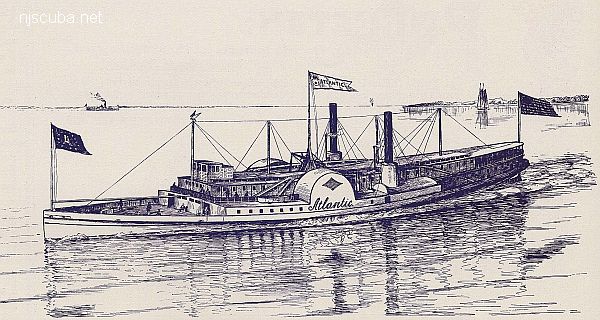
- Type:
- shipwreck, steamer, USA
- Built:
- May 1846, Jeremiah Simonson, New York NY USA
- Specs:
- ( 320 x 36 ft ) 1112 gross tons, 75 passengers & crew
- Sunk:
- Friday November 26, 1846
boiler explosion; then grounded during storm on Fisher's Island - 45 casualties - Depth:
- 20 ft
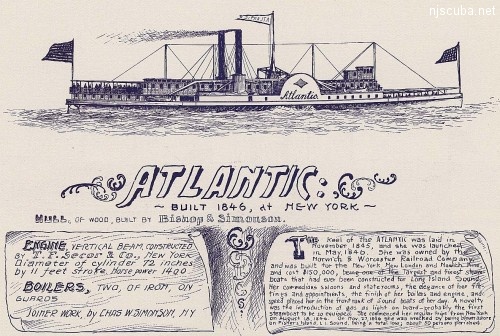
ATLANTIC:
~ Built 1846, At NEW YORK ~
HULL of wood, built by Bishop & Simonson
ENGINE, Vertical beam, constructed by T.F. Secor & Co., New York.
Diameter of cylinder 72 inches by 11 feet stroke. Horsepower 1400
BOILERS, Two, of iron, on guards
Joiner work, by Chas W. Simonson, NY
The keel of the Atlantic was laid in November 1845, and she was launched in May 1846. She was owned by the Norwich & Worcester Railroad Company, and was built for the New York, New London and Norwich line, and cost $150,000, being one of the largest and finest steamboats that had ever been constructed for Long Island Sound. Her commodious saloons and staterooms, the elegance of her fittings and appointments, the finish of her boilers and engine, and speed placed her in the front ranks of Sound boats of her day. A novelty was the introduction of gas as light onboard - probably the first steamboat to be so equipped. She commenced her regular trips from New York on August 18, 1846. On November 27, 1846, she was wrecked by being blown ashore on Fisher's Island, L.I. Sound, being a total loss; about 50 persons perished.
from American Steam Vessels, New York: Smith & Stanton, 1895
Atlantic
Questions or Inquiries?
Just want to say Hello? Sign the .