
Ships (22/50)
A ship is a large watercraft that travels the world's oceans and other sufficiently deep waterways, carrying goods or passengers, or in support of specialized missions, such as defense, research, and fishing. Ships are generally distinguished from boats, based on size, shape, load capacity, and tradition.
More: Gallery of Ships ...
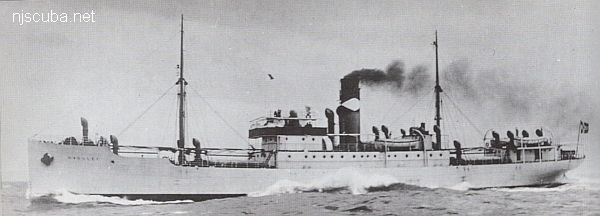
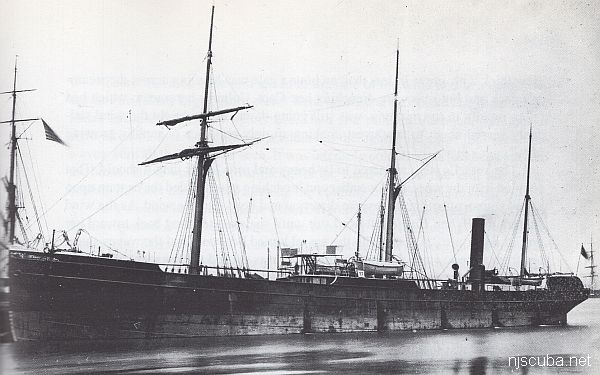
- Type:
- shipwreck, steamer, England
- Built:
- 1871, England
- Specs:
- ( 251 x 32 ft ) 1258 gross tons, 22 crew
- Sunk:
- Monday January 11, 1886
overloaded and foundered in storm - no casualties - Depth:
- 95 ft
More: Hylton Castle ...
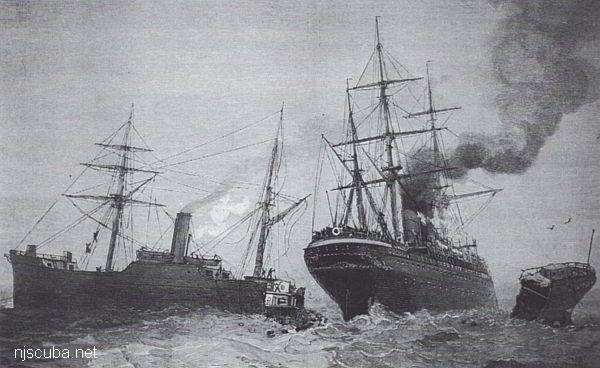
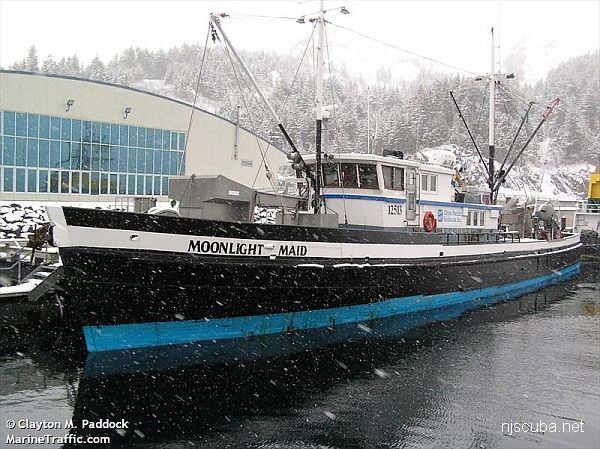
- Type:
- submarine chaser, later trawler, scallop boat, USA
- Built:
- 1943, Elizabeth City Shipyard, Elizabeth City NC USA
- Specs:
- ( 112 x 18 ft ) 99 gross tons
- Sunk:
- ???
- Depth:
- 90 ft
More: Ida K SC-1282 ...
- Type:
- shipwreck, barge
- Depth:
- 95 ft
This wreck seems to be one or more wooden barges, possibly garbage barges from the 1920s. There is an anchor in one spot near a machinery pile, and in other spots, the old walls rise perhaps 10 ft off the bottom. But otherwise, everything is pretty broken down. This forms many hiding holes for lobster and rock crabs, and there is one in almost every hole, and some quite large. The Sea Bass are also good-sized. Yellowish natural sponges and bottles are easy to find.
More: Immaculata ...
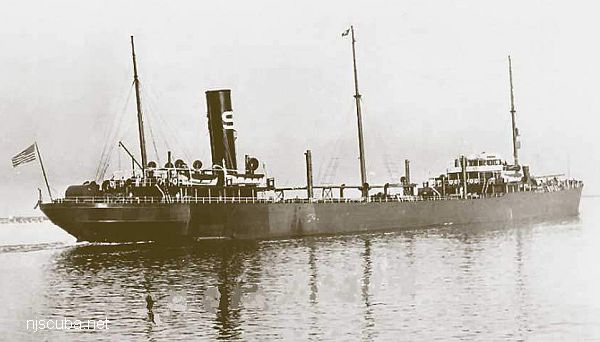
- Type:
- shipwreck, tanker, USA
- Built:
- 1921, Bethlehem Quincy, Quincy MA USA
- Specs:
- ( 468 x 62 ft ) 8327 gross tons, 38 crew
- Sunk:
- Wednesday February 4, 1942
torpedoed by U-103 - 12 survivors - Depth:
- 190 ft
More: India Arrow ...
- Type:
- schooner barge & tugboat ?
- Depth:
- 85 ft
This is a fascinating big wreck of a wooden schooner barge. The broken stern is upended, forming a hollow pyramid that is full of fish. The sides and keel extend north from there to the bow, from which extends a chain which reaches to another much smaller wreck, which is known as the "Inshore Tug."
More: Inshore Barge/Tug ...
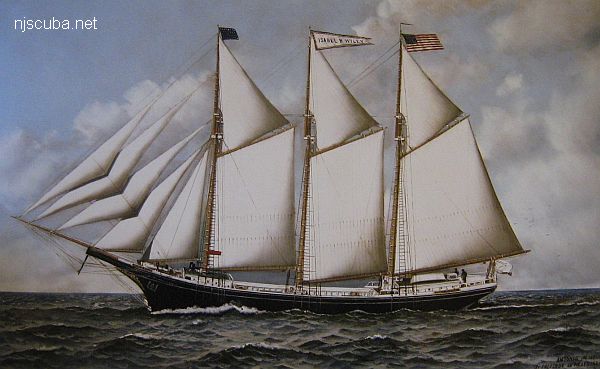
- Type:
- shipwreck, schooner, USA
- Built:
- 1901, Goss & Sawyer, Rockland Me USA
- Specs:
- ( 226 x 43 ft ) 1778 gross tons
- Sunk:
- Sunday June 2, 1918
bombed by U-151 - no casualties - Depth:
- 200 ft
More: Isabel B Wiley ...
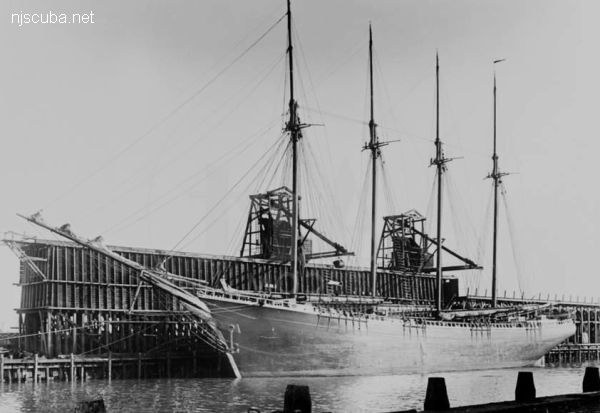
- Type:
- shipwreck, schooner, USA
- Built:
- 1901, Cobb Butler & Co, Rockland ME USA
- Specs:
- ( 226 x 43 ft ) 1778 gross tons
- Sunk:
- Sunday June 2, 1918
bombed by U-151 - no casualties - Depth:
- 200 ft
More: Jacob M Haskell ...
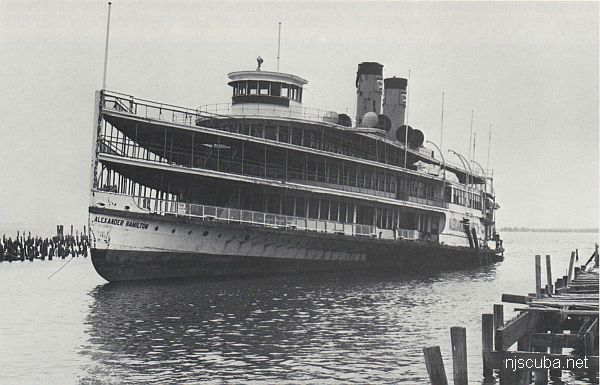
The Alexander Hamilton was the last of the steam-powered side-wheel riverboats of the Hudson River Day Line. Built in 1924, she ceased operations in 1971. A well-meaning group pulled the Hamilton from the mud in 1977 and moved her to a temporary berth along the east side of the Navy pier, planning to restore her as a museum. Unfortunately, at the new more-exposed location, the old vessel was sunk and reduced to scrap by a sudden storm in November of that year. The last records indicate that the wreck is still there, and you can even make out the outline on Google Earth.
More: Alexander Hamilton ...