
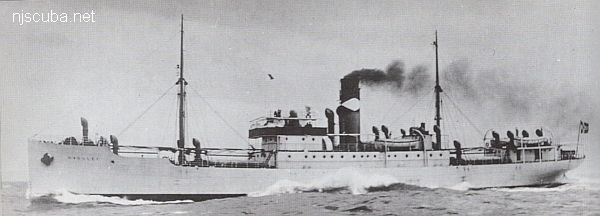
Hvoslef

Shipwreck Hvoslef
Type:
shipwreck, freighter, Norway
Built:
1927, England
Specs:
( 255 x 35 ft ) 1630 gross tons, 20 crew
Sunk:
Tuesday March 10, 1942
torpedoed by U-94 - 6 casualties
Depth:
140 ft

Today the Hvoslef sits in 140 ft of water on a sandy bottom. She is in one large piece but not intact. Her bow is the most recognizable feature. It sits upright with a starboard list. Her midsection is torn open and her large boilers are visible. She can be easily penetrated. There is some debris about, most noticeably large pipes. She has a fishing net draped over some sections, and her stern collapses into the sand. Artifacts are found occasionally.
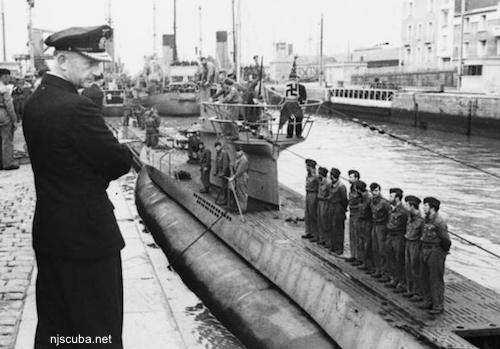
U-94
Type VIIc U-boat U-94 at St Nazaire with Adm. Karl Donitz, sunk August 1942

At 03:16 hours on 11 March 1942, the unescorted and unarmed Hvoslef (Master Arthur Dahl) was hit by two torpedoes from U-94 and sank within two minutes two miles east of Fenwick Island off Delaware Bay. The master, three Norwegian and two Swedish crew members were lost. The survivors kept themselves afloat in a damaged lifeboat until they landed on Rehobeth Beach near Cape Henlopen about a half-mile north of Fenwick Island Light after 14 hours. Three injured men were hospitalized in the Bebee Hospital in Lewis, while the other survivors were sent to New York the following day.

The body of the master was later found on a cork raft, which was located by an aircraft two days later.

Sagua la Grande, Cuba to Boston, Cargo Sugar
Chartered by the United Fruit Company since 5 Mar 1940

Comments on Hvoslef

Questions or Inquiries?

Just want to say Hello? Sign the .

Submit a Comment

Your email address will not be published. Required fields are marked *


Click image to replace if unable to read.

Enter the digits from the image above, except for the last one:

This site uses Akismet to reduce spam. Learn how your comment data is processed.


dive flag

All divers are required to show a flag when in the water. When boat diving, the boat will fly the flag for you, but when shore diving you must take care of this yourself. All dive shops sell flag/floats and lines. The simple fiberglass pole type is inexpensive and works fine; there is no need to buy anything extravagant - it will only get beat-up. If you plan to stay in one place, you can tether the flag to an extra weight on the bottom, or even just prop it up at the shore. If you plan to move around, then you should drag it behind you.

dive flag line

Use only polypropylene for a flag line, never nylon. Polypropylene floats, so when it goes slack it will float up away from you, instead of sinking down in coils around you, like nylon. The big yellow spools that dive shops sell work very well. Although they look clumsy, their size makes them easier to handle in the water. With experience, you will learn to gauge the amount of line necessary to keep the flag from being pulled under, without letting out a huge excess to get tangled up in. Add a brass snap to clip it off for hands-free use. Once you get used to it, dragging a flag is really no trouble at all.