
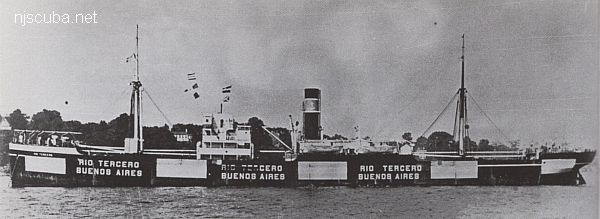
Rio Tercero

Shipwreck Rio Tercero
Type:
shipwreck, freighter, Argentina
Built:
1912, England, as Fortunstella
Specs:
( 405 x 54 ft ) 4864 gross tons
Sunk:
Monday June 22, 1942
torpedoed by U-202 - 5 casualties
Depth:
400 ft ?

Completed in December 1912 as British Eboe for Elder Dempster Lines Ltd, Liverpool. 1939 sold to Italy and renamed Fortunstella for Fratelli Rizzuto, Naples. In June 1940 interned at Necochea and on 25 Aug 1941 seized by Argentina and renamed Rio Tercero.
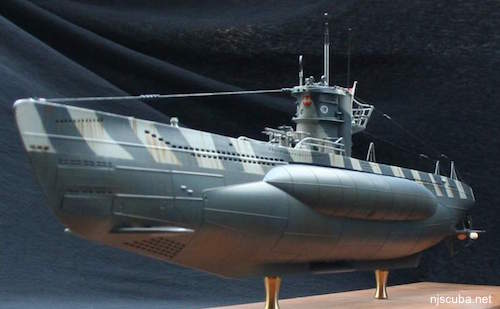
U-202
Type VIIc U-boat U-202 (model), sunk June 1943

At 12:34 hours on 22 June 1942, the un-escorted and neutral Rio Tercero was hit by one of three torpedoes from U-202 and sank slowly about 120 miles off New York. Linder reported that the ship displayed no neutrality markings and was recognized as Argentinian only after the attack when questioning the survivors.

3500 tons of general cargo, including coal and mail


Comments on Rio Tercero

Questions or Inquiries?

Just want to say Hello? Sign the .

Submit a Comment

Your email address will not be published. Required fields are marked *


Click image to replace if unable to read.

Enter the digits from the image above, except for the last one:

This site uses Akismet to reduce spam. Learn how your comment data is processed.


waves

Ocean waves are created by wind ( in unique instances, waves may also be created by earthquake, landslide, or other major disturbance, but that does not concern us here. ) The factors in the mechanics of wave creation are wind speed and duration, and fetch.

Fetch is the distance over which the wind acts on the water. The longer the fetch, the greater the wave-building action. Similarly, the greater the wind speed, the greater the wave-building action. Winds are named for the direction they blow from, not to. Therefore, a west wind blows out of the west, toward the east. Predicting wave heights based on wind conditions is even today extremely imprecise - the weather service still gets it wrong about half the time.