Goody Bags
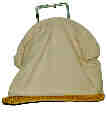
Goody bags come in several lengths and sizes, but three feet ( yellow mesh ) is by far the handiest and most popular size. Bigger bags are too much of an encumbrance, and if filled to capacity, say with mussels, become too heavy to safely carry underwater.
Goody bags come in a variety of materials. Open nylon mesh is the most common and drains instantly when you exit the water. It is also the best for dragging mussels behind the boat. Canvas is good for spearfishing, as it keeps the fish slime off you, yet still drains reasonably well. It can also have a calming effect on your prey, resulting in less thrashing about. Of course, with a canvas bag, it is more difficult to admire your catch during your hang at the end of the dive. Nylon cloth is used for small tool bags. It is the strongest of all, but drains very poorly. A large nylon bag full of water is a very heavy load to drag up a dive boat ladder.
The first thing to do with a goody bag is attach a brass snap to it with nylon line. The base of the snap should be attached to the frame of the bag, which is much stronger than the handle. It might be better to attach the brass snap to the bag material instead, to avoid the galvanic reaction of dissimilar metals in contact, which will cause the bag frame to rust faster.
A three-foot goody bag flowing out behind you can be a real tangle problem. The usual way of stowing it is to open it up and throw it inside of itself. Take a lobster gauge and tie it onto the bag frame outboard from the handle with a foot or so of wreck line. This way you can have it in or out of the bag and use it, but not lose it.
If your goody bag gets a fishy stink, rinse it out well, and hang it out in the sun for a few days.
DIR
Since you are not supposed to touch anything underwater, there is no need for a DIR goody bag. It would be an entanglement hazard anyway.