
Norness
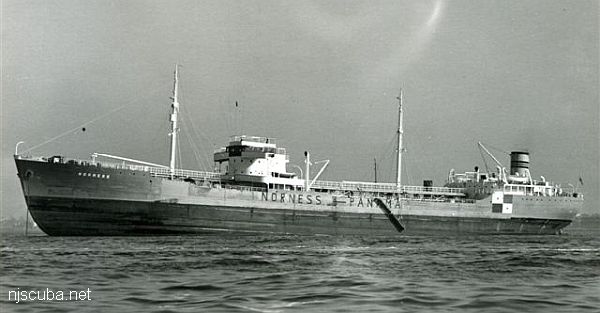
- Type:
- shipwreck, tanker, Panama
- Built:
- 1939, Germany
- Specs:
- ( 493 x 65 ft ) 9577 tons
- Sunk:
- Wednesday January 14, 1942
torpedoed and shelled by U-123 - the first loss of World War II in U.S. waters - Depth:
- 280 ft, min 210 ft
The Norness is generally ignored by divers, because of the proximity of the much more tempting Andrea Doria. The U-123 went on to sink the Coimbra the next day.
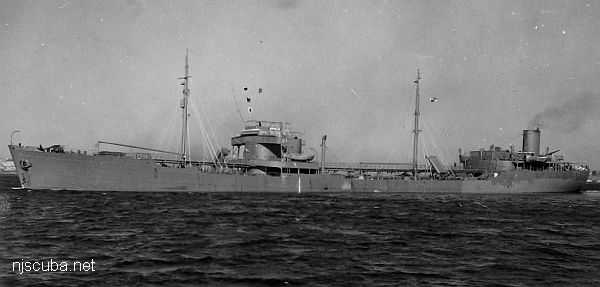
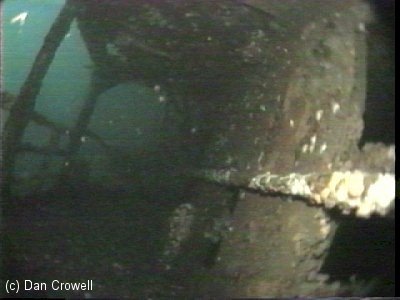
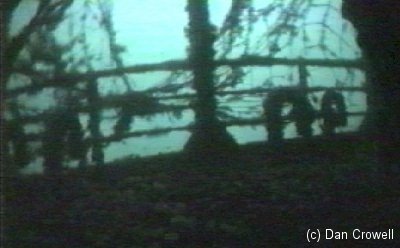
Courtesy of Dan Crowell
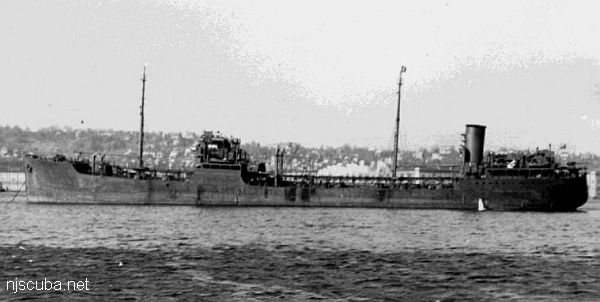
Completed in May 1939 for Hamburger Walfang-Kontor GmbH, Hamburg. 1939 sold to Norway, renamed Norness and registered in Panama.
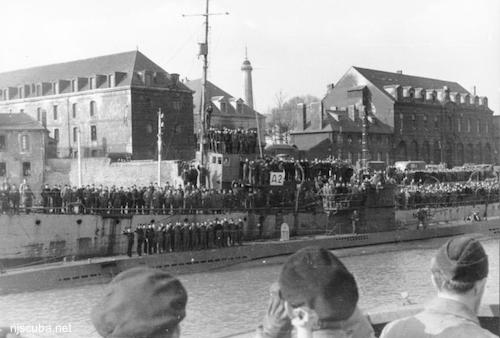
At 08:34 hours on 14 Jan 1942, the unescorted Norness was hit in the stern by one of two stern torpedoes from U-123 about 60 miles from Montauk Point, Long Island, and began listing to starboard. At 08:53 hours, a G7e was fired from a stern tube as coup de grace, hit the tanker underneath the bridge and the ship began settling on even keel, allowing the survivors to abandon ship in the starboard lifeboat and row away from the ship. The port lifeboat had capsized during the launch due to the heavy list and threw the occupants into the cold sea, drowning two Norwegian crew members. At 09:29 hours, the vessel was hit by a third torpedo in the engine room, after a second coup de grace had malfunctioned at 09:10 hours. Four minutes later the tanker sank by the stern in shallow waters, the bow remaining visible over the surface.
30 survivors were spotted in the afternoon by a blimp of the US Navy, which directed USS Ellyson (DD 454) and USCGC Argo (WPC 100) to them, while nine men were picked up by the American fishing boat Malvina. All survivors were landed at Newport, Rhode Island.
New York - Halifax - Liverpool
Cargo 12.222 tons of Admiralty fuel oil
Screening Level Risk Assessment Package
Deep Sea Dive Sites, Dive Sites, Tankers, World War II,
Deep Sea Chart (pan right for more)
- Four Daughters
- USS Akron
- Andrea Doria
- Atlantic Princess
- Azua
- USS Baldwin
- Bidevind
- Brian C
- Carolina
- Catamount
- Cayru
- Champion
- USS Cherokee
- Coimbra
- Corvallis
- Deepwater Dump
- Durley Chine
- Edward H Cole
- Galimore's Cayru
- Lady Gertrude
- Herbert Parker
- Thomas Hebert
- Hvoslef
- Isabel B Wiley
- India Arrow
- USS Jacob Jones
- Jacob M Haskell
- Lady Mary
- Lillian
- Maiden Creek
- Miraflores
- Misty Blue
- Montgomery
- USS Moonstone
- USS Murphy
- Northern Pacific
- Norness
- Pan Pennsylvania
- Republic
- Rio Tercero
- RP Resor
- Southern Lillian
- USS S-5
- USS Salmon
- SC-209
- Sebastian
- Shookus
- Sommerstad
- USS Spikefish
- Suffolk
- Texas Tower
- Texel
- U-550
- U-869
- Varanger
- Wily Fox
- Winneconne
More: Deep Sea Dive Sites ...

knife, the most tangible clue to the
identity of New Jersey's mystery U-boat.
In 1991, while checking out an obscure site known for hanging up fishing lines, I dropped down the anchor line only to find a virgin German U-boat. A wreck diver's fantasy of discovering a new shipwreck somehow had become a reality, and it was every bit as good as could be imagined. While reveling in the experience, I wondered if I would have enough skill and luck to ever make it happen again. Several discoveries later, the challenge is still irresistible.
More: Searching For Shipwrecks ...

- Type:
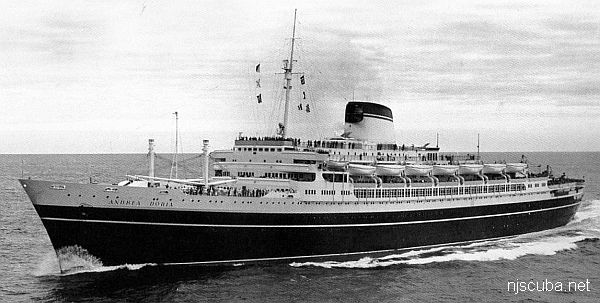
- shipwreck, liner, Italy
- Name:
- A 16th century Genoese Admiral. This name had been previously carried by a number of Italian warships ( see page bottom )
- Built:
- 1951, Italy
- Specs:
- ( 700 x 90 ft ) 29083 displacement tons, 1706 passengers & crew
- Sunk:
- Thursday July 26, 1956
collision with freighter Stockholm ( 12000 tons) - 46 casualties - GPS:
- 40°29.405' -69°52.028' (AWOIS)
- Depth:
- 240 ft ( 190 ft minimum )
More: Andrea Doria ...
Brian:
August 30, 2024 at 11:39 AM
The U-123 had quite a career with sending ships to the bottom. Thanks for all of the great pictures