
Sea Transporter YF-879
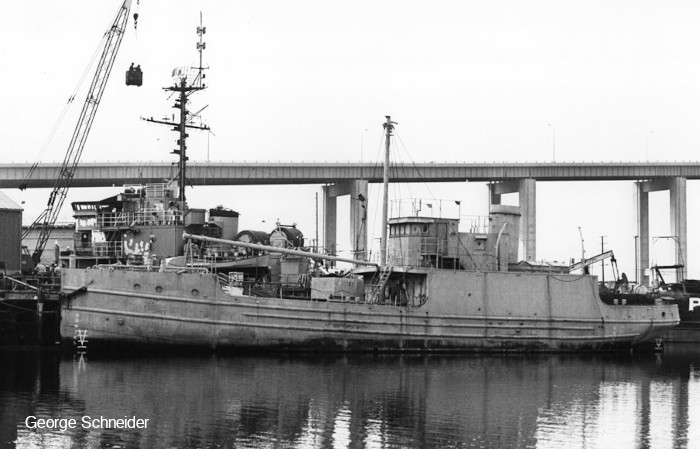
- Type:
- artificial reef, trawler, USA
- Specs:
- ( 133 x 30 ft )
- Built:
- 1945, American Bridge, Ambridge PA, as YF-879
- Sponsor:
- Cape May County Party & Charter Boat Association, Atlantic Cape Fisheries, Artificial Reef Association
- Sunk:
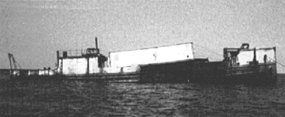
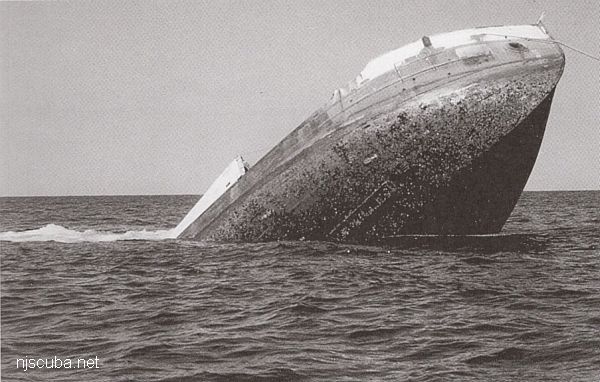
- Friday August 21, 1992 - Cape May Artificial Reef
- GPS:
- 38°53.118' -74°40.190'
- Depth:
- 70 ft
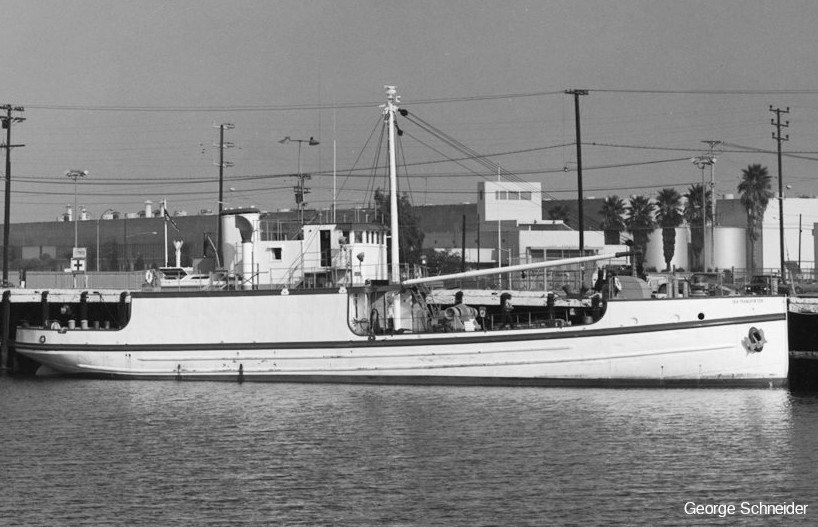
YF-879 was sold by the Navy in 1974 and became marine survey ship Sea Transporter. By 1977 the vessel had been moved from southern California to Port Arthur Texas for a government study in the Gulf of Mexico, which was published in 1979. For the survey, Sea Transporter was equipped with side-scan sonar and underwater video cameras. Later the vessel was converted to commercial fishing, and finished its days in New Jersey. Exactly how it was modified for fishing is unclear, although it appears a deckhouse was added over the cargo hold.
YF-852 class covered lighter (self-propelled)
- Displacement: 300 t.(lt) 650 t.(fl)
- Length: 133'
- Beam: 30'
- Draft: 9'
- Speed: 10 kts
- Armament: none
- Complement: one officer, ten enlisted
- Propulsion: 2x 500hp diesel, twin screws
A large number of these small freighters were built during World War II, with slight variations to the design.
568087
Questions or Inquiries?
Just want to say Hello? Sign the .