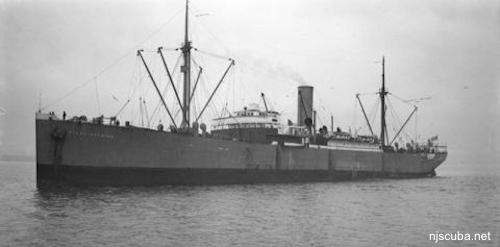
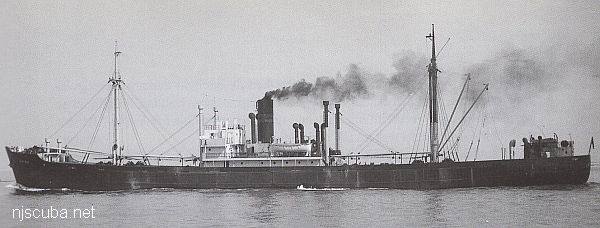
Astra

Shipwreck Astra
Type:
shipwreck, freighter, Denmark
Name:
Astra is Latin for star.
Built:
1945, Denmark, as Gudnaes
Specs:
( 333 x 51 ft ) 2709 gross tons, 105 passengers & crew
Sunk:
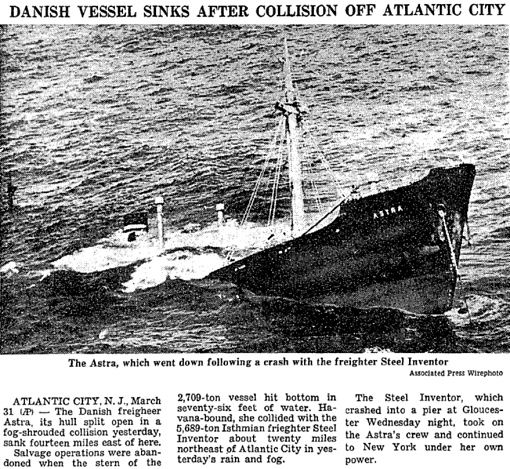
Friday March 30, 1951
collision with freighter Steel Inventor ( 5689 tons) - 5 casualties
Depth:
85 ft

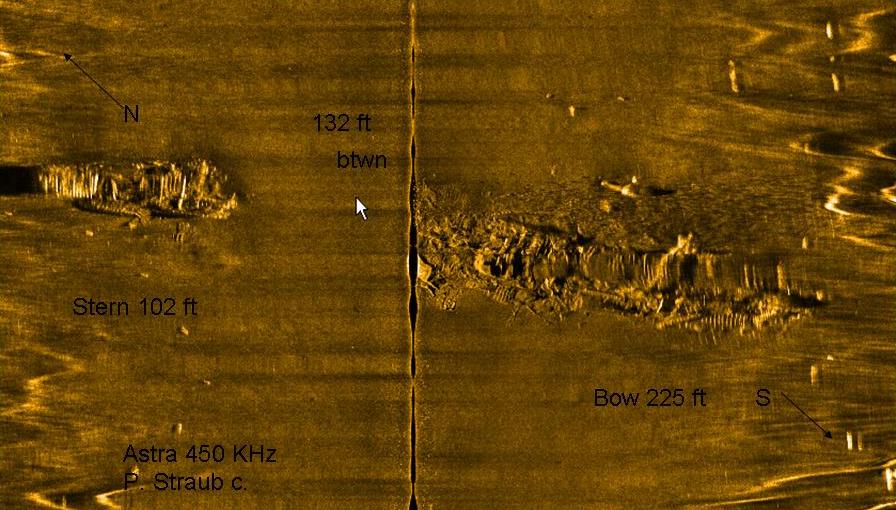
Today the Astra sits in 85 ft of water on a sandy bottom. Her stern is intact and lists to port. The rest of the ship sits upright, her midsection collapsed. She can be easily penetrated and is a great photography wreck. The stern has the greatest relief, coming 25 ft or so off the sand. Parts of automobiles are spread around the wreckage.
Shipwreck Astra
Side-scan courtesy of Stockton University
Shipwreck Astra New York Times
shipwreck Astra Coast Guard Report
Steel Inventor
Steel Inventor - scrapped in Japan 1954


Comments on Astra

Questions or Inquiries?

Just want to say Hello? Sign the .

Submit a Comment

Your email address will not be published. Required fields are marked *


Click image to replace if unable to read.

Enter the digits from the image above, except for the last one:

This site uses Akismet to reduce spam. Learn how your comment data is processed.


scallop dredge
Scallop

Scallop dredging is similar to clam dredging in that large metal rakes are dragged across the bottom. However, that is where the resemblance ends. Since scallops live on the surface, unlike buried clams, they can be harvested with much lighter-weight gear. A scallop rake is typically much smaller than a clam rake, consisting of a triangular frame with a chain-link catch-bag. No hydraulics are necessary. Such gear does not require as much towing power as for clamming. Since scallops are cleaned at sea as they are caught, and all the heavy shells discarded, there is also much less on-board storage requirement. Scallop boats can therefore be smaller than clam boats, and some are quite small indeed. In fact, the entire business model seems to be different, and it appears that a few small privately-owned operations persist to this day, in contrast to clamming, which is now dominated by a few corporate fleets.