
Atlantus
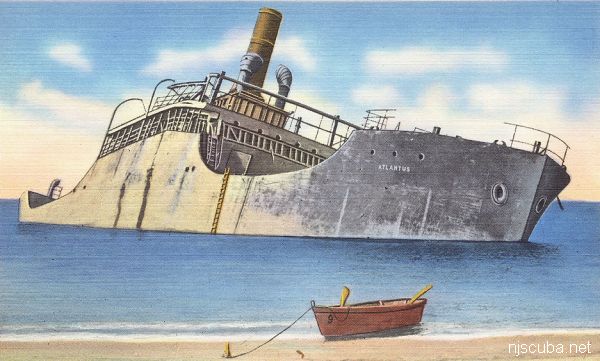
- Type:
- shipwreck, freighter, USA
- Built:
- 1918, Liberty Shipbuilding, Brunswick GA USA
- Specs:
- ( 260 x 43 ft ) 2000 gross tons, no crew
- Sunk:
- Tuesday June 8, 1926
dragged anchor and grounded in storm while awaiting final disposition - Depth:
- 25 ft
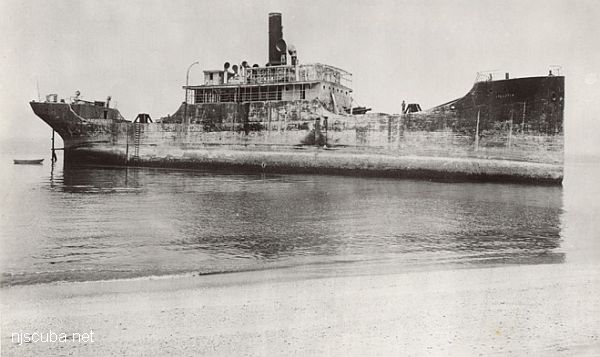
Atlantus was one of a class of experimental concrete ships built during World War I. The hull was constructed of reinforced concrete rather than steel, which had become scarce during the war. While this design offered a number of advantages, including lower noise and vibration, and a dryer cargo space, it was not economically competitive with steel hulls when peacetime resumed.
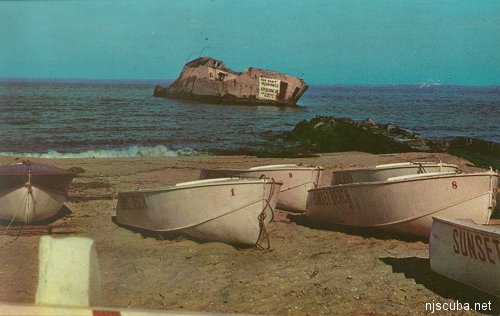
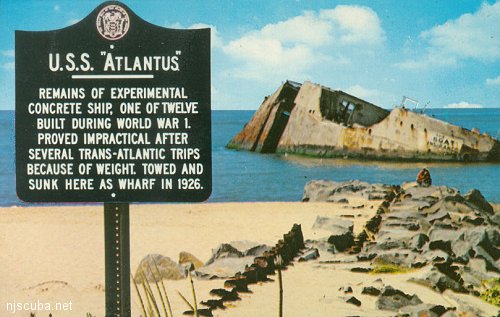
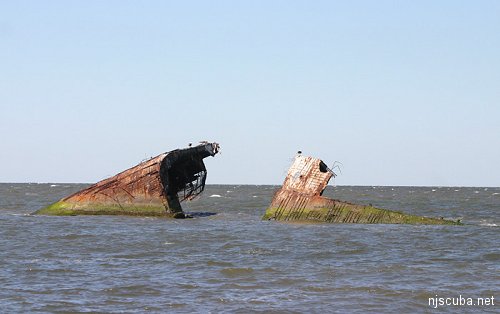
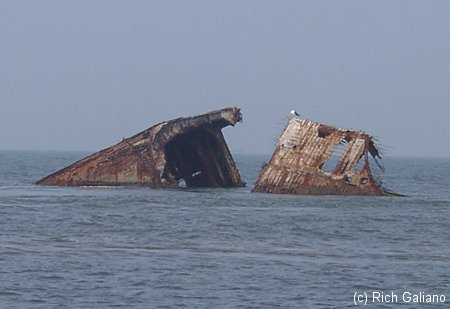
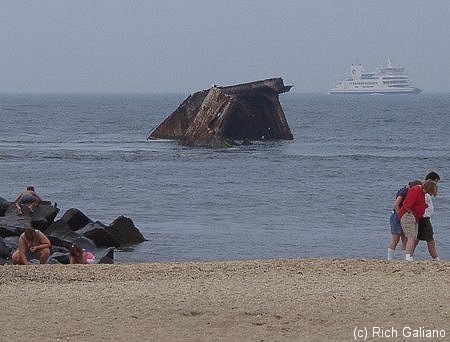
The Cape May - Lewes Ferry is crossing in the distance, while people on the beach look for "Cape May diamonds" - pretty quartz stones found on the beach. I wouldn't dive this spot, but it's a nice place to stop for lunch. The Cape May lighthouse and the ferry terminal are a short drive away.
Atlantus
Cape May Dive Sites, Dive Sites, Freighters, New Jersey Dive Sites,
Cape May Chart
- Absecon Inlet
- USS Akron
- Alex Gibson
- Alexander
- Almirante
- American
- Astra
- Atlantus
- Azua
- Dorothy B Barrett
- Brigantine Beach Wreck
- USS Blenny
- boiler wreck
- Bonito
- Brian C
- Brigantine Inlet
- Brigantine Buoy Wreck
- Charles Morand
- Cape May Inlet
- Cassandra
- Cayru
- Champion
- USS Cherokee
- China Wreck
- City of Athens
- City of Georgetown
- Cleopatra
- Clermont
- Corson’s Inlet
- Crystal Wave
- William B Diggs
- dredge
- Admiral DuPont
- Elizabeth Palmer
- Elizabeth Warren
- Evening Star
- car float
- Florida
- Galimore's Cayru
- Gory Wreck
- Great Egg Inlet
- Gypsum Prince
- Hereford Inlet
- Hornet
- Hvoslef
- Independence Day
- India Arrow
- Indian River Inlet
- USS Jacob Jones
- John Marvin
- China Junk Wreck
- Kennebec
- King Cobra
- Lemuel Burrows
- Lake Frampton
- Lady Mary
- Linda Snow II
- Manhattan
- Marine Electric
- Miraflores
- Misty Blue
- Mohawk
- Montgomery
- USS Moonstone
- EF Moran
- Northern Pacific
- New Orleans
- USS Nina
- Nuphar
- Ocean Quest
- Oklahoma
- Patrice McAllister
- Pet Wreck
- Poseidon
- Ranald
- RJ Walker
- Southern Lillian
- USS S-5
- Salem
- Salem
- San Jose
- Sea Girt
- Sea Wolf
- Shookus
- Sindia
- Slabs
- General Slocum
- Southern Sword
- Townsend's Inlet
- Varanger
- Washingtonian
- Wayne
- Wily Fox
- YP-387
More: Cape May Dive Sites Chart ...
Questions or Inquiries?
Just want to say Hello? Sign the .