
Poseidon
- Type:
- shipwreck, iron-hulled screw freighter, USA
- Built:
- 1914, Scotland
- Specs:
- ( 295 x 43 ft ) 1909 tons
- Sunk:
- Wednesday July 31, 1918
collision with freighter SS Somerset - Depth:
- 90 ft
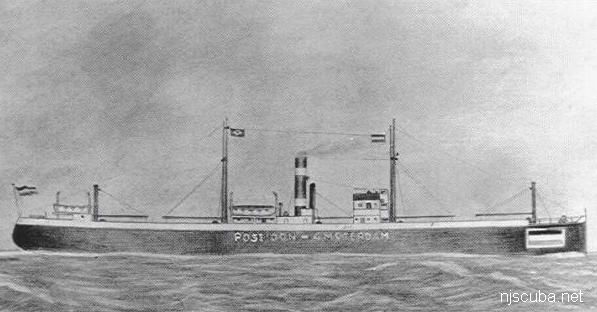
This steamer of 1,909 tons was built in 1914 by Dunlop-Bremner & Co, Port Glasgow, for N. V. Koninklijke Nederlandsche Stmbt Maats in Amsterdam. The Poseidon was powered by a steam, triple expansion engine, single screw giving 10.5 knots. In 1918 she was requisitioned by the US Government. On the 31st July 1918, she sank after a collision with the SS Somerset five miles NNE of Five Fathom Bank Lightship, on passage from Boston to Norfolk, Virginia.
This wreck is also known as the "Little Oiler" and has also been nicknamed the "Steel Wreck". A good lobster wreck in 90 feet of water makes her an interesting and fun dive. Most everything found so far on the wreck has been steel, including portholes, which indicates she may have been salvaged after sinking. The highest section is the boilers, although much of the wreck is buried. The rudder and the blades of the steel propeller stick up off the muddy bottom.
Questions or Inquiries?
Just want to say Hello? Sign the .