Miss Beth

Miss Beth reef
Type:
artificial reef, trawler, USA
Built:
1974, Andy International, Brownsville TX, USA as Southport II
Specs:
( 80 x 20 ft ) 146 gross tons
Sunk:
Tuesday January 29, 2008 - Cape May Artificial Reef
GPS:
38°53.237' -74°40.545'
Miss Beth reef
Miss Beth reef

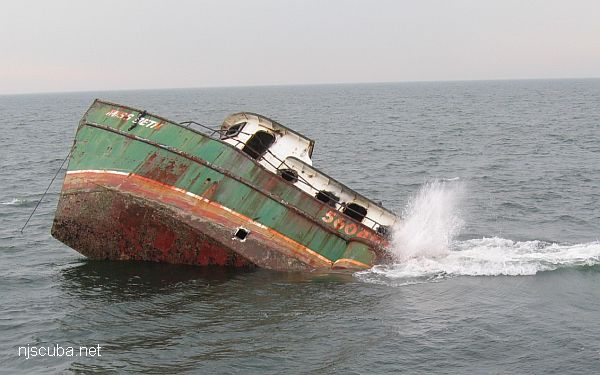
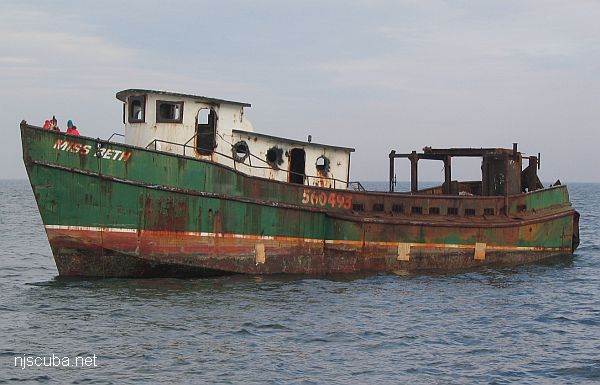
You can tell a lot about the method of sinking from these pictures. In the first one, three rectangular tan patches are weakly welded over three holes that were cut in the hull above the waterline. There are three matching ones on the other side. They are located to open up any compartments inside the hull, which have likewise been holed.

In the second picture, you can see the patches have been knocked out with a sledgehammer. Then a seacock is opened to start the flooding process. This is very slow, by itself, a seacock would take hours to sink the vessel. Hours and hours and hours. But with the big open holes in the hull, as soon as the first one touches the waterline, the process speeds up considerably.

560493

Comments on Miss Beth

Questions or Inquiries?

Just want to say Hello? Sign the .

Submit a Comment

Your email address will not be published. Required fields are marked *


Click image to replace if unable to read.

Enter the digits from the image above, except for the last one:

This site uses Akismet to reduce spam. Learn how your comment data is processed.


Harbor Seal

Phoca vitulina

by Larry Sarner

Wild seals conjure up images of northern or even Arctic climates. But few people know that more than a hundred harbor seals call New Jersey home during the winter months, coming ashore into isolated estuaries and even upstream into a few rivers.

New Jersey is near the southern limits of the range for harbor seals on the East Coast. However, these seals are frequent visitors offshore in winter and even have been reported as far south as the mouth of the Chesapeake Bay in Virginia and off the coast of North Carolina. The winter seal-sighting season runs from December through March. Seals generally leave the New Jersey coast by the second week in April, probably responding to rising air and water temperatures and the increase in human activity.