
Spartan (1/2)
- Type:
- artificial reef, tugboat, USA
- Built:
- 1957, Calumet Shipyard & Drydock, Chicago IL USA
- Specs:
- ( 85 x 23 ft )
- Sponsor:
- Spentonbush Red Star Company
- Sunk:
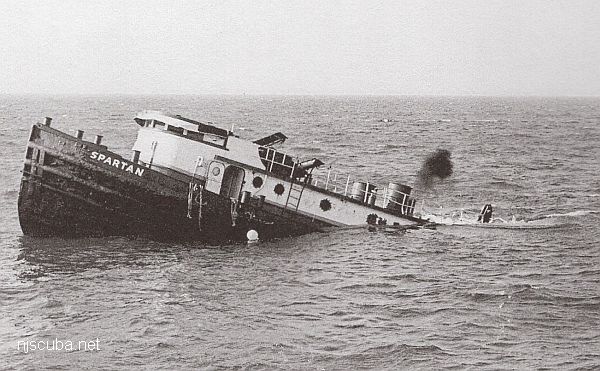
- Friday January 31, 1986 - Sea Girt Artificial Reef
- GPS:
- 40°06.158' -73°57.198'
- Depth:
- 70 ft

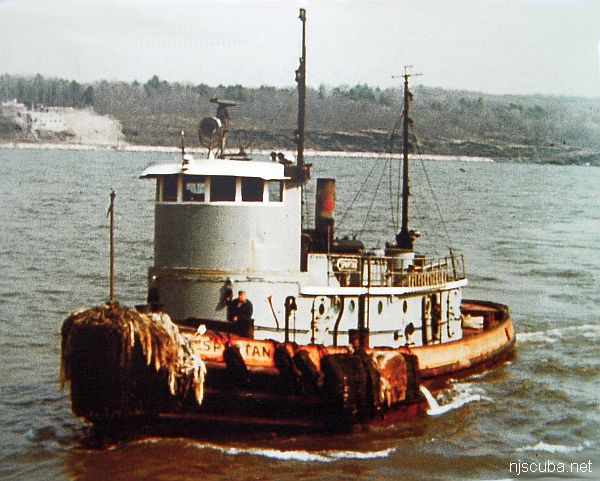
The Spartan was a canal tugboat that towed barges on the Erie Canal between New York City and the Great Lakes.
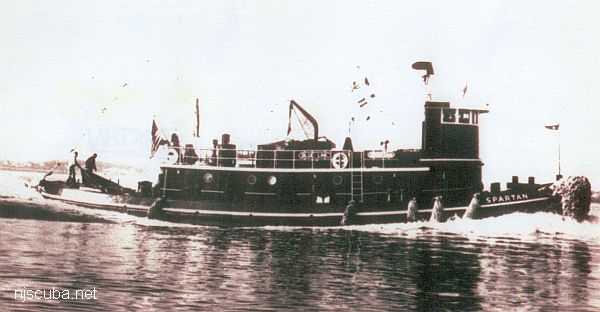
The pilothouse of the Spartan could be raised and lowered to fit under low bridges. Here it is in the "up" position; when she was sunk, it was in the down position.
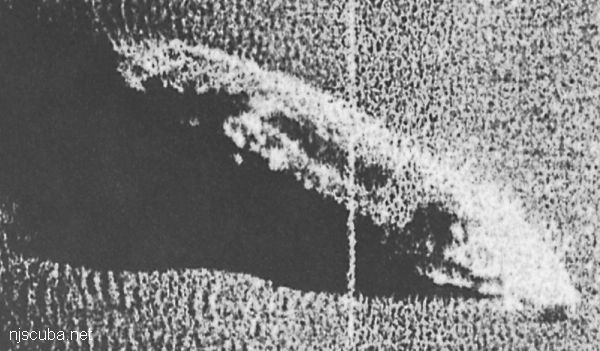
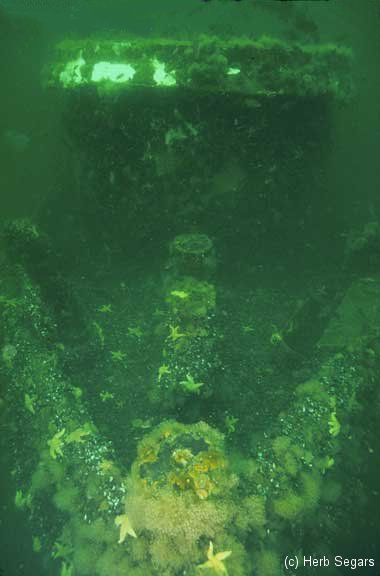
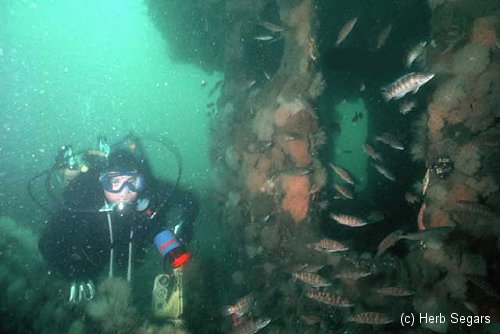
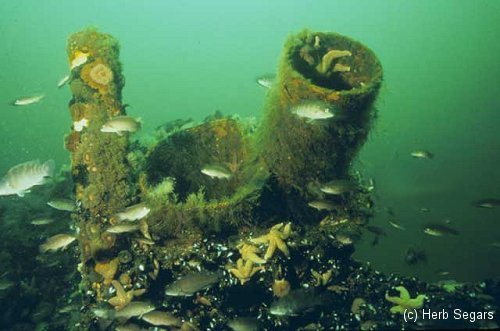
The vessel is intact and upright. The roof of the deckhouse has been completely removed, forming a large "skylight" through which even student divers may safely penetrate the wreck. The interior is filled with silt. The railings evident in the photos have long since been pulled away by years of grappling hooks, but the visor around the pilothouse is easy to find, as is the open door and other features. The top of the wreck is 45-50 ft, while the deepest point is under the stern, where the propeller is no longer.
The Spartan swarms with Blackfish, including some real monsters. For those who know where to look, it can also produce a lobster or two. However, it is usually pretty clean of mussels. Because of the easy conditions and closeness to port, the Spartan is often used for training dives.
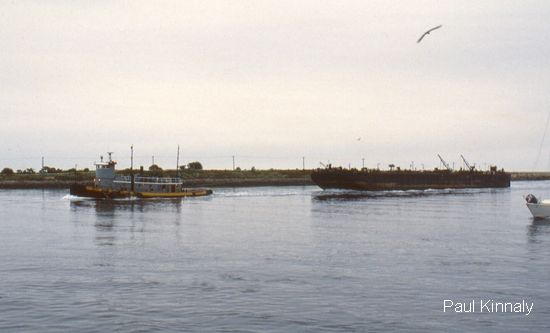
Built in 1957, by the Calumet Shipyard and Drydock Company of Chicago, Illinois (hull #230 as the Spartan for the Cleveland Diesel Engine and Diesel Company of Cleveland Ohio. In 1957 the tug was acquired by James McWilliams of the Blue Line Incorporated of New York, New York, where she retained her name.
The tug was later acquired by Ira S. Bushey and Sons Incorporated of New York, New York. Where she retained her name. In 1977, Ira S. Bushey and Sons Incorporated was acquired by the Amerada Hess Oil Corporation of New York, New York to form the Spentonbush-Red Star Companies of New York, New York, where the tug retained her name.
Powered by a single turbocharged two-cycle twelve-cylinder Cleveland 498 diesel engine, rated at 2,000 horsepower.
Paul Strubeck, Jim Garret
tugboatinformation.com

Questions or Inquiries?
Just want to say Hello? Sign the .