Tanks / Clifford Lipke Reef

army tanks reef
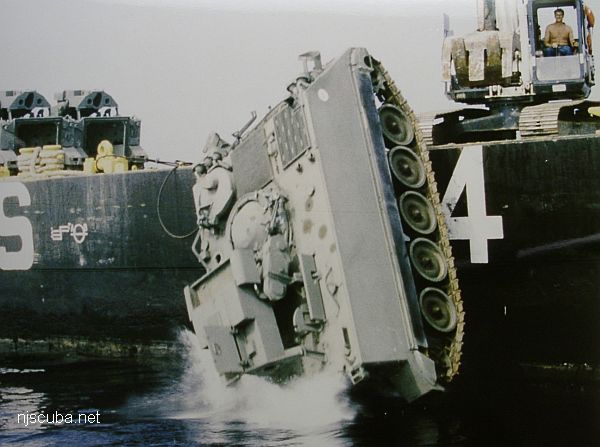
An M-113 APC is pushed overboard to build a reef.
Type:
various types of Army tanks and other vehicles, 15 in all
Sponsor:
Friends of Clifford Lipke, NJ National Guard
Sunk:
1998 - Sea Girt Artificial Reef
GPS:
40°07.608' -73°56.650'

While former Army vehicles are scattered all over the artificial reefs, at this particular spot there are enough to make them worth a dive in themselves - 15 in all. This underwater battlefield is composed mainly of M-113 APCs, with a few other types thrown in. The large tailgate door at the back of each APC is removed, making it a sort of miniature cave. On a clear day, you could probably get some interesting pictures.
army tanks reef
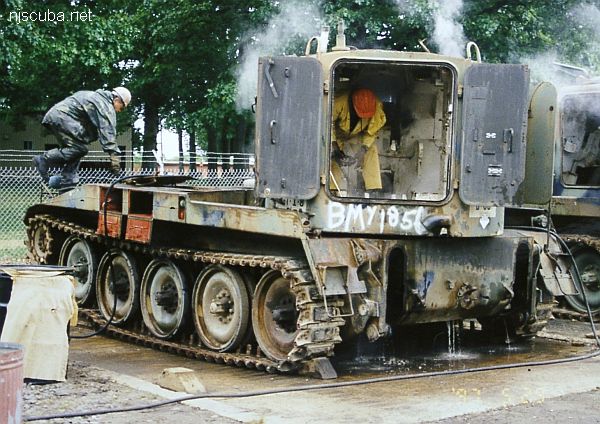
M-578 armored cranes being cleaned prior to sinking. Several of these lie at this site.
army tanks reef
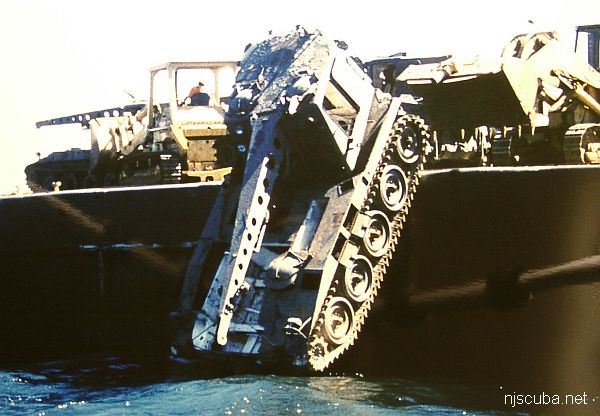
A crane gets dunked

Comments on Tanks

Questions or Inquiries?

Just want to say Hello? Sign the .

Submit a Comment

Your email address will not be published. Required fields are marked *


Click image to replace if unable to read.

Enter the digits from the image above, except for the last one:

This site uses Akismet to reduce spam. Learn how your comment data is processed.


no snorkel

Here is an item that is useful in the tropics, but much less so around here. This is because the water here is not nearly as crystal clear as in the tropics, and the depths are often greater. Therefore it is unlikely you will be able to see anything interesting below from the surface.

On a boat dive, a snorkel is totally useless - leave it home. Chances are, the captain and crew will tell you to take it off anyway. The same is generally true for inlet diving where the entry is steep. A snorkel is just one extra thing to get tangled up, and you will probably have enough of that already. A snorkel might be useful in a surface swim from the beach out to a close-in dive site, if it is a good one with purge valve or a dry valve to keep the water out entirely. Even then, you are better off doing a backstroke out to the site, with your head out of the water so you can navigate by landmarks, or an underwater swim if the currents are favorable.