

Mohawk (4/4)

NJ Scuba
NJ Scuba
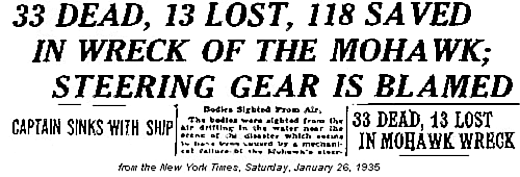
Shipwreck SS Mohawk headline

Just a few miles out of Manasquan Inlet (New Jersey), the remains of the Mohawk lie beneath 80 feet of water. The steel-hulled passenger ship, launched in October of 1925 by the Newport News Shipbuilding & Dry Dock Company, was 387' long, 54' in breadth, and listed at 5897 gross tons.

The Mohawk was the third in a string of disasters suffered by the Ward Line. First was the infamous Morro Castle fire at Asbury Park, then the Havana ran aground on a reef off Florida. The Mohawk was leased from the Clyde Line to take over the duties of the Morro Castle, but only a few months after the fire which claimed 124 lives, this ship also met with a tragic end. The Mohawk left New York on the afternoon of January 24, 1935.

About 9:00 that evening, several miles south of Sea Girt Light and about six miles offshore, the steering gear went awry and the crew switched to a manual steering system instead. Shortly afterward, confusion between orders from the bridge and their execution in the steering engine room caused the Mohawk to execute a hard turn to port, at full speed, directly into the path of the Norwegian freighter Talisman. Although both ships tried to avoid the collision, it was too late. Talisman struck the Mohawk, and the latter began to take on water. Bitter cold, ice, and snow hampered the evacuation of the 160 passengers; all told 45 lives were lost, including Captain Joseph Wood and all but one of the ship's officers.
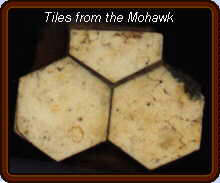
tiles from the Mohawk

The Mohawk sank within an hour. Nearby ships came to the rescue, and Coast Guard boats and planes searched through the night and the next day, first for survivors, then for bodies. The wreck was later blasted to a maximum depth of 50' so as not to pose a navigational hazard in the heavily traveled shipping lane.

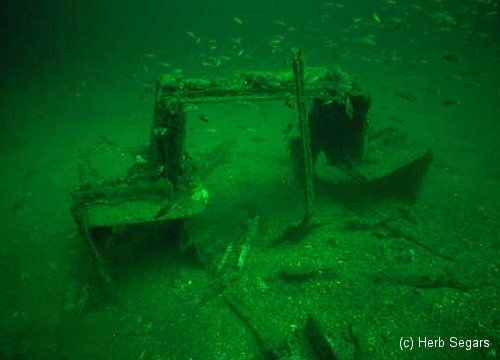
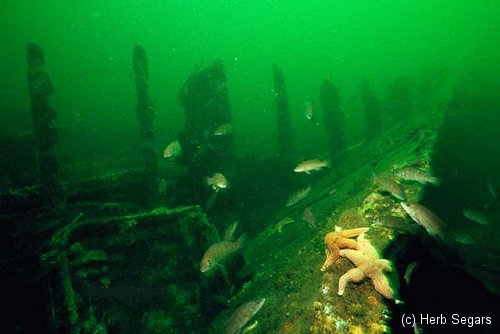
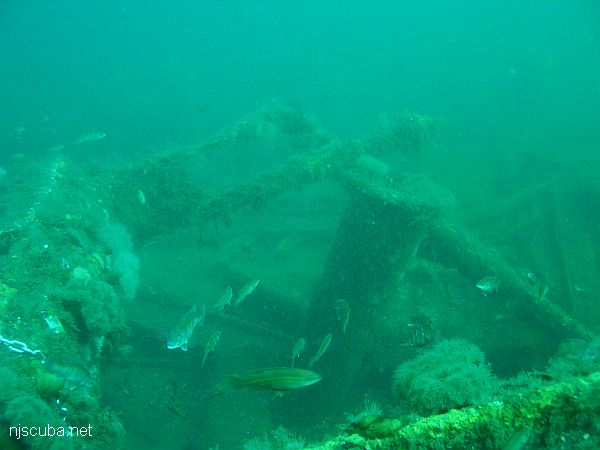
The Mohawk is one of the most dived wrecks in this area, although it resembles a ship less than an underwater junkyard. It's easy to get lost in the vast jumble of hull plates and twisted metal, so careful navigation is essential. Despite its popularity, this wreck still yields plenty of artifacts and lobster, and offers many interesting sights for the observant diver.

Original NJScuba website by Tracy Baker Wagner 1994-1996

A Survivor's Story

My parents, Sarah Jackson Smith and Samuel Smith, were among the lucky survivors [of the Mohawk.] My aunt Jennie Jackson wrote a kind of informal book of memoirs. I am enclosing my mother's account. My son - then 12 and now 44 - when he took diving lessons - he always talked of retrieving "Grandma's luggage." ( Yeah, sure! )

Sincerely yours,
Marilyn J Goldstein


The Brooklyn Bridge was one sheet of ice and as we crept along, inch by inch, wondered whether we would make it across the bridge, and if we did, would the Mohawk still be there waiting for us? Unfortunately, yes. As I was always seasick, I went down to our stateroom shortly after we boarded the ship and went to bed. In the short time that I was upstairs, I had remarked to Sam that all the lifeboats seemed to be buried in snow on the decks.

Four hours later, there was a terrible jolt followed by the complete standstill of our ship. Sam came running in and said we were rammed by a Norwegian freighter. He assured me that everything was under control. I put my coat over my pajamas and adjusted the life belt. We started through the passage to go to the deck. A seaman came running toward us. He had no life belt. I went back with him and gave him a second one which I had seen under my berth. On our second attempt to get to on deck, I met a woman whom I had spoken to briefly before I had left for my stateroom. She was returning for her jewels, which she had left in her stateroom. Unhappily, she was one of the forty-nine lost. Her body was later found floating, with jewels intact.

The lifeboats were dug out of the snow by us, as in those days they were not lifted by machinery. By this time, we were aware that a great gash had been made in our side and the ship was beginning to list. We finally raised one lifeboat, got it down the side of the ship and started to move away from the side of the ship. The lifeboat was filled to capacity with passengers and a few crew.

To our shock, we discovered that we were still tied to the Mohawk. A crew member started to shout for a knife to cut us away. Sam called to him to tear his coat open and pull out a gold penknife he had in his pocket, given to him by the Brooklyn Optometrical Society when he was president. As it was two degrees below zero, Sam's fingers were already frozen. The seaman found his knife, ran and cut us loose from the Mohawk.

We rowed away as quickly as possible, and had hardly gotten at a safe distance when we watched with horror - the Mohawk sinking with 49 people aboard, many of them young. Had we not gotten away when we did, we would have been sucked in with the Mohawk as she sank. We were picked up by the Algonquin several hours later and taken ashore, where we were met by a barrage of cameramen with endless questions.

We were happy to break away finally and go home. Betty and Jennie had met us at the pier with valises of warm clothes. We had sent a telegram earlier saying "saved Sarah Sam" the rest of the story is told by Jen her narrative of what happened in our home when the news was first broadcast.

Sam and I became active members of the Morro Castle safety at sea organization, founded by the survivors of the Morro Castle, which had burned off the coast of New Jersey with great loss of life. We later testified on numerous occasions before congressional committees in Washington about the terrible conditions which existed on board most of the American ships, the great fire hazards on many of the coastwise vessels, and the need for drastic changes which would make our ships safe for passengers and crew.

In 1936, the National Maritime Union called a strike in New York and all other United States ports to protest filthy and dangerous conditions on American ships and make demands for better wages, working conditions, hours, and modern safety equipment on all American vessels.

A citizens committee was formed, which I chaired. It was a rough strike, with freezing weather and much police brutality. We had a soup kitchen, obtained warm clothing for the strikers, found places for them to sleep, and ran meetings to raise money. This strike failed, but out of it came the 1937 strike which was a great victory for the seamen, resulting in increased wages, shorter hours, better working and living conditions, and new safety measures and equipment.

Sarah Jackson Smith's account
as told to Jennie Jackson, who put it in her memoirs

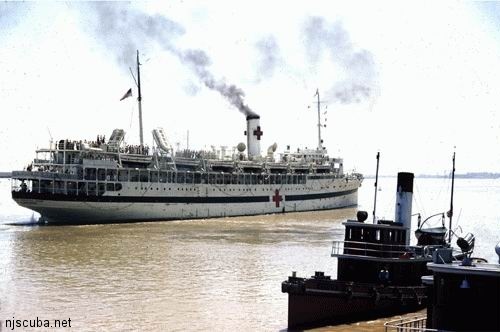
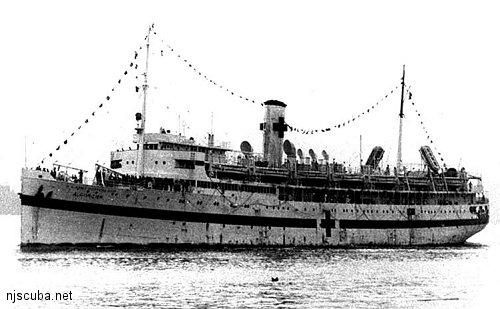
Of the Mohawk's three sisters, Cherokee was torpedoed and sunk June 15, 1942, by U-87 in a gale off Cape Cod ( 42-47N, 66-18W ) with great loss of life. Seminole and Algonquin served as hospital ships during World War II and were scrapped in 1952 and 1956 respectively.
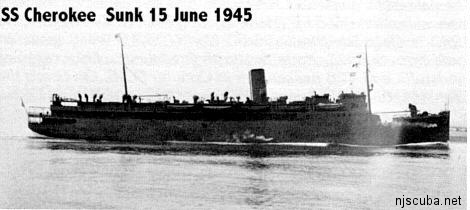
SS Cherokee
Cherokee in wartime service as a troop transport
SS Algonquin
SS Algonquin
Twin sister Algonquin as WWII Army hospital ship - never returned to civilian service
Herb Segars Photography

Credits:

  • Side-scan sonar image courtesy of Capt. Steve Nagiewicz
  • Document courtesy of Capt. Stan Zagleski / Miss Elaine B
  • Survivor's Story courtesy of Dan Crowell
  • Timetable courtesy of Maritime Timetable Images - www.timetableimages.com
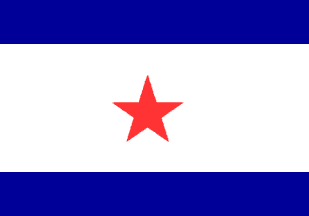
Clyde Lines Pennant
Does anyone know what this is?
at the stern
 1 2 3 4  

Comments on Mohawk

Questions or Inquiries?

Just want to say Hello? Sign the .

Submit a Comment

Your email address will not be published. Required fields are marked *


Click image to replace if unable to read.

Enter the digits from the image above, except for the last one:

This site uses Akismet to reduce spam. Learn how your comment data is processed.


NJ Scuba

Pete Nawrocky is a photographer specializing in the underwater environment of the Northeastern United States. Pete's work has been published in numerous books and magazines, including Skin Diver and Underwater USA, and he is currently a staff writer for the Northeast Dive Journal. Pete has also received the Beneath the Sea Diver of the Year award, and the NAUI Outstanding Contributor to Sport Diving award.

Atlantic Rock Crab - Cancer irroratus

Crabs are carnivorous and typically walk on the sea floor. Their habitat ranges from the deep sea up to shallow water, along the shore, and sometimes well inland. The Atlantic Rock Crab is found on rocky or sandy bottoms at depths from the low-tide line to depths of 2600 feet (780m). Although these crabs were once regarded as pests by lobstermen, as they will enter lobster pots and steal bait, the rise in seafood prices has made the crabs a profitable catch as well.

Northern Sea Robin - Prionotus carolinus

The Northern Sea Robin, which grows to 17 inches in length, inhabits waters off most of the eastern coast of North America, migrating south and offshore during the winter. These fish are bottom-dwellers, feeding on various crustaceans, bivalves, squid, and other fish. Sea Robins can be recognized by the large head, broad mouth, spiny dorsal fin, and wing-like pectoral fins.

Sea Gooseberry - Pleurobrachia pileus

This tiny comb jelly is only about an inch across, but its retractable tentacles can extend over twenty times its body length to snare microscopic food organisms. Comb jellies are noted for their sometimes spectacular luminescence, which is produced by glandular structures near the radial digestive canals. Sea Gooseberries, which unlike most jellyfish do not sting, can be found drifting near shore from Maine to Florida and Texas. Another comb jelly, P. bachei is found from Alaska to Baja California on the Pacific coast, and is indistinguishable from P. pileus outside of the laboratory.

Atlantic Purple Sea Urchin - Arbacia punctulata

This omnivorous species, found on rock or shell bottoms from low-tide line to water 750′ (229m) deep, will eat anything from algae, sponges, and coral polyps, to mussels, sand dollars, even dead or dying urchins or other animals. Sea urchins carry fascinating tiny grooming organs between their spines. These organs, once thought to be parasites, are actually just the opposite: an integral part of the animal which keeps the echinoderm’s surface free from other animal or plant organisms.

Tubularian (Pink Hearted) Hydroid - Tubilaria crocea

This is not a plant, but an animal which attaches itself to nearly any solid object continuously submerged in shallow water. Single pink polyps, each up to 5″ high, combine to form a colony over a foot wide. Individual members of the colony become specialized to perform specific tasks, from eating to defending the colony. This species is found on the east coast from Nova Scotia to Cape Hatteras, and from Washington to California in the west.

Northern Red Anemone and Frilled Anemone
Tealia crassicornis and Metridium senile

The similarities between anemones and their relatives, the corals and the jellyfish, are not hard to see. All spend part, if not all of their lives as polyps anchored to the sea floor or other surface, and most employ stinging cells, or nematocysts, to subdue prey.

Both of these anemones are found in northern waters on the east and west US coasts. The Northern Red Anemone can grow to 5″ high and 3″ wide with a hundred tentacles arranged in rings around the mouth. The Frilled Anemone, which can grow to a height of 18″, may have as many as a thousand slender tentacles which give it the frilled appearance. These anemones can reproduce either sexually or asexually, the latter being accomplished by leaving behind, as they creep over a surface, bits of tissue which regenerate into complete organisms.

Goosefish - Lophius piscatorius

This angler fish is a large bottom-dweller, reaching lengths of up to six feet in depths to 1,800 feet (550m). Lophius are voracious eaters, attracting prey with a modified dorsal fin which acts as a “fishing lure.” They have been known to eat a wide variety of fish, turtles, invertebrates, and even birds. Fishermen comment that the goosefish usually comes up in a trawl with a full belly, having gorged itself on its fellow captives. The appearance of this fish belies the delicately flavored flesh, which is popular in Europe.

Blue Mussels - Mytilus edulis

The edible Blue Mussel is usually found in dense masses attached to rocks, pilings, or nearly any solid object between low- and high-tide lines. These mussels grow to 4″ long and feed on nutrients filtered out of the water which passes into and out of the mantle cavity through the frilled siphons. Breathing also occurs as this stream of water passes over the creature’s gills.

Northern Stony Coral - Astrangia danae

The beautiful reefs of tropical locations are not actually living creatures at all, but are built up of the skeletons left behind by hard or stony corals and encrusting algaes. The Northern Stony Coral is the only shallow-water species of stony coral found north of Cape Hatteras. It is pinkish to white in color, and found attached to rocks or shells in water to 135′ deep.

Black Sea Bass - Centropristes striata

A favorite prize of spearfishing SCUBA divers, the Black Sea Bass is an important food fish throughout the mid-Atlantic states. Growing to 24″ in length, this fish is found from Maine to Florida, usually over rocks and around jetties, pilings, and wrecks.

Ocean Sunfish - Mola mola

Perhaps the strangest in appearance of all local fishes, the Ocean Sunfish with its large dorsal fin is probably responsible for more than a few “shark” sightings at sea. The caudal (tail) fin of the Mola mola is reduced to a short flap, with the dorsal and anal fins used like oars for propulsion. This fish can weigh well over a ton and measure up to 13 feet in length. They are found in both the Atlantic and Pacific oceans, and feed on jellyfishes and other small, soft items.

Sea Star - Asterias forbesi

The Common Sea Star is a familiar sight to any north Atlantic wreck diver. Found on rock, sand, or gravel bottoms from the low-tide line to depths of 160′, this creature can grow to over 10 inches across. This Sea Star feeds mainly on bivalve mollusks, by pulling the valves open just far enough to slip a piece of its stomach inside ( it only needs a tiny space of 1/250″. ) It then secretes digestive juices which begin to consume the mollusk’s soft tissues, and finishes the meal once the bivalve’s shell opens as it dies.

Sea Raven - Hemitripterus americanus

The Sea Raven has the unusual ability to pump itself up like a balloon when removed from the water. If it is thrown back again, it first floats helplessly on the surface, then returns to normal as it lets the air back out again. This fish is often used as bait for lobster, though some claim that it tastes good. The Sea Raven is found along the Atlantic coast of the US, and grows to over two feet in length.

If you are a New Jersey diver, we hope we’ve helped you become better acquainted with the creatures you see on your dives. If you’re not, we hope that we have shown you a little of what New Jersey diving has to offer.

Original NJScuba website by Tracy Baker Wagner 1994-1996

From way back when in 1996