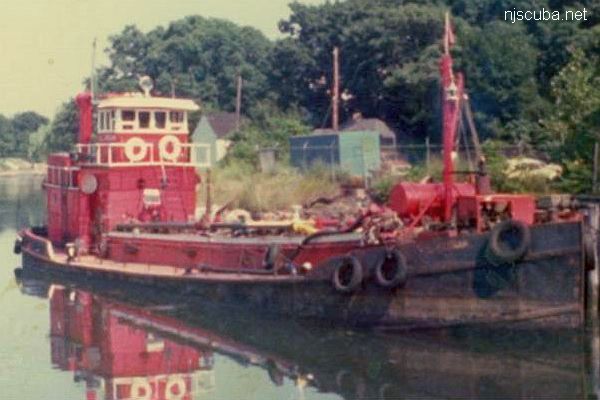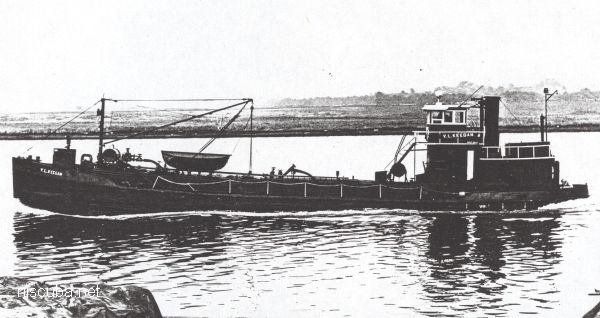
V.L. Keegan YO-166

V.L. Keegan
Type:
artificial reef, tanker - Spentonbush Company, USA (Hess Oil)
Built:
1932, Ira S. Bushey & Sons, Brooklyn NY USA
Specs:
( 110 ft )
Sponsor:
Spectra Services
Sunk:
Saturday June 3, 1989 - Sandy Hook Artificial Reef
GPS:
40°21.525' -73°56.110'
Depth:
60 ft
V.L. Keegan

V.L. Keegan was built in 1932, by Ira S. Bushey and Sons of Brooklyn, New York for Spentonbush Fuel Transport, Incorporated. She was acquired by the United States Navy where she was designated YO-166 during World War II. The unit was later acquired by the Eklof Marine Corporation of Staten Island, New York where she was named back to V.L. Keegan.

Both the Keegan and the Dorothy sank at a dock in the Raritan River and were cut up in place and loaded onto a barge prior to reefing.

Comments on V.L. Keegan YO-166

Questions or Inquiries?

Just want to say Hello? Sign the .

Submit a Comment

Your email address will not be published. Required fields are marked *


Click image to replace if unable to read.

Enter the digits from the image above, except for the last one:

This site uses Akismet to reduce spam. Learn how your comment data is processed.


tides

Shore diving is very much dependant on the tide. Tidal inlets and rivers will flow with the tide, such that a river may even flow upstream for a time when the tide is incoming. Normal river currents are far too strong to swim against, and will simply sweep away a loaded diver. Many inlets have time restrictions for divers, so you will have to take the local laws and the tide tables into account to work out a good dive time.

However, there are two times when the currents drop to near zero. Those are dead high tide, and dead low tide. Of the two, dead high tide is usually better, simply because there is more water, and it is cleaner ocean water rather than silty river water. You will get about a half-hour window on either side of dead high tide during which you can either drift in the weak current or swim against it. After that, you'd better get out.