
Relief Lightship WAL-505 (1/4)
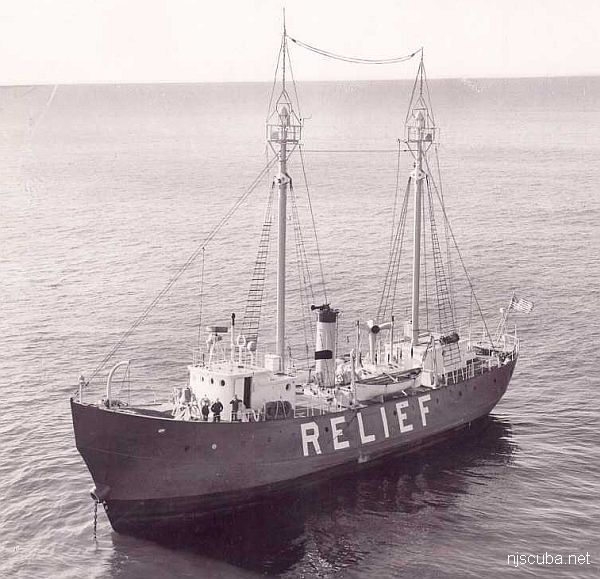
- Type:
- shipwreck, lightship, USCG
- Name:
- Named for its job - as the "relief ship" for the other regular lightships along the eastern seaboard.
- Built:
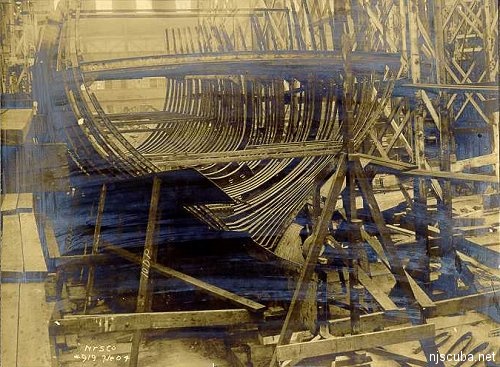
- 1904, New York Shipbuilding, Camden NJ USA
- Specs:
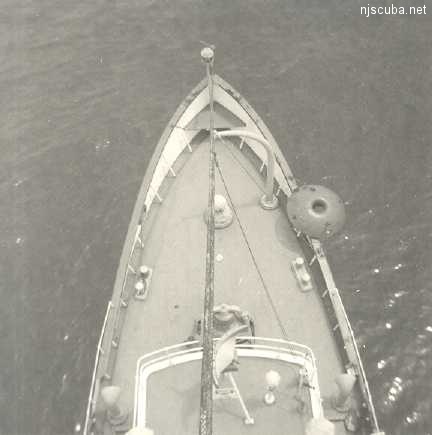
- ( 129 x 28 ft ) 631 gross tons, 9 crew
- Sunk:
- Friday June 24, 1960
collision with freighter Green Bay - no casualties - GPS:
- 40°27.144' -73°49.070' (AWOIS 2003)
- Depth:
- 105 ft, main deck at 90

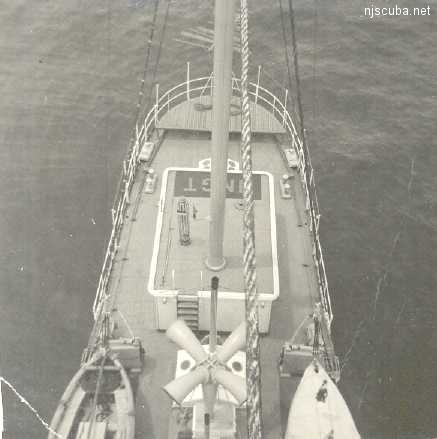
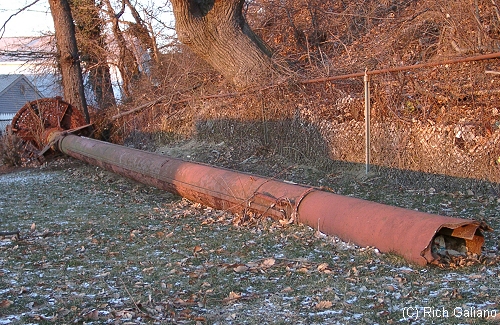
The lightship is intact and upright, with the masts knocked down. This wreck is interesting because before you dive it, you can tour her near-identical twin, the Ambrose, at the South Street Seaport. And that's probably not a bad idea - the viz here can be deplorable.
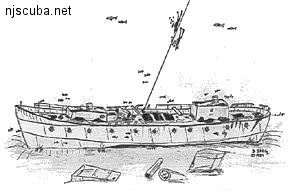
The wreck is heavily overgrown with mussels and other marine life. Large skylights that once illuminated the interior have long since collapsed, and the wreck is easily penetrated through the resulting holes in the deck, although the interior is quite silty. After forty years of being picked over, you would have to be very lucky to find good artifacts anyway. A better place to look inside is the large gash on the starboard side near the "L" in the picture, the result of the collision that sank her. Searching around inside the edges of this hole might even produce a lobster. The bottom is mud and silt - pretty nasty.
The wreck of the pilot boat Sandy Hook is not more than a mile away.
Dive Sites, Long Island West Dive Sites, New Jersey Dive Sites, New York Dive Sites, Sandy Hook Dive Sites,
Sandy Hook / Rockaway Inlet Chart
- Barge #10
- 120 Wreck
- 3 Sisters
- Ambrose Buoy
- A Street - Shark River
- Acara
- Across
- Adele
- Ajace
- Alex Mac
- Allenhurst Jetty
- Antioch
- Arnoff
- Arundo
- Asfalto
- Aurora
- Ayuruoca
- BA Wreck
- Shark River - Back Bay
- Balaena
- Bald Eagle
- BD1738
- USS Benson
- Beth Dee Bob
- Blue Boy
- Bronx Queen
- Bug Light
- Charles Dunlap
- Cecilia M Dunlap
- Catherine Jackson
- Chauncy Jerome
- Cornelia Soule
- Choapa
- coal (Lido)
- Continent
- crane barge
- Daghestan
- Dragger
- drydock
- Dryland
- Edwin Duke / Stone Barge
- dump
- Dutch Springs
- Edmund Phinney
- East Rockaway Inlet
- Ed's Schooner
- Elberon Rocks
- Eureka
- Finance
- Fort Victoria
- German
- GL78
- Glen II
- I.P. Goulandris
- Gypsy
- Horseshoe Cove
- Alexander Hamilton
- Howard
- Iberia
- Immaculata
- Inshore Schooner
- Jack I
- Joan La Rie III
- Jones Inlet
- Jones Tug
- Klondike Rocks
- Larsen
- Lizzie D
- Long Branch locomotives
- Logwood
- H.W. Long
- Macedonia
- Mahogany
- Malta
- Manasquan Inlet
- Margaret
- Marion
- Mistletoe
- R.C. Mohawk
- Manasquan Wreck
- Nautilus
- Navesink River
- Northeast Sailor
- New Reef
- New Deal
- New Era
- HMS Pentland Firth
- Long Branch Pier Rubble
- Pinta
- Pipe Barge
- Pliny
- Plymouth
- Pocopson
- Princess Anne
- Ruth Shaw
- Robert A Snow
- Ramos
- Ranger
- Relief Lightship
- Rickseckers
- Rjukan
- Rockaway Inlet
- Rockaway Belle
- Round Valley
- Roy's barge
- Rudder Wreck - Pocono
- Rusland / Adonis
- Scotland Buoy
- Sandy Hook Pilot Boat
- SC-60
- Sea Girt Inlet
- Sea Girt Wreck
- Shark River Inlet
- Shrewsbury Rocks
- Spring Lake Sailor
- Steel Wreck
- Stolt Dagali
- Sylvanus
- Tampa III
- USS Turner
- AWOIS 8087
- AWOIS 8097
- u11
- AWOIS 7509
- AWOIS 7932
- AWOIS 9768
- AWOIS 12966/11422
- AWOIS 1609
- AWOIS 8084
- AWOIS 7940
- AWOIS 7938
- AWOIS 8076
- AWOIS 4600
- AWOIS 8075
- Valerie E
- Vega
- Warrior
- Delaware River Water Gap
- Western World
- Edward W Winslow
More: Sandy Hook Dive Sites Chart ...
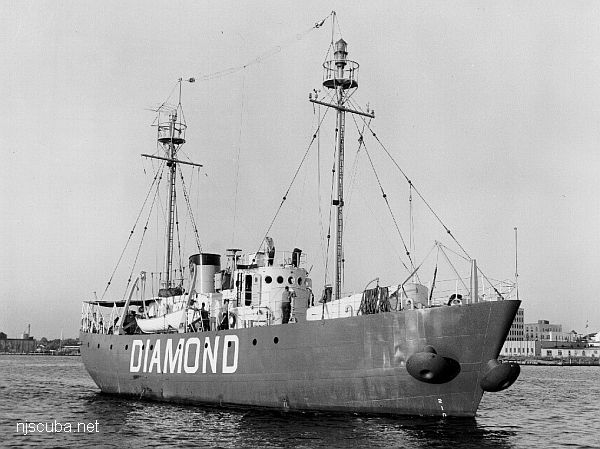
- Type:
- artificial reef, lightship, USA
- Name:
- Named for the harbor that it served as marker for during its long active career.
- Built:
- 1946, Devoe Shipbuilding, Bay City MI USA
- Specs:
- ( 128 x 30 ft ) 630 tons
- Sponsor:
- Atlantic County, Trump Casino, Atlantic City Seafood Festival, Artificial Reef Association, Atlantic County Party & Charter Boat Association
- Sunk:
- Friday January 28, 1994 - Atlantic City Artificial Reef
- GPS:
- 39°15.444' -74°14.004'
- Depth:
- 85 ft
More: Boston Lightship WLV-189 ...
Sandy Hook / Rockaway Inlet Chart
- Barge #10
- 3 Sisters
- Ambrose Buoy
- A Street - Shark River
- Acara
- Across
- Ajace
- Allenhurst Jetty
- Arnoff
- Arundo
- Asfalto
- Aurora
- Ayuruoca
- BA Wreck
- Shark River - Back Bay
- Balaena
- Bald Eagle
- BD1738
- USS Benson
- Beth Dee Bob
- Blue Boy
- Bronx Queen
- Bug Light
- Charles Dunlap
- Cecilia M Dunlap
- Chauncy Jerome
- Cornelia Soule
- Choapa
- coal (Lido)
- Continent
- crane barge
- Daghestan
- Dragger
- drydock
- Dryland
- Edwin Duke / Stone Barge
- dump
- Edmund Phinney
- East Rockaway Inlet
- Ed's Schooner
- Elberon Rocks
- Eureka
- Finance
- Fort Victoria
- German
- GL78
- Glen II
- I.P. Goulandris
- Gypsy
- Horseshoe Cove
- Alexander Hamilton
- Happy Days
- Howard
- Iberia
- Immaculata
- Inshore Schooner
- Jack I
- Jones Inlet
- Jones Tug
- Klondike Rocks
- Larsen
- Lizzie D
- Long Branch locomotives
- H.W. Long
- Macedonia
- Malta
- Margaret
- Mistletoe
- R.C. Mohawk
- Nautilus
- Navesink River
- Northeast Sailor
- New Reef
- New Deal
- New Era
- HMS Pentland Firth
- Long Branch Pier Rubble
- Pinta
- Pipe Barge
- Pliny
- Plymouth
- Pocopson
- Princess Anne
- Ruth Shaw
- Robert A Snow
- Ramos
- Ranger
- Relief Lightship
- Rickseckers
- Rjukan
- Rockaway Inlet
- Rockaway Belle
- Roda
- Rudder Wreck - Pocono
- Rusland / Adonis
- Scotland Buoy
- Sandy Hook Pilot Boat
- SC-60
- Shark River Inlet
- Shrewsbury Rocks
- Spring Lake Sailor
- Steel Wreck
- Stolt Dagali
- Sylvanus
- Tampa III
- USS Turner
- AWOIS 8087
- AWOIS 8097
- u11
- AWOIS 7509
- AWOIS 7932
- AWOIS 9768
- AWOIS 12966/11422
- AWOIS 1609
- AWOIS 8084
- AWOIS 7940
- AWOIS 7938
- AWOIS 8076
- AWOIS 4600
- AWOIS 8075
- Valerie E
- Vega
- Warrior
- Edward W Winslow
More: Long Island West Dive Sites Chart ...
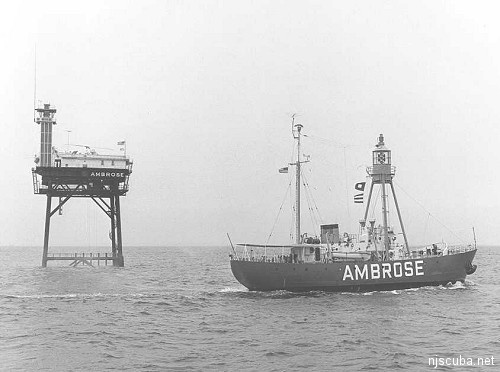
A lightship is a small vessel with minimal engine power and a stout stable hull, designed to act as an anchored long-term floating lighthouse outside of a harbor. They were generally painted in bright red or orange anti-collision colors. Not that it helped much.
More: Lightship ...
Questions or Inquiries?
Just want to say Hello? Sign the .