
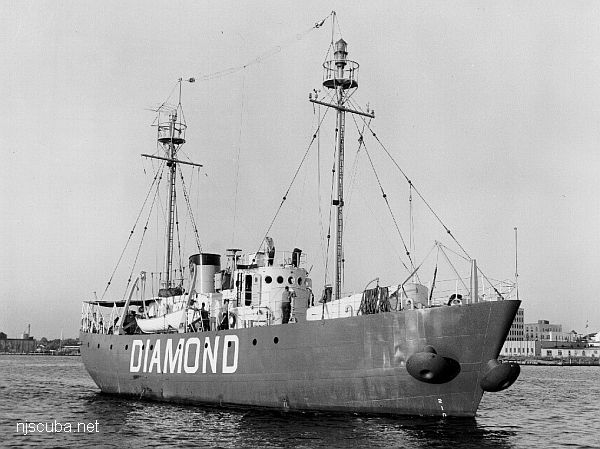
Boston Lightship WLV-189
- Type:
- artificial reef, lightship, USA
- Name:
- Named for the harbor that it served as marker for during its long active career.
- Built:
- 1946, Devoe Shipbuilding, Bay City MI USA
- Specs:
- ( 128 x 30 ft ) 630 tons
- Sponsor:
- Atlantic County, Trump Casino, Atlantic City Seafood Festival, Artificial Reef Association, Atlantic County Party & Charter Boat Association
- Sunk:
- Friday January 28, 1994 - Atlantic City Artificial Reef
- GPS:
- 39°15.444' -74°14.004'
- Depth:
- 85 ft
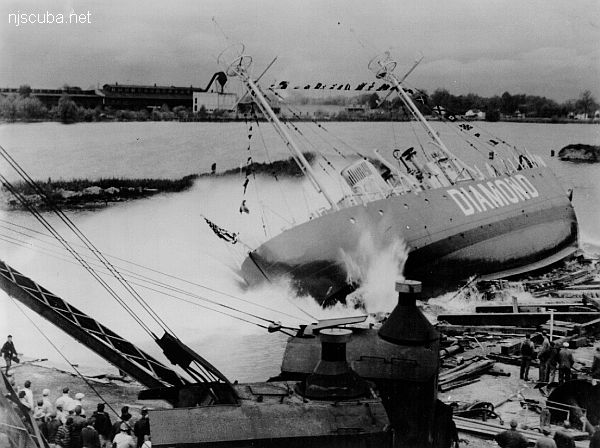
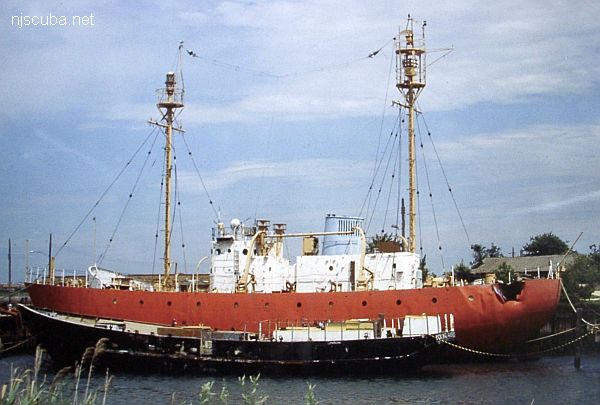
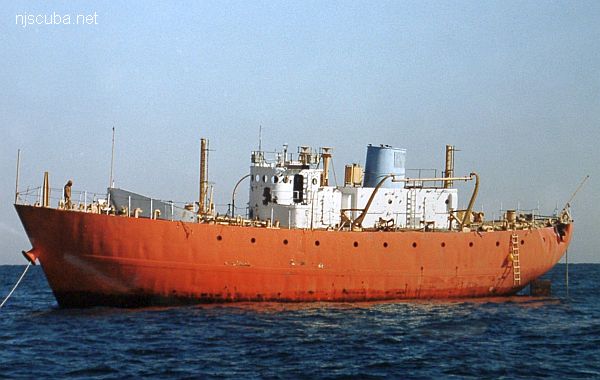
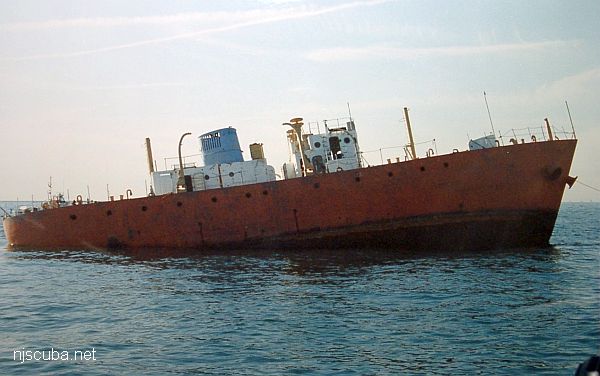
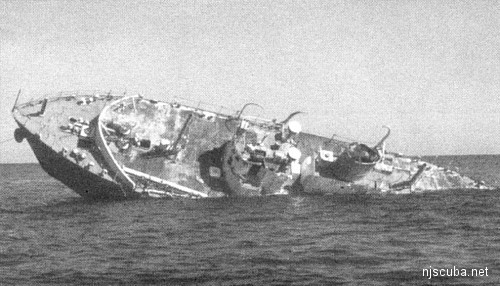
Although known as the Boston Lightship, this particular vessel spent most of her career off North Carolina, New Orleans, and Cape May, where she marked a shoal in the approaches to Delaware Bay known as the Five Fathom Bank. After decommissioning in Massachusetts in 1975, the lightship was under tow back to Atlantic City for conversion to a floating museum when she was struck by a tanker, tearing a large hole in her port side ( see photos below. ) the museum conversion never materialized, probably because of the collision damage, and the ship languished until taken over by the Artificial Reef Program. She was dismasted and sunk intact with a wealth of historical artifacts ( portholes! ) many of which are very difficult to get at since the wreck lies on its side.
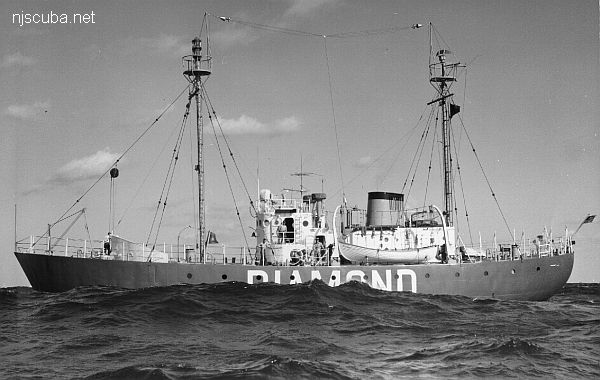
STATION ASSIGNMENTS: WLV 189
- 1947-1966: Diamond Shoal (NC)
- 1966-1971: New Orleans (LA)
- 1971-1972: Five Fathom Bank (NJ)
- 1972-1975: Boston (MA)
The last Five Fathom Bank Lightship was LV189 ( later called WLV189 ) which was built in 1947. She served at Five Fathom Bank from 1971-1972 when the station was discontinued. She was sent to the Boston station where she served until being decommissioned in 1974. She was being towed from the Boston station to Gardiner's Basin in Atlantic City when she was rammed by a tanker. A large hole was ripped in her port side, which was never repaired. LV189 remained docked at Gardiner's Basin for seventeen years, practically ignored until she was donated to New Jersey's Artificial Reef Program. On February 29, 1994, she was sent to the bottom to provide habitat for fish and other lifeforms. She had previously also served stints on the Diamond Shoals, and New Orleans stations.
A large navigational buoy replaced the departing Five Fathom Bank Lightship #189 which marked a main shipping channel to Delaware Bay, 20 miles off Cape May, New Jersey.
-- from Coast Guard historical records
Artificial Reef Sites, Artificial Reefs, Atlantic City Artificial Reef, Coast Guard Artificial Reefs, Military Reefs, New Jersey Artificial Reef Sites, New Jersey Artificial Reefs,
Atlantic City Artificial Reef
12.2 Nautical Miles off Atlantic City, 5.00 sq miles
Depth: 55-95 ft [download]
More: Atlantic City Artificial Reef ...
Cape May Chart
- Absecon Inlet
- USS Akron
- Alex Gibson
- Alexander
- Almirante
- American
- Astra
- Atlantus
- Azua
- Dorothy B Barrett
- Brigantine Beach Wreck
- USS Blenny
- boiler wreck
- Bonito
- Brian C
- Brigantine Inlet
- Brigantine Buoy Wreck
- Charles Morand
- Cape May Inlet
- Cassandra
- Cayru
- Champion
- USS Cherokee
- China Wreck
- City of Athens
- City of Georgetown
- Cleopatra
- Clermont
- Corson’s Inlet
- Crystal Wave
- William B Diggs
- dredge
- Admiral DuPont
- Elizabeth Palmer
- Elizabeth Warren
- Evening Star
- car float
- Florida
- Galimore's Cayru
- Gory Wreck
- Great Egg Inlet
- Gypsum Prince
- Hereford Inlet
- Hornet
- Hvoslef
- Independence Day
- India Arrow
- Indian River Inlet
- USS Jacob Jones
- John Marvin
- China Junk Wreck
- Kennebec
- King Cobra
- Lemuel Burrows
- Lake Frampton
- Lady Mary
- Linda Snow II
- Manhattan
- Marine Electric
- Miraflores
- Misty Blue
- Mohawk
- Montgomery
- USS Moonstone
- EF Moran
- Northern Pacific
- New Orleans
- USS Nina
- Nuphar
- Ocean Quest
- Oklahoma
- Patrice McAllister
- Pet Wreck
- Poseidon
- Ranald
- RJ Walker
- Southern Lillian
- USS S-5
- Salem
- Salem
- San Jose
- Sea Girt
- Sea Wolf
- Shookus
- Sindia
- Slabs
- General Slocum
- Southern Sword
- Townsend's Inlet
- Varanger
- Washingtonian
- Wayne
- Wily Fox
- YP-387
More: Cape May Dive Sites Chart ...
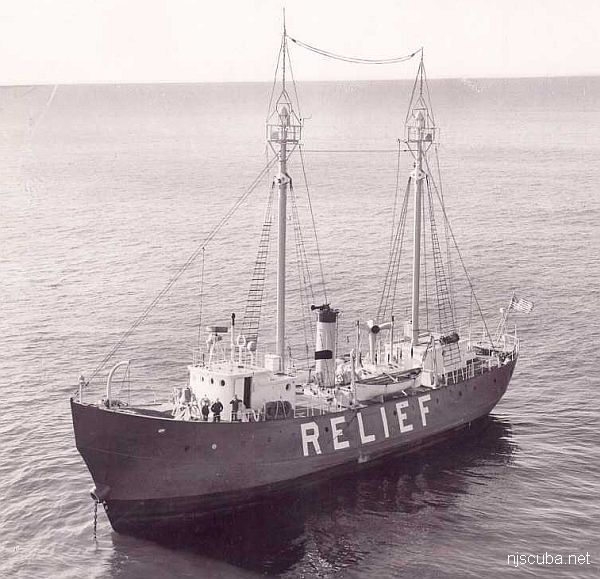
- Type:
- shipwreck, lightship, USCG
- Name:
- Named for its job - as the "relief ship" for the other regular lightships along the eastern seaboard.
- Built:
- 1904, New York Shipbuilding, Camden NJ USA
- Specs:
- ( 129 x 28 ft ) 631 gross tons, 9 crew
- Sunk:
- Friday June 24, 1960
collision with freighter Green Bay - no casualties - GPS:
- 40°27.144' -73°49.070' (AWOIS 2003)
- Depth:
- 105 ft, main deck at 90
More: Relief Lightship WAL-505 ...

The United States Coast Guard has donated a number of vessels as artificial reefs over the years. They seem to be sensitive about having their vessels shown in a "bad" way, and typically paint out all the markings before turning them over.
More: Coast Guard Artificial Reefs ...
Questions or Inquiries?
Just want to say Hello? Sign the .