
Atlantic City Artificial Reef
12.2 Nautical Miles off Atlantic City, 5.00 sq miles
Depth: 55-95 ft [download]
More: Atlantic City Artificial Reef ...
New Jersey Artificial Reefs
More: New Jersey Artificial Reefs ...
Atlantic City Artificial Reef
12.2 Nautical Miles off Atlantic City, 5.00 sq miles
Depth: 55-95 ft [download]
More: Atlantic City Artificial Reef ...
Axel Carlson Artificial Reef
2.0 Nautical Miles off Mantoloking, 5.19 sq miles
Depth: 65-80 ft [download]
More: Axel Carlson Artificial Reef ...
3.1 Nautical Miles off Barnegat, 1.08 sq miles
Depth: 50-60 ft [download]
More: Barnegat Light Artificial Reef ...
Cape May Artificial Reef
8.5 Nautical Miles off Cape May, 5.34 sq miles
Depth: 50-75 ft [download]
More: Cape May Artificial Reef ...
Deepwater Artificial Reef
23.6 Nautical Miles off Ocean City, 1.03 sq miles
Depth: 90-125 ft [download]
More: Deepwater Artificial Reef ...
Delaware Bay Artificial Reef
1.13 sq miles
Depth: 22-27 ft [download]
More: Delaware Bay Artificial Reef ...
Garden State North Artificial Reef
6.5 Nautical Miles off Harvey Cedars, 1.50 sq miles
Depth: 65-85 ft [download]
Good Times and Queen Mary are plotted from 1989 LORAN numbers. Although the TDs are slightly different, the resulting conversions are identical. It doesn't matter, neither one is still there.
More: Garden State North Artificial Reef ...
Garden State South Artificial Reef
5.1 Nautical Miles off Spray Beach, 0.74 sq miles
Depth: 55-65 ft [download]
More: Garden State South Artificial Reef ...
Great Egg Artificial Reef
7.2 Nautical Miles off Atlantic City, 1.03 sq miles
Depth: 50-70 ft [download]
More: Great Egg Artificial Reef ...
Little Egg Artificial Reef
4.0 Nautical Miles off Holgate, 2.05 sq miles
Depth: 50-60 ft [download]
More: Little Egg Artificial Reef ...
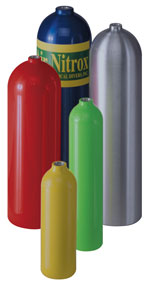
Scuba tanks are made out of steel or aluminum. Aluminum is cheaper and has somewhat better corrosion resistance, but steel is stronger. The "standard" modern scuba cylinder is the aluminum "80", which actually holds about 77 cubic feet of air at its rated pressure of 3000 psi. This type of tank has probably caught on because for an average-sized person with reasonably good breathing skills, this size is just big enough to cover your allowable no-decompression bottom time and no more. For smaller people, 63 cubic foot aluminum tanks are available, while for larger folks there are choices as big as 120 cuft.
More: Main Tanks & Bands ...