
Mary C
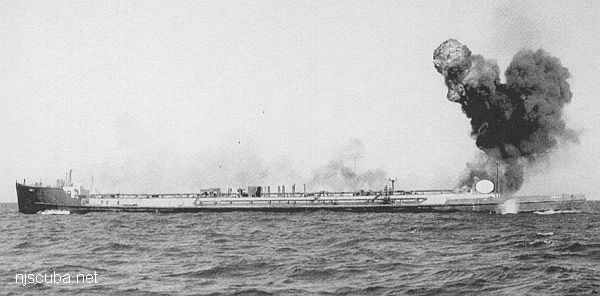
- Type:
- artificial reef, barge, tank
- Built:
- 1944, East Coast Shipyards, Bayonne NJ, as AOG-23 Ammonusuc
- Specs:
- ( 240 x 38 ft )
- Sponsor:
- Eklof Marine Co., Fish America, Atlantic County Reef Society, Princeton Dive Club, Village Harbor Fishing Club, Fish Hawks
- Sunk:
- Tuesday October 30, 1990 - Garden State North Artificial Reef
- GPS:
- 39°37.168' -74°01.720'
- Depth:
- 80 ft
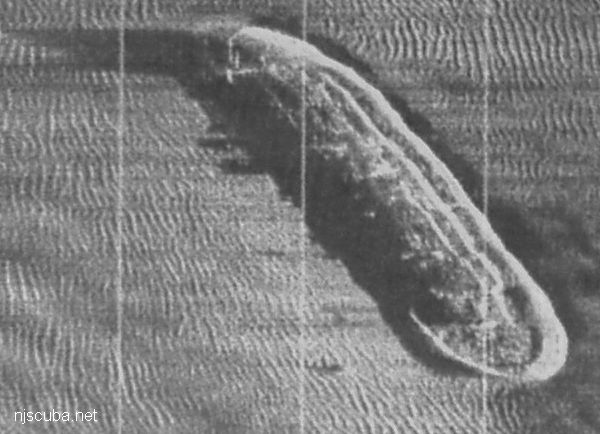
AOG-23 Ammonusuc
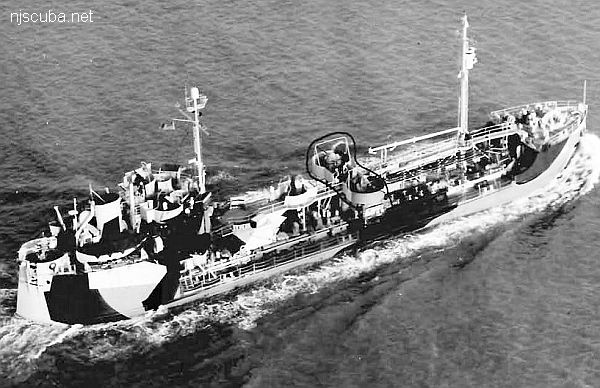
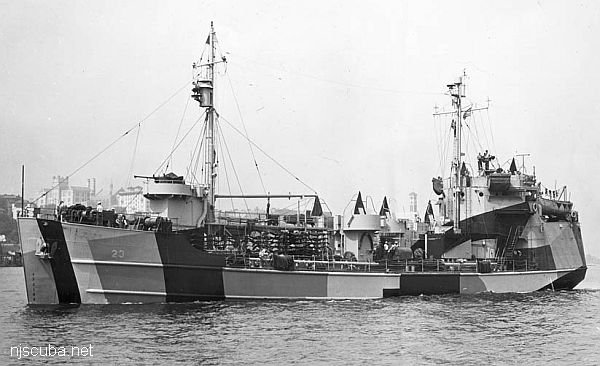
Built in 1944, by East Coast Shipyards Incorporated of Bayonne, New Jersey ( hull #5 ) as the Ammonusuc ( design number USMC #1520, Mettawee class, ) a T-1 tanker for the United States Navy. T-1 tankers were small product carriers, designed to carry gasoline. Almost all of them went to either the US Navy, as AOGs, or to Britain, for service in a similar role. Many were under construction at the end of the war, and were sold immediately. This unit entered service on May 19th, 1944, and was designated as AOG-23.
In 1948, she was sold and renamed Providence. In 1962, the unit was acquired by Texaco Marine Company Incorporated of Beaumont, Texas, where she was lengthened, and renamed Texaco Providence. In 1968, she was acquired by the Reinauer Transportation Companies of Staten Island, New York, and renamed Dean Reinauer.
In 1969, she was burned up and declared a constructive total loss. In 1970, she was converted to a tank barge at the Caddell's Dry Dock Company in Staten Island, New York, and renamed BFT No. 1. Assigned to the Reinauer Transportation Company subsidiary Boston Fuel Transportation Company of Boston, Massachusetts.
The barge was then acquired by a Norfolk, Virginia-based owner, renamed Mary C, and converted to carry sludge. Then acquired by Eklof Marine Corporation of Staten Island, New York, and stripped for spare parts.
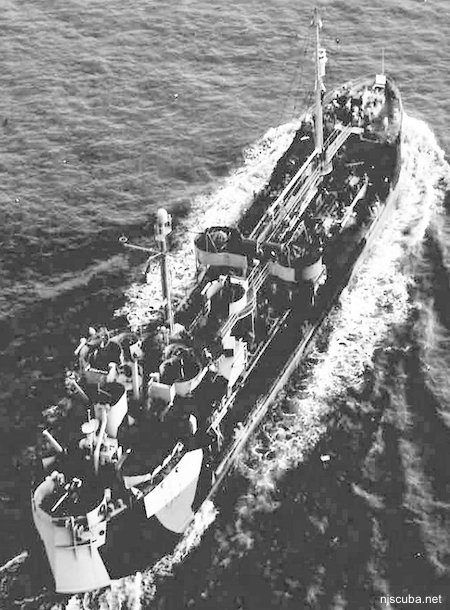
Ammonusuc was sister to AOG-33 Ochlockonee ( Vincent Tibbetts )
Artificial Reef Sites, Artificial Reefs, Barges, Garden State North Artificial Reef, New Jersey Artificial Reef Sites, New Jersey Artificial Reefs,
Garden State North Artificial Reef
6.5 Nautical Miles off Harvey Cedars, 1.50 sq miles
Depth: 65-85 ft [download]
Good Times and Queen Mary are plotted from 1989 LORAN numbers. Although the TDs are slightly different, the resulting conversions are identical. It doesn't matter, neither one is still there.
More: Garden State North Artificial Reef ...
- Absecon Inlet
- Adriatic
- USS Akron
- Almirante
- Anastasia
- Astra
- Barnegat Inlet
- Brigantine Beach Wreck
- boiler wreck
- Bonanza
- Brick barge
- Brigantine Inlet
- Cornelius Grinnell
- Caddo
- Capt Smitty
- Cassandra
- Charlemagne Tower
- Chaparra
- Chesapeake
- clam boat
- Creole
- Delaware
- dredge
- Duncan
- Emerald / USS Hibiscus
- Francis A Perkins
- William R Farrell
- FF Clain
- Gassoon
- Gory Wreck
- Glory Wreck
- Granite Wreck
- Great Isaac
- Gulftrade (stern)
- Gulftrade (bow)
- Hankins (Big)
- Hankins (Offshore)
- Hankins 3
- Cornelius Hargraves
- Harry Rush
- Hornet
- Ida K
- Inshore barge/tug
- Irene/Truro
- John Minturn
- John Marvin
- Kennebec
- Lake Frampton
- Lake Allure
- Lana Carol
- Lavallette Wreck
- Leon Walter
- Lillian
- Manhattan
- Maurice Tracy
- Mediator
- Meta
- Middle Barge
- Mohawk
- EF Moran
- Mullica River Wrecks
- NJ Aquarium
- Northern 29
- NW Barges
- Offshore Tug
- Oklahoma
- Patrice McAllister
- Park City
- Peerless
- Persephone
- Remedios Pascual
- Reliable
- Ridge Schooner
- Riggy
- RP Resor
- Rump
- Southern Lillian
- Sachem
- Salem
- San Saba
- Sea Hag
- Seaside Crane Barge
- Shookus
- Simala
- Sumner
- Southwest Mohawk
- Thurmond
- Tolten
- Troop Carrier
- Vivian
- Vizcaya
- Yellow Flag
- ZPG-3W
More: Barnegat Dive Sites Chart ...
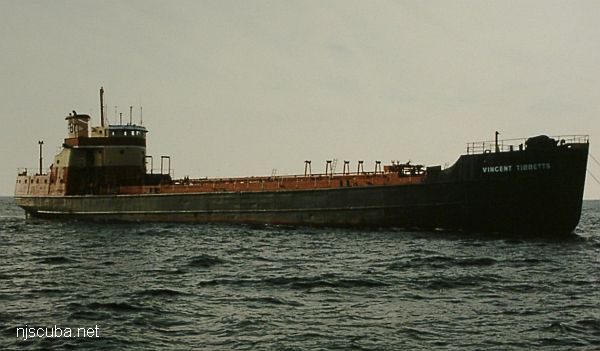
- Type:
- artificial reef, T1-M-A2 tanker, gasoline
- Built:
- 1944, East Coast Shipyards, Bayonne NJ USA as USS Ochlockonee AOG-33
- Specs:
- ( 244 x 37 ft ) tonnage unknown after lengthening
- Sponsor:
- Cape May County Party & Charter Boat Association, PSE&G Habitat Restoration Fund, friends of Walt Hendee, Ann E Clark Foundation
- Sunk:
- Thursday Sept 5, 2002 - Deepwater Artificial Reef
- GPS:
- 38°58.385' -74°11.429'
- Depth:
- 135 ft
More: Vincent Tibbetts AOG-33 ...
Questions or Inquiries?
Just want to say Hello? Sign the .