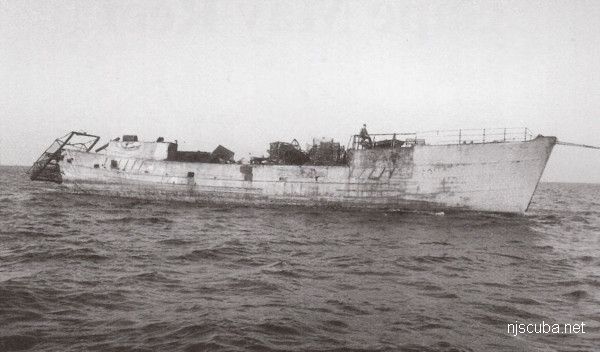
Barnegat Dive Sites Chart
- Absecon Inlet
- Adriatic
- USS Akron
- Almirante
- Anastasia
- Astra
- Barnegat Inlet
- Brigantine Beach Wreck
- boiler wreck
- Bonanza
- Brick barge
- Brigantine Inlet
- Cornelius Grinnell
- Caddo
- Capt Smitty
- Cassandra
- Charlemagne Tower
- Chaparra
- Chesapeake
- clam boat
- Creole
- Delaware
- dredge
- Duncan
- Emerald / USS Hibiscus
- Francis A Perkins
- William R Farrell
- FF Clain
- Gassoon
- Gory Wreck
- Glory Wreck
- Granite Wreck
- Great Isaac
- Gulftrade (stern)
- Gulftrade (bow)
- Hankins (Big)
- Hankins (Offshore)
- Hankins 3
- Cornelius Hargraves
- Harry Rush
- Hornet
- Ida K
- Inshore barge/tug
- Irene/Truro
- John Minturn
- John Marvin
- Kennebec
- Lake Frampton
- Lake Allure
- Lana Carol
- Lavallette Wreck
- Leon Walter
- Lillian
- Manhattan
- Maurice Tracy
- Mediator
- Meta
- Middle Barge
- Mohawk
- EF Moran
- Mullica River Wrecks
- NJ Aquarium
- Northern 29
- NW Barges
- Offshore Tug
- Oklahoma
- Patrice McAllister
- Park City
- Peerless
- Persephone
- Remedios Pascual
- Reliable
- Ridge Schooner
- Riggy
- RP Resor
- Rump
- Southern Lillian
- Sachem
- Salem
- San Saba
- Sea Hag
- Seaside Crane Barge
- Shookus
- Simala
- Sumner
- Southwest Mohawk
- Thurmond
- Tolten
- Troop Carrier
- Vivian
- Vizcaya
- Yellow Flag
- ZPG-3W
- Adriatic
- Barnegat Bay
- Barnegat Inlet
- Barnegat Light Reef ...
- Beach Jetties
- Bonanza
- Brick barge
- Caddo
- Chaparra
- Charlemagne Tower
- Chesapeake
- clam boat
- Cornelius Hargraves
- F.F. Clain
- Francis A Perkins
- Garden State N Reef ...
- Garden State S Reef ...
- Gassoon
- Great Isaac
- Gulf Trade
- Hankins Wrecks
- Harry Rush
- Inshore Barge/Tug
- Irene/Truro
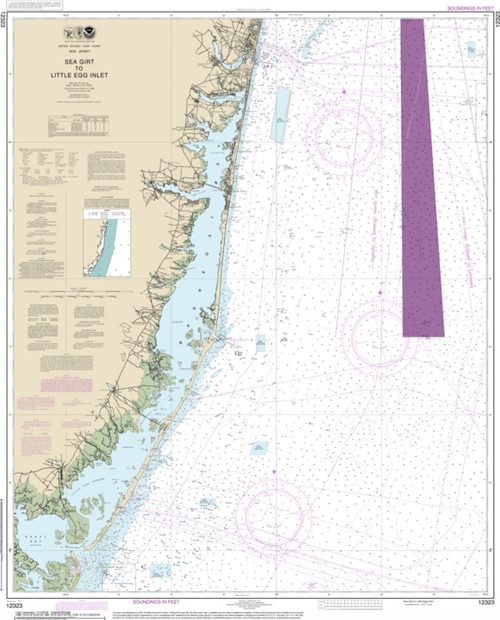
- Type:
- shipwreck, sailing ship
- Depth:
- 85 ft
A large wooden sailing ship, more intact than most. The hull is almost complete, 8-10 feet high, with a Navy-style stockless anchor in one side of the bow, and bowsprit lying in the sand below. The bowsprit indicates that this was a true sailing ship and not a schooner barge. I saw no sign of towing bits, bow, or stern. The stern is broken down.
More: Sea Hag ...
The "Sachem" wreck is typical of the remains of many unknown wooden sailing ships that are found off the coast. Three parallel sets of ribs and scattered decking between provide good habitat for lobster. The wreck sits in 60' of water on a clean sandy bottom and visibility is usually good on this site. Fairly large and scattered, it also provides a good opportunity for the spearfisherman.
More: Sachem ...
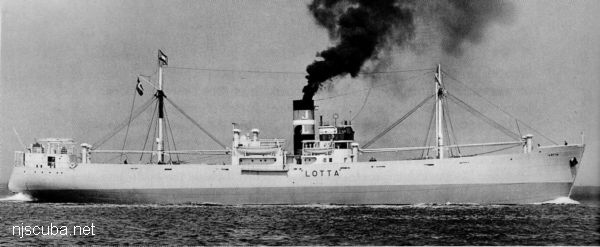
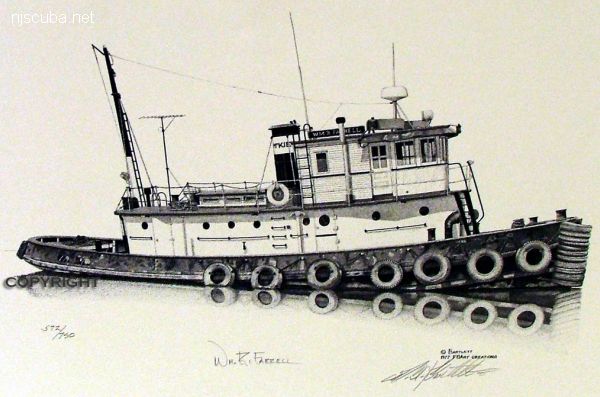
- Type:
- shipwreck, tugboat, USA
- Built:
- 1900
- Specs:
- ( 61 ft )
- Sunk:
- 1979
- Depth:
- 55 ft
More: William R Farrell ...
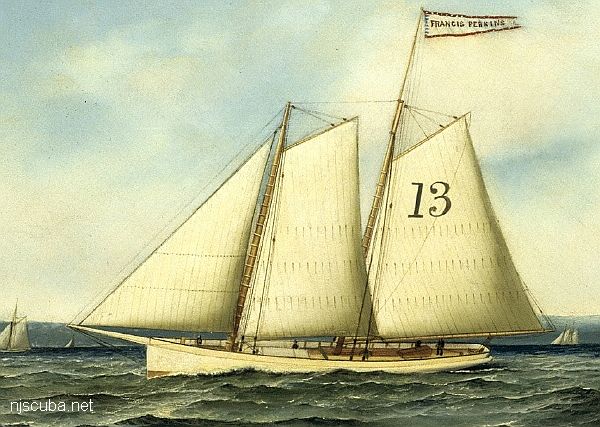
- Type:
- shipwreck, schooner, pilot boat, USA
- Built:
- 1876, New York, USA
- Specs:
- ( 78 x 20 ft ) 52 tons, 9 crew
- Sunk:
- Monday January 24, 1887
ran aground - 2 casualties - Depth:
- 80 ft
More: Francis A Perkins ...
- Type:
- shipwreck, sailing ship
- Specs:
- 965 tons
- Sunk:
- Wednesday February 17, 1943
possibly collision with barge F.F. Clain - Depth:
- 80 ft
The Harry Rush is described as a freighter by Krotee, not always the most reliable source. The wreck commonly known as the Harry Rush is a sailing ship. The wreck is the typical three parallel wooden walls, very low-lying, with some steam machinery and chain pile at the west end. The orientation of the wreck is unusual, as if it sank while running for the shore, rather than riding out a storm. The absence of towing bits makes it likely this was a true sailing ship rather than a schooner barge.
More: Harry Rush ...