
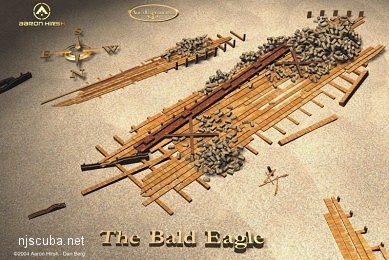
Bald Eagle

Shipwreck Bald Eagle rocks
Type:
shipwreck, barge (s?)
Depth:
90 ft

The "Bald Eagle" consists of a substantial amount of wreckage, including stone piles, wood ribs, metal ribs, and metal debris. The wreckage is scattered in all directions, and this, along with the variety of different materials found, makes it very likely that this is not a single wreck, but the superimposed remains of two or more unidentified vessels. In one part there is a recognizable stern section, with a propeller. Some parts of the wreck are separated from the main section, and may in fact be small wrecks of their own. Or it could all be the torn-apart remains of a single very large wreck.

Judging by the bottles you can find, at least part of this wreck dates from the early part of the twentieth century. However, these could have been dumped onto the site after the fact. Lobstering here is often an exercise in frustration, but it would be unusual to go home without at least one. Sometimes you can move the stones to get at them, but most of them have seemingly bottomless holes to retreat into. Fish life is profuse. Visibility tends to be better than inshore sites, but still not great, and easily ruined by stirring up the silty bottom.
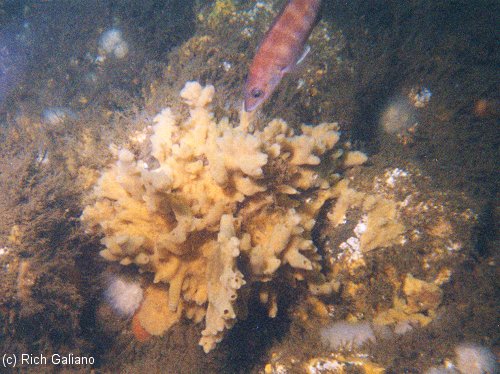
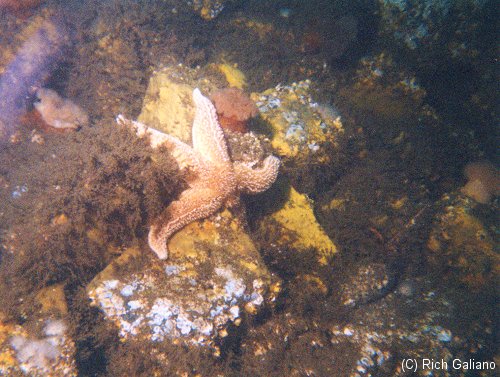
Shipwreck Bald Eagle sponge
Cunner inspects a sponge on the Bald Eagle
starfish
As you can see, there is a good deal of color on this wreck, which is really not fully expressed in these pictures.

The Bald Eagle sits on the edge of the old 12-Mile dump. It is possible that when the vessel was worn-out, it was simply sunk, full of garbage, now diver treasure. Or the garbage was dumped on top of the wreck.
Comments on Bald Eagle

Questions or Inquiries?

Just want to say Hello? Sign the .

Submit a Comment

Your email address will not be published. Required fields are marked *


Click image to replace if unable to read.

Enter the digits from the image above, except for the last one:

This site uses Akismet to reduce spam. Learn how your comment data is processed.


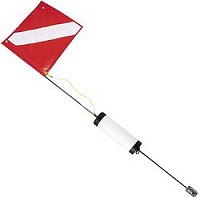
dive flag

All divers are required to show a flag when in the water. When boat diving, the boat will fly the flag for you, but when shore diving you must take care of this yourself. All dive shops sell flag/floats and lines. The simple fiberglass pole type is inexpensive and works fine; there is no need to buy anything extravagant - it will only get beat-up. If you plan to stay in one place, you can tether the flag to an extra weight on the bottom, or even just prop it up at the shore. If you plan to move around, then you should drag it behind you.

dive flag line

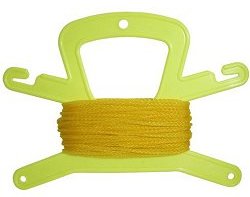
Use only polypropylene for a flag line, never nylon. Polypropylene floats, so when it goes slack it will float up away from you, instead of sinking down in coils around you, like nylon. The big yellow spools that dive shops sell work very well. Although they look clumsy, their size makes them easier to handle in the water. With experience, you will learn to gauge the amount of line necessary to keep the flag from being pulled under, without letting out a huge excess to get tangled up in. Add a brass snap to clip it off for hands-free use. Once you get used to it, dragging a flag is really no trouble at all.