
USS Tarantula SP-124
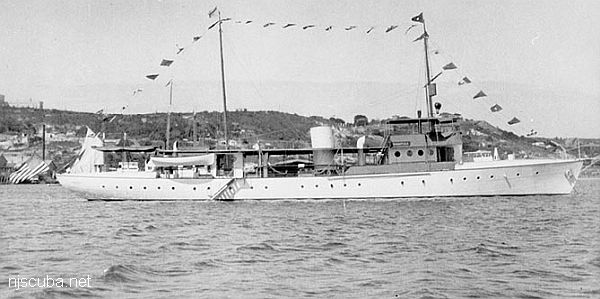
- Type:
- shipwreck, patrol boat, converted yacht, U.S. Navy
- Built:
- 1912, Lawley & Sons, Neponset MA USA
- Specs:
- ( 129 x 19 ft ) 160 gross tons
- Sunk:
- Monday October 28, 1918
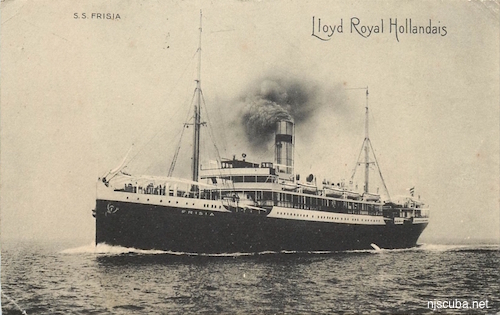
collision with steamer Frisia - no casualties - Depth:
- 115 ft
Tarantula
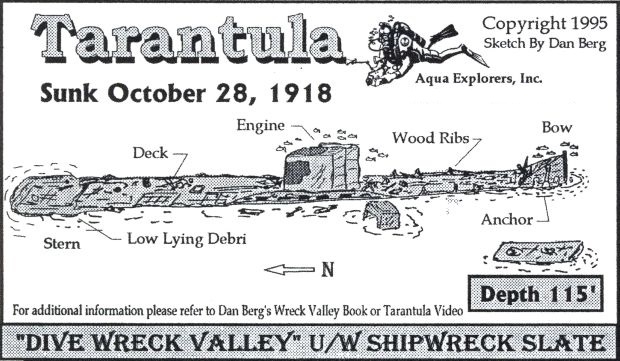
Commonly known as the Gun Boat, the identity of this wreck had been unknown since she was originally located by Jay Porter. She was given the name Gun Boat by divers who noticed the armament that she had carried. In 1985, Billy "Bubbles" deMarigny, a local diver, found and recovered the ship's bronze bell. Inscribed on the bell was the ship's true name, Tarantula. The Tarantula was a private steam yacht. But why would a yacht be armored?. Through some research, I believe I've found the answer.
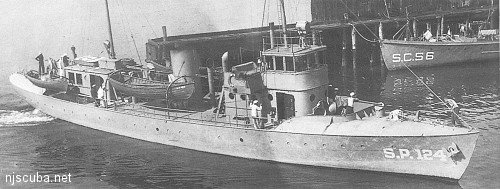
While researching the name Tarantula, I came across two ships. Both were yachts owned by W.K. Vanderbilt, one built in 1902 and the other in 1912. I thought I had found the answer when I read that the ship built in 1902 had been commissioned by the Canadian Navy during WW I. This ship was renamed the H.M.C.S. Tuna and would have certainly explained the wreck's guns, but unfortunately, my early assumption was wrong. The Tuna had never sunk; she was sold in 1918 and eventually stripped for salvage. The Gun Boat wreck off of Long Island was the 128 foot by 19 foot, 159-ton U.S.S. Tarantula, built by George Lawley and Son Corp in 1912. She was in service with the U.S. Navy at the time of her loss. After a collision with the Royal Holland Lloyd Line freighter SS Frisia, on October 28, 1918, the Tarantula sunk.
Today, the U.S.S. Tarantula lies 22 miles off Jones Inlet in 115 feet of water. If you want to dive on her or fish over this wreck, most captains know her as the "Good Gun Boat" wreck. The remains are very low lying with only her boilers coming off the bottom about seven feet. She lies in a straight line. Her bow, which only protrudes about three feet off the bottom, still has a navy anchor in place on the starboard side. Divers can dig just ahead of the boilers for ammunition or behind the boilers for china and silverware.
Excerpted from Wreck Valley CDROM by Dan Berg
Questions or Inquiries?
Just want to say Hello? Sign the .