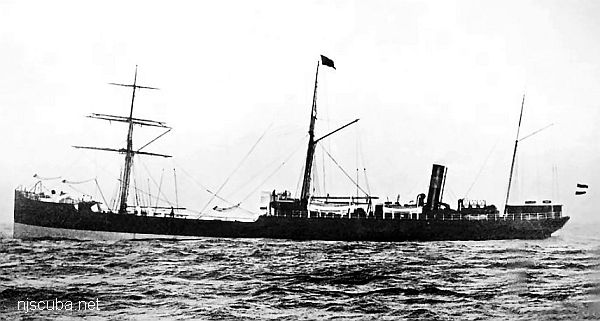
Gluckauf

Shipwreck Gluckauf
Type:
shipwreck, tanker, Germany
Built:
1886, Germany
Specs:
( 300 x 37 ft ) 2307 gross tons
Sunk:
Friday March 25, 1893
ran aground in storm - no casualties
Depth:
0-25 ft

The Gluckauf lies 75 to 100 ft offshore in 25 ft of water. Visibility is poor and worsens as the surge increases. Small sections are exposed at low tide. No artifacts worth mentioning are left. She is a jumbled mass of twisted wreckage, spread over a wide area. The most-dived section is the stern.
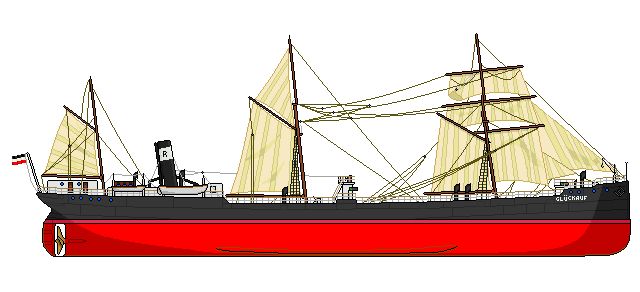
Shipwreck Gluckauf

The Gluckauf was the first tanker of modern design, where the liquid cargo is contained directly in the hull, rather than in barrels. Ironically, Gluckauf means "lucky" in German, but then all ships eventually come to an end.
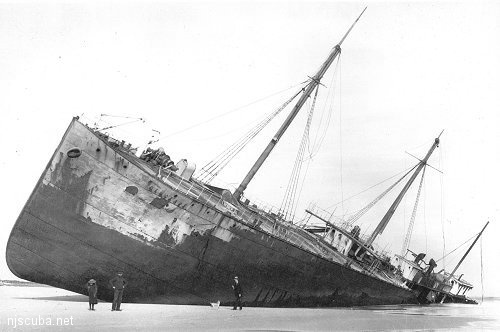
Shipwreck Gluckauf
Shipwreck Gluckauf

Gluckauf


Comments on Gluckauf

Questions or Inquiries?

Just want to say Hello? Sign the .

Submit a Comment

Your email address will not be published. Required fields are marked *


Click image to replace if unable to read.

Enter the digits from the image above, except for the last one:

This site uses Akismet to reduce spam. Learn how your comment data is processed.


Delaware Water Gap Bottles

Glass is a hard substance, usually brittle and transparent, composed chiefly of silicates and an alkali fused at high temperature.

Composition and Properties of Glass

Most glass is a mixture of silica obtained from beds of fine sand or from pulverized sandstone; an alkali to lower the melting point, usually a form of soda or, for finer glass, potash; lime as a stabilizer; and cullet ( waste glass ) to assist in melting the mixture. The properties of glass are varied by adding other substances, commonly in the form of oxides, e.g., lead, for brilliance and weight; boron, for thermal and electrical resistance; barium, to increase the refractive index, as in optical glass; cerium, to absorb infrared rays; metallic oxides, to impart color; and manganese, for decolorizing.