H10284/88 -- OPR-C147-WH-88; AN OBSTRUCTION WAS FOUND WITH AN ESTIMATED DEPTH OF 33 FT; OBSTRUCTION IS 269M SW OF CHARTED POSITION OF THIS ITEM AND 81M SW OF POSITION OF ITEM 1571; EVALUATOR BELIEVES THAT THIS CONTACT IS THIS ITEM OR ITEM 4600; THERE ARE OTHER OBSTRUCTIONS IN THE VICINITY OF THE AWOIS ITEM THAT WERE LOCATED BY THE PRESENT SURVEY, BUT THIS IS THE MOST SIGNIFICANT AND HAS AN ESTIMATED HEIGHT THAT IS CLOSE TO THE CHARTED INFORMATION. (UPDATED MSD 6/91)
FE330SS/89 -- OPR-C147-HE-89; CONTACT #22 FROM SURVEY H-10284/88; DIVERS INVESTIGATION REVEALED THE REMAINS OF A LARGE WOODEN WRECK WHICH IS BADLY BROKEN UP, DETERIORATED, AND STREWN ABOUT THE BOTTOM; SEVERAL LARGE TIMBERS RISE AT ANGLES ABOVE THE GENERAL TREND OF THE WRECK; TIMBERS ARE MOST LIKELY THE RIBS FROM THE WRECK; LEADLINE LEAST DEPTH WAS TAKEN BY DIVERS ON THE AFTERMOST VERTICAL TIMBER; DUE TO THE DETERIORATED CONDITION OF WRECK, POSITIVE IDENTIFICATION IS NOT POSSIBLE; HOWEVER, DIVERS REPORTED THAT THE WRECKAGE WAS MORE LIKELY A BARGE THAN A WAR VESSEL (AWOIS ITEM 1571) (UPDATED MSD 6/91)
FE330SS/89 -- OPR-C147-HE-89; CONTACT #24 FROM SURVEY H-10284/88; SIDE-SCAN SONAR AND DIVER INVESTIGATION FOUND THE BADLY DETERIORATED WRECKAGE OF A WOODEN SHIP; A LARGE METAL MOORING OR TOWING BIT WAS FOUND IN THE WRECKAGE; LEADLINE LEAST DEPTH OF 41 FT TAKEN ON WHAT APPEARED TO BE THE RIBS OF THE WRECK. (ENTERED MSD 6/91)
FE331SS/89 -- OPR-C147-HE-89; CONTACT #19 FROM SURVEY H-10285/88; DIVERS LOCATED AN OVERTURNED 50 FT STEEL-HULLED BOAT WHICH ROSE APPROXIMATELY 5 FT OFF OF A SANDY BOTTOM; LEADLINE LEAST DEPTH OF 40 FT. (ENTERED MSD 7/91)
"This is a worthless rusted-out metal hull with NOTHING of interest and not even worth listing."
FE312SS/88 -- OPR-C121-WH-88; WHILE SEARCHING FOR AWOIS ITEM 1634, TWO SIDE-SCAN SONAR CONTACTS WERE LOCATED AND IDENTIFIED AS WRECKAGE (ALSO REFERENCE ITEM 7508); AN OBSTRUCTION (SSS CONTACT NO. 379.6S) WAS FOUND; DIVER LEAST DEPTH OF 36 FT. IN PRESENT SURVEY DEPTHS OF 38 FT.; REMAINS OF A PORTION OF A KEEL OF A METAL HULLED VESSEL; VESSEL WAS LYING INVERTED WITH THE KEEL EXPOSED; PORTION OF MIDSECTION OF VESSEL WAS VISIBLE; ENTIRE STRUCTURE WAS COATED WITH ANTI-FOULING PAINT; 45 FT. WIDE AT THE BEAM, 37 FT. AT THE NORTHERN END AND 18 FT. LONG; SOUTHERN END OF SITE WAS BENT AND TWISTED; HULL STOOD APPROXIMATELY 3 FT. OFF THE BOTTOM AT THE NORTHERN END, AND A SAND SCOUR AT THE SOUTHERN END EXPOSED APPROXIMATELY 6-8 FT. OF THE WRECK (3-4 FT. BELOW THE SURROUNDING BOTTOM). (ENTERED MSM 10/89)
H10224/86 -- OPR-C121-WH-86; WHILE INVESTIGATING ITEM 751, AN AREA WITH NUMEROUS SIDE-SCAN SONAR CONTACT WAS FOUND AND DEVELOPED USING SIDE-SCAN AND ECHO SOUNDER; DIVER INVESTIGATION DETERMINED LIMITS OF SITE, NATURE OF WRECKAGE, AND LOCATION OF THE LEAST DEPTH; SITE WAS ORIENTED NORTHEAST-SOUTHWEST; CONSISTS MOSTLY OF SHIPYARD DEBRIS IN THE FORM OF HEAT EXCHANGERS, BUCKLED DECK PLATING, TWISTED ANGLE IRON, WOODEN RIBS, AND PIPING OF VARIOUS LENGTHS AND SIZES; THE NORTHEAST END OF THE SITE CONSISTED OF A BARGE LYING IN A NORTHWEST-SOUTHEAST DIRECTION WITH THE BOW OF THE BARGE DEFINING THE SOUTHEAST WALL OF THE SITE; THE NORTHWEST END OF THE BARGE, THE STERN, WAS COVERED WITH METAL DEBRIS, HAWSER LINES, AND TRAWLER NETTING; DIVERS CONCLUDED THAT THIS SITE IS THE WRECK OF A BARGE THAT WAS FILLED WITH SHIPYARD SCRAP IRON AND DEBRIS; PNEUMATIC DEPTH GAUGE LEAST DEPTH OF 50 FT. (ENTERED MSD 4/91)
H10224/86-88 -- OPR-C121-WH; SIDE-SCAN SONAR CONTACT. DIVERS DESCRIBE A WRECK SITE 250' X 50' CONTAINING THE REMAINS OF WHAT APPEARED TO BE A WOODEN VESSEL (DECK MACHINERY, 3-FOOT DIA. METAL CYLINDER, LARGE TIMBERS REINFORCED WITH METAL PLATES). LD (PNEUMO) OF 53 FEET. (ENT 5/30/96, SJV)
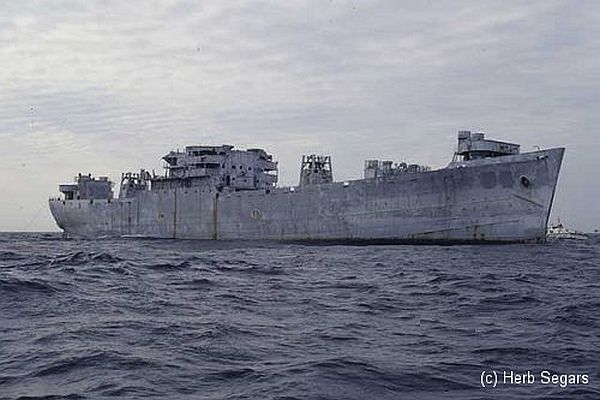
artificial reef, Andromeda class attack transport (
freighter ), U.S. Navy, also known as a "Victory Ship", although often incorrectly referred to as a Liberty Ship
Name:
One of a series of Navy transports named for stars; Algol is a star in the constellation Perseus, also known as the Demon star.
Built:
1943, Moore Drydock, Oakland CA USA, as James Barnes
Specs:
( 459 x 63 ft ) 13910 displacement tons, 429 crew *
* this figure almost certainly includes embarked Marines