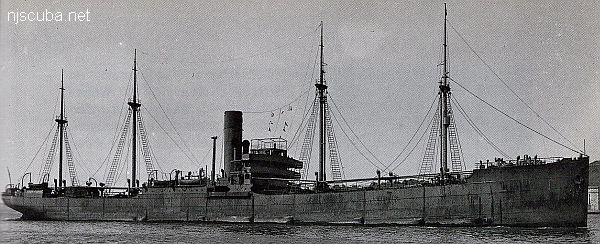
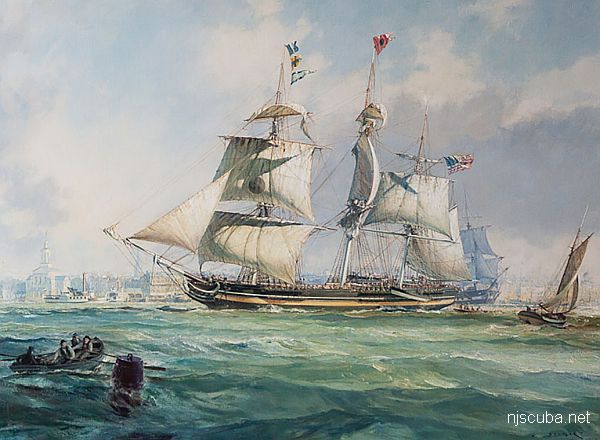
Aurora sailed for the Kermit Line.
- Type:
- shipwreck, sailing ship, USA
- Built:
- 1824, Bath ME, USA
- Specs:
- ( 106 x 22 ft )
- Sunk:
- Nov 20, 1827, ran aground in storm - 6 casualties
- Depth:
- 12 ft
More: Aurora ...
Dive Sites - pick your starting point
More: Dive Sites ...
More: Aurora ...
Axel Carlson Artificial Reef
2.0 Nautical Miles off Mantoloking, 5.19 sq miles
Depth: 65-80 ft [download]
More: Axel Carlson Artificial Reef ...
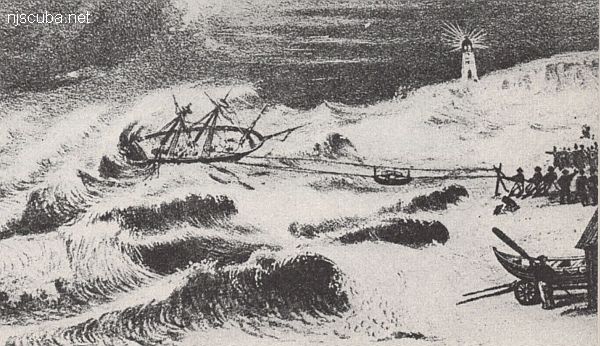
More: Ayrshire ...
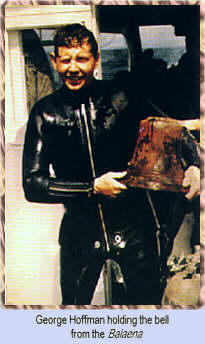
shipwreck, wooden hull full of coal
A wood sailing ship in the Mud Hole at a depth of 170 feet. She was a collier or ore carrier. She is still largely intact, coal in what's left of her holds. Divers tell tales of finding lots of deadeyes, but I haven't seen or heard of one coming from this wreck in many years. Her bell was found to identify her name, but not much else has been discovered about her history. A dive for the very experienced diver. Limited visibility, deep and dark. For those with the technical dive skill, it is a very nice dive.
More: Balaena ...
More: Barataria ...

Human lungs are designed to extract the oxygen we need from air - a mixture of roughly 21% oxygen and 79% nitrogen, at a pressure of one atmosphere ( about 14.7 psia.) As you dive deeper and longer while breathing air, the increased pressure causes ever-greater amounts of both gases to dissolve in your blood and tissues. One would expect that eventually, such elevated concentrations would become troublesome, and indeed that is the case. As it turns out, nitrogen, with its greater concentration in the air, is the first gas to become a problem during a dive to recreational depths ( <130 ft. )
This problem is that of "off-gassing", or decreasing the concentration of dissolved nitrogen in the body at a rate that does not cause bubbles of the gas to form in the tissues and blood, the condition commonly known as the bends. One way to delay the onset of this problem is to decrease the concentration of nitrogen in the breathing gas, and the easiest way to do this is simply by increasing the concentration of oxygen. The resulting mixture is typically known as Enriched Air Nitrox and has become a staple in the diving community.
More: Nitrox and Air ...