Brightliner Subway Cars (1/3)
- Type:
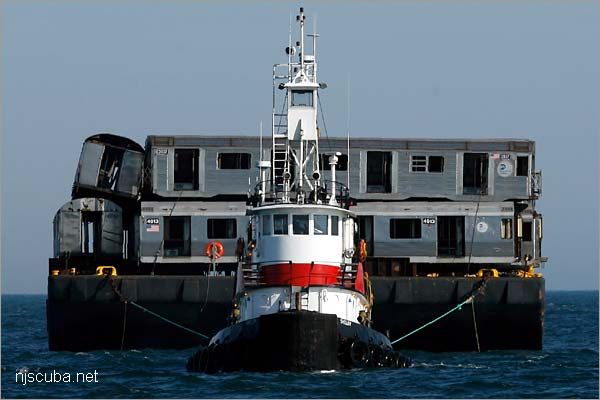
- ~100 "Brightliner" subway cars - NYC Subway system
- Built:
- 1963-1964 - Budd Company - Model R32 # 3350-3949
1966-1967 - St. Louis Car - Model R38 # 3950-4149
1967-1969 - St. Louis Car - Model R40 # 4150-4349
1969-1970 - St. Louis Car - Model R42 # 4550-4949 - Specs:
- ( 60 x 10 ft ) 10 tons ( all, typical, body only )
- Sunk:
- 44 cars were sunk on Atlantic City Reef on April 3, 2008
more in Cape May reef and Delaware reefs - Sponsor:
- New York City Metropolitan Transportation Authority ( MTA )
- GPS:
- too many to list, and all gone anyway
- Depth:
- Depths vary by location
Update 2020
The "Brightliners" went to pieces unexpectedly fast, and there is almost certainly nothing left of them by now.
Brightliner Reefs
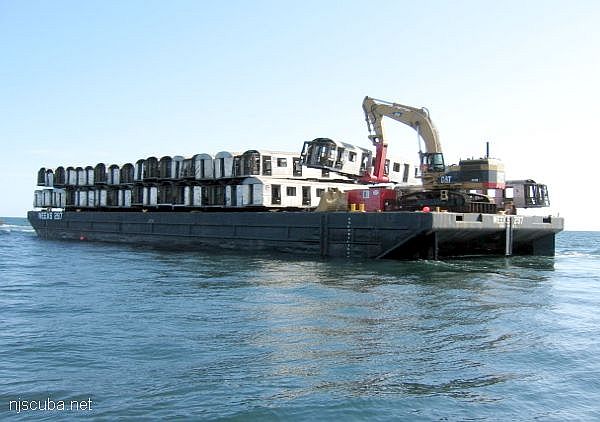
On April 3, 2008, 44 decommissioned stainless steel subway cars were deployed on the Atlantic City Reef site as part of the Artificial Reef Program. The cars are placed in a tight circle pattern to better accommodate divers. More cars were deployed on the Cape May reef, for a total of about 100. When the cars were found to have completely fallen apart after only several months, plans to deploy another 500 were abandoned.
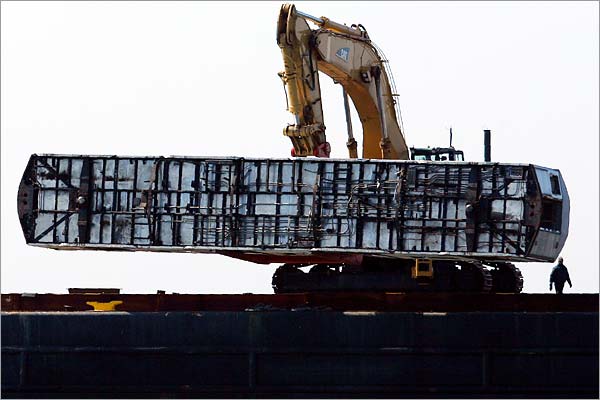
After being stripped of windows and doors, it will be difficult to tell one type from another. The R40s and R42s will also lose their fiberglass end-caps. Compared to the Redbirds, these cars are 10 feet longer, and over a foot wider, with much heavier stainless steel construction.
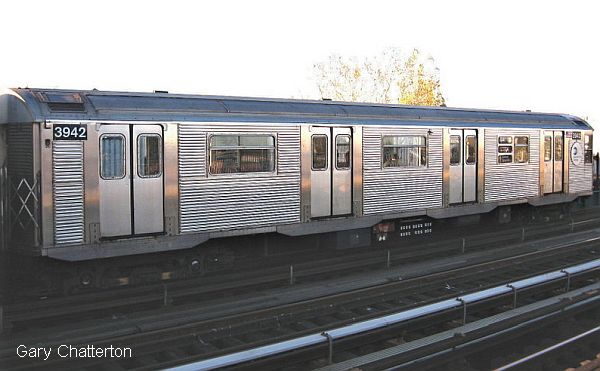
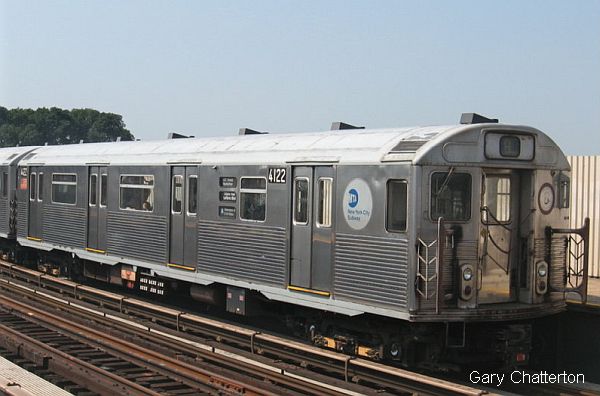
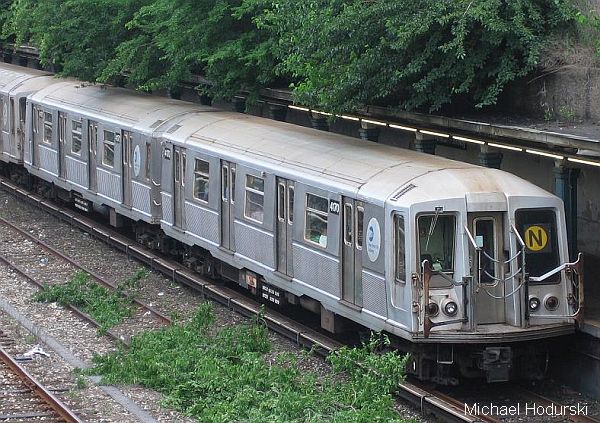
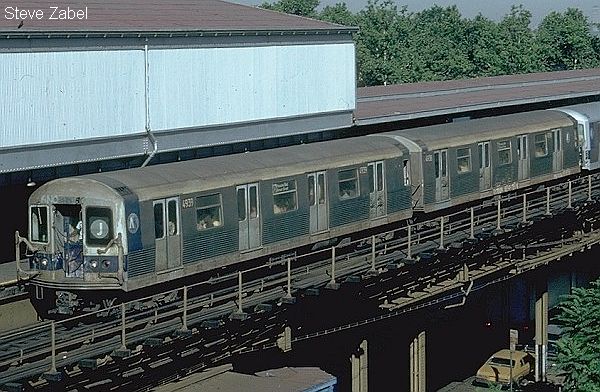
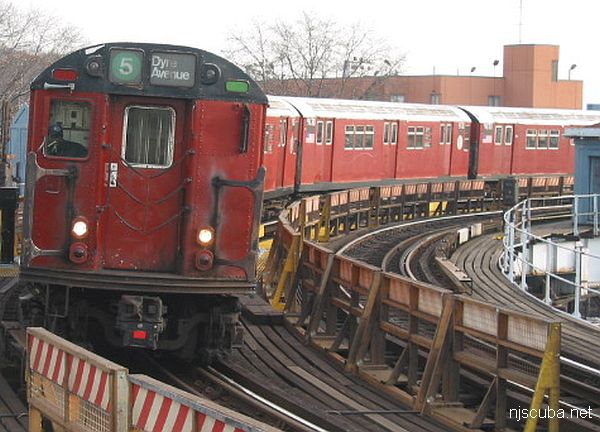
Brightliners were named for their gleaming unpainted stainless-steel finish and overall modern appearance, which contrasted strongly with the painted cars of previous generations, such as the Redbirds.
Artificial Reef Sites, Artificial Reefs, Atlantic City Artificial Reef, Delaware #11 Artificial Reef, Delaware Artificial Reef Sites, Delaware Artificial Reefs, New Jersey Artificial Reef Sites, New Jersey Artificial Reefs,
There is a great deal of controversy over the use of subway cars as artificial reefs. There shouldn't be. Subway cars are fish condos. They are the perfect size and shape to provide homes for all sorts of fishes, as well as large attachment areas for other organisms. The fact that they come complete with large door and window openings is even better. Most reef materials, such as ships and barges, improve with age because they open up, allowing easier access to the interior. Indeed, some of the most barren reefs I have seen are those that are completely intact, since they offer little shelter.
More: Rail Cars ...
Atlantic City Artificial Reef
12.2 Nautical Miles off Atlantic City, 5.00 sq miles
Depth: 55-95 ft [download]
More: Atlantic City Artificial Reef ...
Cape May Artificial Reef
8.5 Nautical Miles off Cape May, 5.34 sq miles
Depth: 50-75 ft [download]
More: Cape May Artificial Reef ...
Delaware #11 Artificial Reef
15.5 Nautical Miles from Indian River Inlet, 1.52 sq miles
Depth: 70-90 ft
More: Delaware #11 Artificial Reef ...
Cape May Chart
- Absecon Inlet
- USS Akron
- Alex Gibson
- Alexander
- Almirante
- American
- Astra
- Atlantus
- Azua
- Dorothy B Barrett
- Brigantine Beach Wreck
- USS Blenny
- boiler wreck
- Bonito
- Brian C
- Brigantine Inlet
- Brigantine Buoy Wreck
- Charles Morand
- Cape May Inlet
- Cassandra
- Cayru
- Champion
- USS Cherokee
- China Wreck
- City of Athens
- City of Georgetown
- Cleopatra
- Clermont
- Corson’s Inlet
- Crystal Wave
- William B Diggs
- dredge
- Admiral DuPont
- Elizabeth Palmer
- Elizabeth Warren
- Evening Star
- car float
- Florida
- Galimore's Cayru
- Gory Wreck
- Great Egg Inlet
- Gypsum Prince
- Hereford Inlet
- Hornet
- Hvoslef
- Independence Day
- India Arrow
- Indian River Inlet
- USS Jacob Jones
- John Marvin
- China Junk Wreck
- Kennebec
- King Cobra
- Lemuel Burrows
- Lake Frampton
- Lady Mary
- Linda Snow II
- Manhattan
- Marine Electric
- Miraflores
- Misty Blue
- Mohawk
- Montgomery
- USS Moonstone
- EF Moran
- Northern Pacific
- New Orleans
- USS Nina
- Nuphar
- Ocean Quest
- Oklahoma
- Patrice McAllister
- Pet Wreck
- Poseidon
- Ranald
- RJ Walker
- Southern Lillian
- USS S-5
- Salem
- Salem
- San Jose
- Sea Girt
- Sea Wolf
- Shookus
- Sindia
- Slabs
- General Slocum
- Southern Sword
- Townsend's Inlet
- Varanger
- Washingtonian
- Wayne
- Wily Fox
- YP-387
More: Cape May Dive Sites Chart ...
- Type:
- 250 "Redbird" subway cars - NYC Subway system - steel bodies / frames
- Built:
- 1959-1960 - American Car & Foundry - Model R26 # 7750-7859
1960-1961 - American Car & Foundry - Model R28 # 7860-7959
1962-1963 - St. Louis Car - Model R29 # 8570-8805
1962-1963 - St. Louis Car - Model R33 # 8806-9345
1963-1964 - St. Louis Car - Model R36 # 9346-9769 - Specs:
- ( 51 x 9 ft ) 15,000 to 18,000 pounds (body)
- Sunk:
- 50 cars - Cape May Reef on July 3, 2003
50 cars - Deepwater Reef on July 16, 2003
50 cars - Atlantic City Reef on July 25, 2003
50 cars - Garden State North Reef on Sept 3, 2003
50 cars - Shark River Reef on Oct 14, 2003
619 cars - Delaware Reef 11 from Aug 2001 to Nov 2003 - Sponsor:
- New York City Metropolitan Transportation Authority (MTA)
- anti-
Sponsor: - Environmental group Clean Ocean Action lobbied aggressively and almost successfully to prevent the use of these subway cars as artificial reefs in New Jersey, resulting in most of the cars going to other states.
- GPS:
- too many to list, and all gone anyway
- Depth:
- Depths vary by location between 80 ft and 130 ft.
More: Redbird Subway Cars ...