
Sandy Point
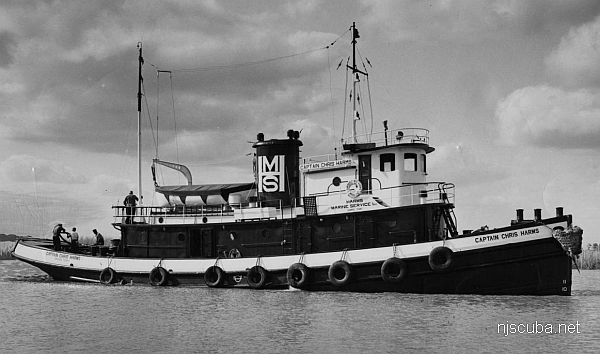
- Type:
- artificial reef, tugboat
- Built:
- 1947, Gulfport Shipbuilding, Port Arthur, TX, as Captain Chris Harms
- Specs:
- ( 85 ft )
- Sunk:
- Wednesday March 10, 2010 - Delaware #11 Artificial Reef
- GPS:
- 38°40.540' -74°43.957'
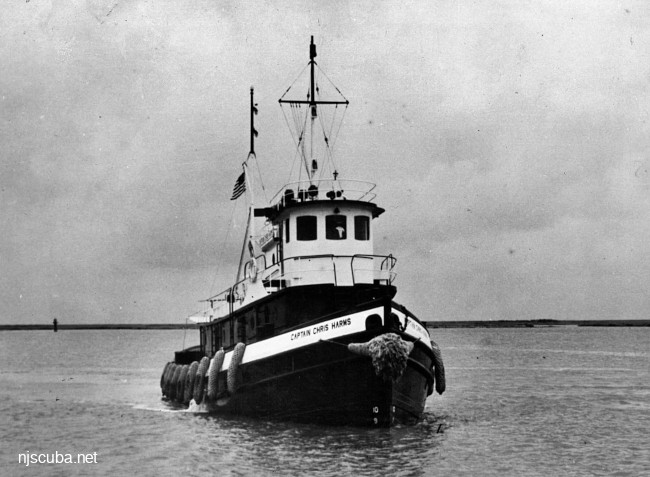
Built in 1947, by Gulfport Shipbuilding of Port Arthur, Texas (hull #273) as Captain Chris Harms for Harms Marine Services Incorporated of Houston, Texas. In 1964, the tug was acquired by the Moran Towing Company subsidiary Curtis Bay Towing Company of Baltimore, Maryland, where she was renamed Sandy Point. In 1980, she was acquired by the Crescent Towing and Salvage Company of New Orleans, Louisiana, and renamed Lillian Smith. In 1991, the Crescent Towing and Salvage Company renamed the tug the Fort Conde. The tug was single-screw, rated at 1,000 horsepower.
tugboatinformation.com
Artificial Reef Sites, Artificial Reefs, Delaware #11 Artificial Reef, Delaware Artificial Reef Sites, Delaware Artificial Reefs, Moran Towing Company, Tugboats,
Delaware #11 Artificial Reef
15.5 Nautical Miles from Indian River Inlet, 1.52 sq miles
Depth: 70-90 ft
More: Delaware #11 Artificial Reef ...
Cape May Chart
- Absecon Inlet
- USS Akron
- Alex Gibson
- Alexander
- Almirante
- American
- Astra
- Atlantus
- Azua
- Dorothy B Barrett
- Brigantine Beach Wreck
- USS Blenny
- boiler wreck
- Bonito
- Brian C
- Brigantine Inlet
- Brigantine Buoy Wreck
- Charles Morand
- Cape May Inlet
- Cassandra
- Cayru
- Champion
- USS Cherokee
- China Wreck
- City of Athens
- City of Georgetown
- Cleopatra
- Clermont
- Corson’s Inlet
- Crystal Wave
- William B Diggs
- dredge
- Admiral DuPont
- Elizabeth Palmer
- Elizabeth Warren
- Evening Star
- car float
- Florida
- Galimore's Cayru
- Gory Wreck
- Great Egg Inlet
- Gypsum Prince
- Hereford Inlet
- Hornet
- Hvoslef
- Independence Day
- India Arrow
- Indian River Inlet
- USS Jacob Jones
- John Marvin
- China Junk Wreck
- Kennebec
- King Cobra
- Lemuel Burrows
- Lake Frampton
- Lady Mary
- Linda Snow II
- Manhattan
- Marine Electric
- Miraflores
- Misty Blue
- Mohawk
- Montgomery
- USS Moonstone
- EF Moran
- Northern Pacific
- New Orleans
- USS Nina
- Nuphar
- Ocean Quest
- Oklahoma
- Patrice McAllister
- Pet Wreck
- Poseidon
- Ranald
- RJ Walker
- Southern Lillian
- USS S-5
- Salem
- Salem
- San Jose
- Sea Girt
- Sea Wolf
- Shookus
- Sindia
- Slabs
- General Slocum
- Southern Sword
- Townsend's Inlet
- Varanger
- Washingtonian
- Wayne
- Wily Fox
- YP-387
More: Cape May Dive Sites Chart ...
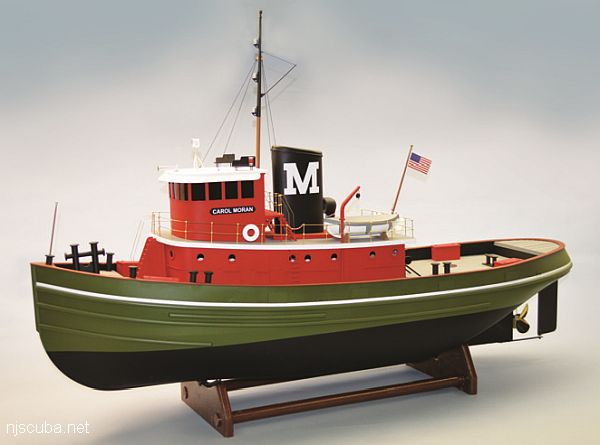
Founded in 1860, by Michael Moran as a towing and brokerage firm, the Moran Towing and Transportation Company of New York, New York. In 1863, the company transitioned from a brokerage firm to an owner/operator of towing vessels when the company acquired a one-half interest in the tugboat Ida Miller for $2,700. In 1880, Michael Moran painted the first white "M" on the stack of a Moran tugboat.
More: Moran Towing Company ...
Questions or Inquiries?
Just want to say Hello? Sign the .