
Reedville FS-278
- Type:
- artificial reef, freighter, purse seiner
- Built:
- 1944, Wheeler Shipbuilding, Brooklyn NY USA, as Army FS-278
- Specs:
- ( 166 x 32 ft ) 542 gross tons
- Sunk:
- Friday, August 14, 2020 - Delaware #11 Artificial Reef
- GPS:
- 38°40.423' -74°44.295'
- Depth:
- 80 ft
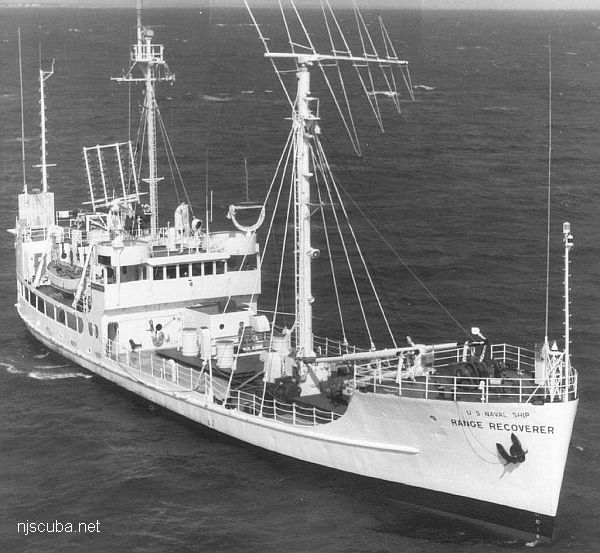
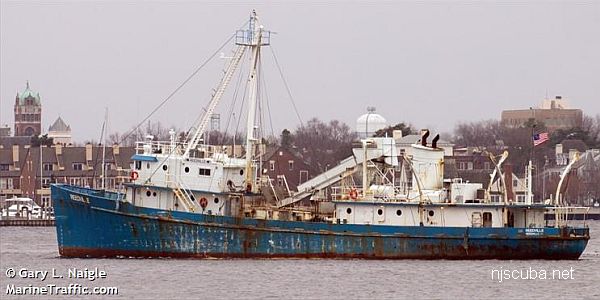
Reedville was built by Wheeler Shipbuilding in 1944 for the US Army as FS-278, one of the countless small freighters needed for the war effort. Coast Guard-manned FS-278 departed New York on 17 December 1944, for the Southwest Pacific where she operated at Peleliu, Palawan, etc. during the war. She was decommissioned shortly after the war's end.
In 1960 the vessel was transferred to the Navy and converted to a missile range instrumentation ship. Rechristened Range Recoverer, she went through a series of classifications: T-AG-161, T-AGM-2, YFRT-524. Range Recoverer supported missile tests for the Navy and NASA on both coasts, finishing her career in Virginia.
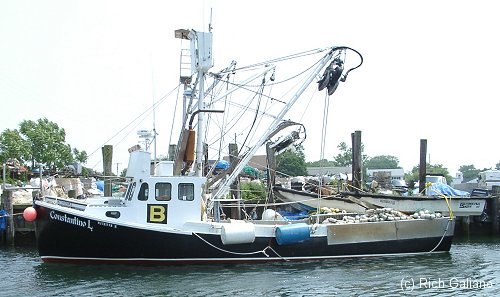
By 1974, the Navy had disposed of the vessel, which was then converted to a purse seiner by the Omega Protein Company ( or whatever name it had at the time, ) at which point its history became basically the same as Shearwater. Reedville was named for her home port of Reedville Virginia, Omega's main base of operations on the east coast.
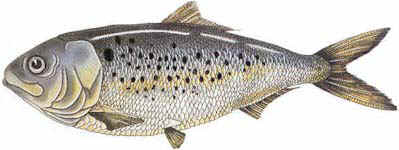
In 2013, Omega acquired two new purpose-built vessels to replace the well-worn World War II-era conversions, and eventually donated Shearwater and Reedville as artificial reefs. Omega fishes exclusively for Atlantic Menhaden, or Mossbunker (pictured), which is used in the manufacture of a wide range of products.
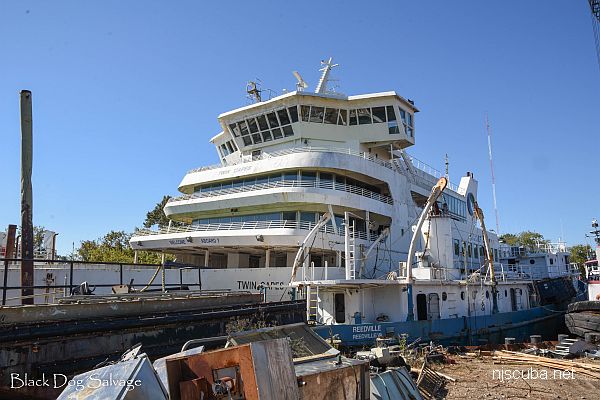
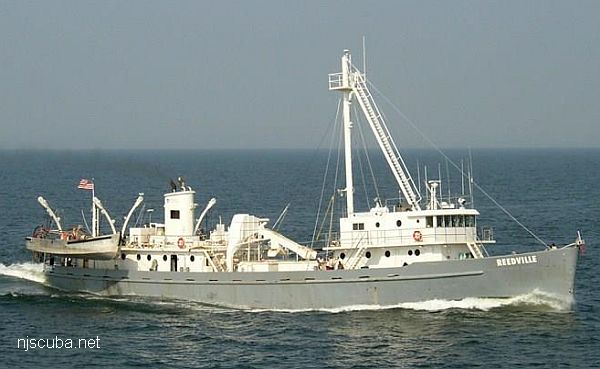
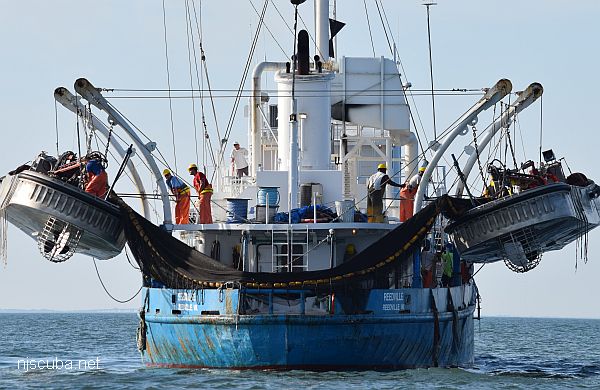
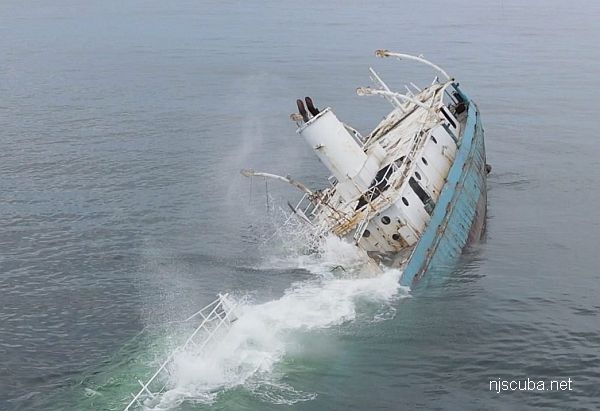
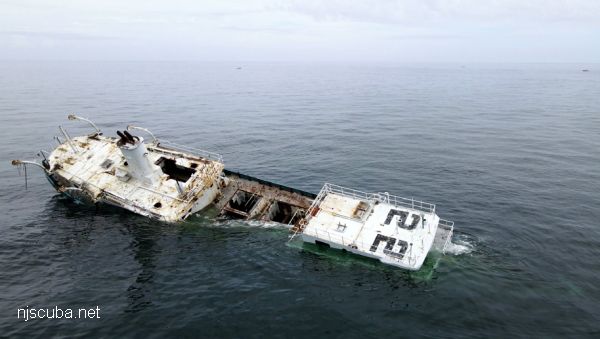
Reedville is a repeat of Shearwater, the vessels are nearly identical. Reedville settled on her starboard side.
Artificial Reef Sites, Artificial Reefs, Bunker Boats, Delaware #11 Artificial Reef, Delaware Artificial Reef Sites, Delaware Artificial Reefs, Military Reefs, Omega Boats, Seiners,
Delaware #11 Artificial Reef
15.5 Nautical Miles from Indian River Inlet, 1.52 sq miles
Depth: 70-90 ft
More: Delaware #11 Artificial Reef ...
Cape May Chart
- Absecon Inlet
- USS Akron
- Alex Gibson
- Alexander
- Almirante
- American
- Astra
- Atlantus
- Azua
- Dorothy B Barrett
- Brigantine Beach Wreck
- USS Blenny
- boiler wreck
- Bonito
- Brian C
- Brigantine Inlet
- Brigantine Buoy Wreck
- Charles Morand
- Cape May Inlet
- Cassandra
- Cayru
- Champion
- USS Cherokee
- China Wreck
- City of Athens
- City of Georgetown
- Cleopatra
- Clermont
- Corson’s Inlet
- Crystal Wave
- William B Diggs
- dredge
- Admiral DuPont
- Elizabeth Palmer
- Elizabeth Warren
- Evening Star
- car float
- Florida
- Galimore's Cayru
- Gory Wreck
- Great Egg Inlet
- Gypsum Prince
- Hereford Inlet
- Hornet
- Hvoslef
- Independence Day
- India Arrow
- Indian River Inlet
- USS Jacob Jones
- John Marvin
- China Junk Wreck
- Kennebec
- King Cobra
- Lemuel Burrows
- Lake Frampton
- Lady Mary
- Linda Snow II
- Manhattan
- Marine Electric
- Miraflores
- Misty Blue
- Mohawk
- Montgomery
- USS Moonstone
- EF Moran
- Northern Pacific
- New Orleans
- USS Nina
- Nuphar
- Ocean Quest
- Oklahoma
- Patrice McAllister
- Pet Wreck
- Poseidon
- Ranald
- RJ Walker
- Southern Lillian
- USS S-5
- Salem
- Salem
- San Jose
- Sea Girt
- Sea Wolf
- Shookus
- Sindia
- Slabs
- General Slocum
- Southern Sword
- Townsend's Inlet
- Varanger
- Washingtonian
- Wayne
- Wily Fox
- YP-387
More: Cape May Dive Sites Chart ...

Omega Protein with fishing partner Ocean Harvesters have a long history of collaborating with government agencies and non-profit organizations to offer retired vessels to artificial reef programs. The vessels that have been submerged act as a habitat for marine life, promoting biodiversity and creating recreational fishing and diving opportunities. The former vessels that have been sunk include the F/V Reedville off of the coast of Delaware in 2020, the F/V Barataria Bay off the coast of Mississippi in 2015, the F/V Great Wicomico in the Gulf of Mexico in 2009, and the F/V von Rosenberg off the coast of Mississippi in 2000.
More: Omega Protein Artificial Reefs ...
More: Purse Seiners & Gill-netters ...
Scientific Name:
Brevoortia tyrannus
Atlantic Menhaden:
A Profile
Family:
Clupeidae
Size:
12"-15"
1 lb.
Common Names:
menhaden, bunker, mossbunker, pogy, fatback, alewife, bugfish, skipjack
Although this herring is generally considered unfit for human consumption, the menhaden fishery is one of the most important and productive fisheries on the Atlantic coast. For years, it has provided coastal communities with a stable source of employment and the nation with a major source of protein on a renewable and environmentally sound basis.
More: Atlantic Menhaden ...
Questions or Inquiries?
Just want to say Hello? Sign the .