
Purse Seiners & Gill-netters
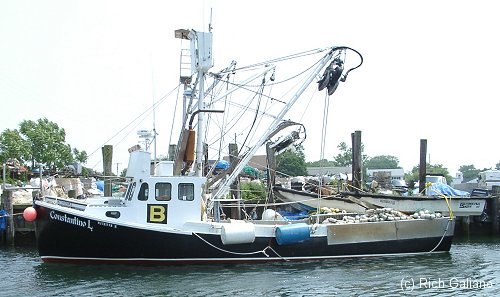
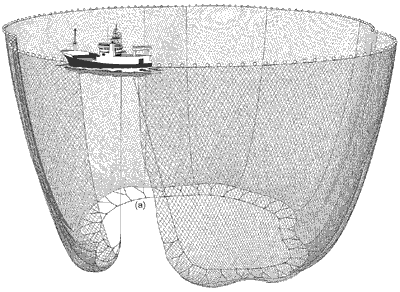
A purse seine net is a complex device with floats at the top and lead weights at the bottom. Often, a skiff is used to draw out the floating net around the fish. The purse line at the bottom of the net is then drawn in, closing it off and trapping the fish. The net is then taken aboard over a large roller, either at the side or the stern. The mesh is usually sized to let small fish escape while retaining large ones.
Most of the purse seining done in New Jersey waters is for Mossbunker, which is used as bait. Mossbunker, aka Menhaden, is also ground up for animal feed and fertilizer, but fishing it for such uses is banned in state waters, which hopefully does something to save our fish from the fleets of huge offshore "bunker boats" that travel the world's oceans vacuuming out the fish. Local seining boats tend to be small.
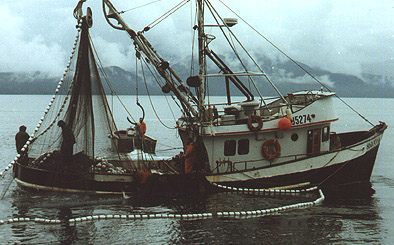
Purse seining like this is also the preferred method of catching tuna and other pelagic fishes. Dolphins that travel with schools of such fishes are often trapped in the nets and drown. Why they don't just jump out is a mystery. In recent years, new methods of purse seining have reduced such unfortunate bycatches.
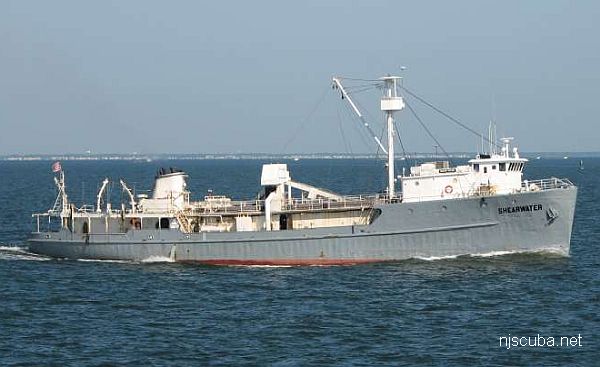
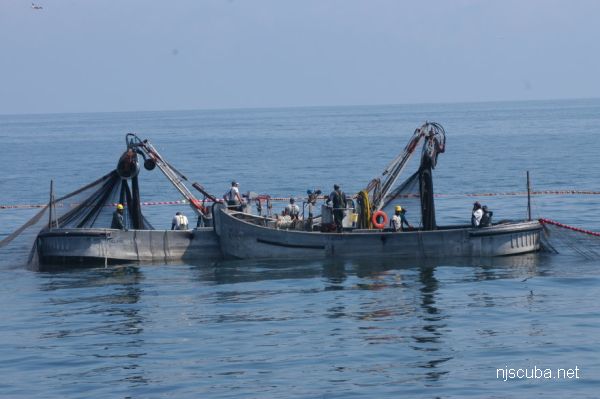
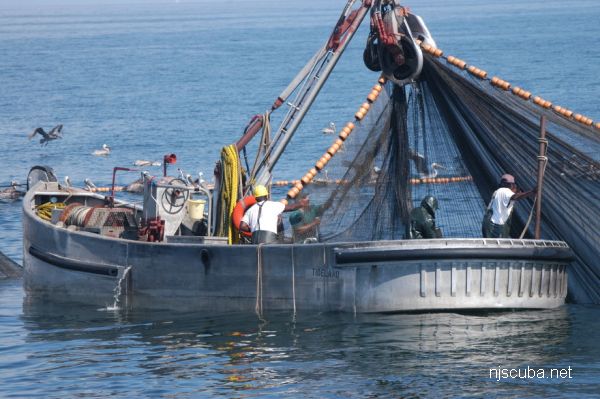
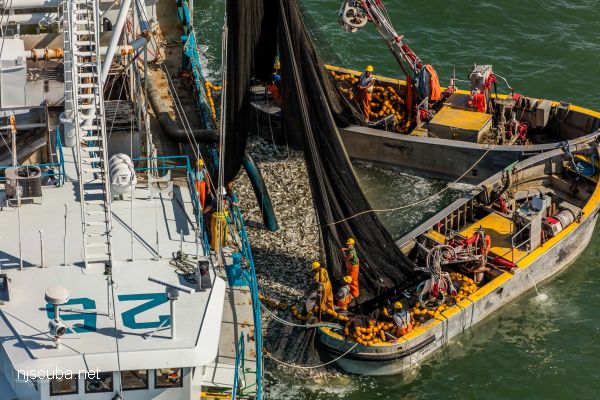
A sequence of images showing purse nets being set out around a school of fish, closed, and drawn in by a crane on the mothership, and finally vacuumed out into the mothership's holds.
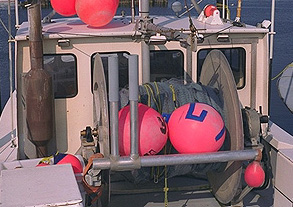
Gill netting is a method of fishing in which a net with a specific mesh size is used to ensnare fish of a specific matching size. The fish can swim part-way but not all the way through the net. When it tries to back out, it becomes snagged on its gill covers. Smaller fish pass harmlessly through the mesh, and larger fish are not ensnared. A gill net boat would be similar to a seiner; I cannot tell them apart.
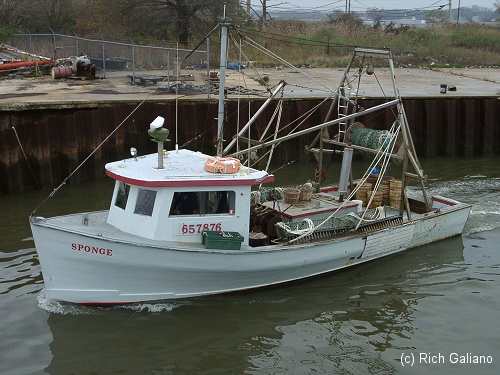
There are three basic types of commercial fishing vessels found in the Mid-Atlantic region: trawlers, seiners/gill-netters, and long-liners. A trawler or "dragger" operates by towing its fishing gear across the bottom. Weighted nets take bottom fishes, while cage-like steel dredges take clams and scallops. A seiner uses a floating net to encircle schools of surface-swimming fishes such as herring and tuna. A long-liner sets out miles of buoyed line with baited hooks to catch sharks, tuna, and swordfish. One could also add lobster boats and charter fishing or "head" boats to this list. And of course, dive boats.
More: Fishing Vessels ...

Omega Protein with fishing partner Ocean Harvesters have a long history of collaborating with government agencies and non-profit organizations to offer retired vessels to artificial reef programs. The vessels that have been submerged act as a habitat for marine life, promoting biodiversity and creating recreational fishing and diving opportunities. The former vessels that have been sunk include the F/V Reedville off of the coast of Delaware in 2020, the F/V Barataria Bay off the coast of Mississippi in 2015, the F/V Great Wicomico in the Gulf of Mexico in 2009, and the F/V von Rosenberg off the coast of Mississippi in 2000.
More: Omega Protein Artificial Reefs ...
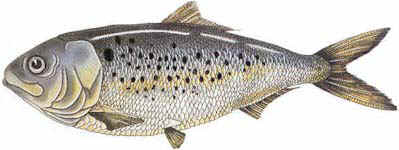
Scientific Name:
Brevoortia tyrannus
Atlantic Menhaden:
A Profile
Family:
Clupeidae
Size:
12"-15"
1 lb.
Common Names:
menhaden, bunker, mossbunker, pogy, fatback, alewife, bugfish, skipjack
Although this herring is generally considered unfit for human consumption, the menhaden fishery is one of the most important and productive fisheries on the Atlantic coast. For years, it has provided coastal communities with a stable source of employment and the nation with a major source of protein on a renewable and environmentally sound basis.
More: Atlantic Menhaden ...