
Gregory Poole AM-215
- Type:
- artificial reef, minesweeper, US Navy, later converted to purse seiner
- Built:
- 1944, Tampa Shipbuilding, Tampa FL USA as AM-215 Cruise
- Specs:
- ( 184 x 33 ft ) 650 tons
- Sunk:
- Monday, Dec 10, 2007 - DelJerseyLand Artificial Reef
- GPS:
- 38°30.910' -74°30.597'
- Depth:
- 120 ft
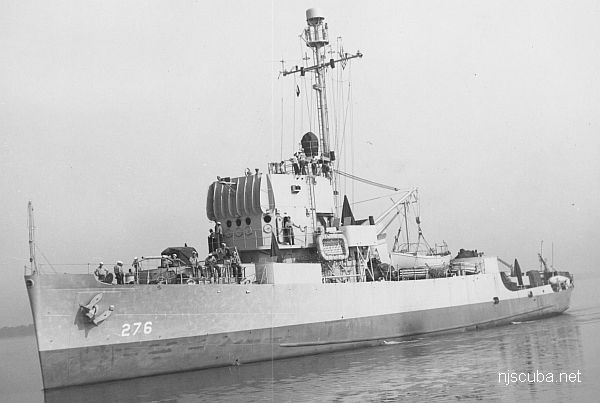
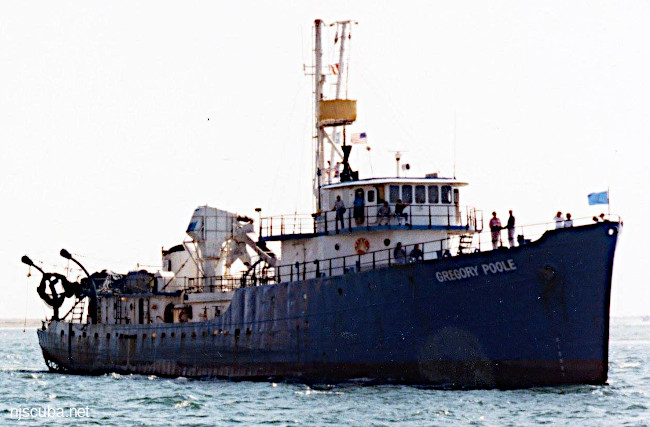
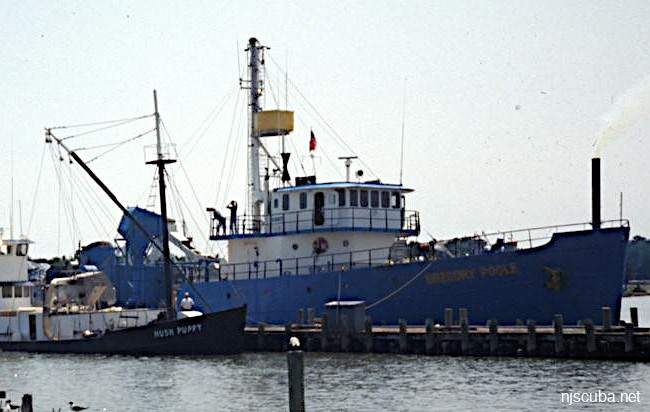
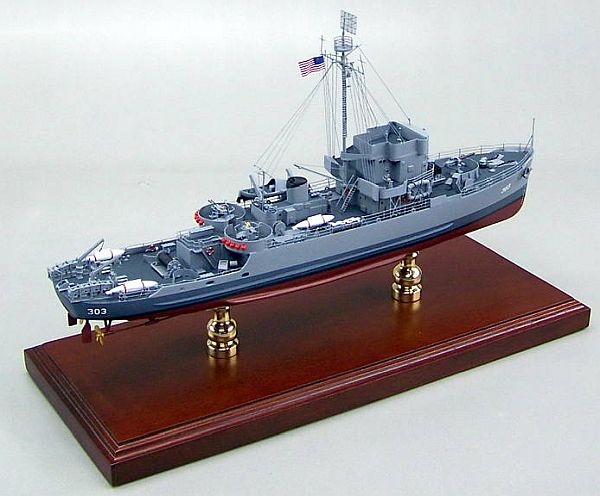
The Gregory Poole was built by the Tampa Shipbuilding Co. of Tampa, Fl. and launched March 1943 as an Admirable-class minesweeper by the Charleston Navy Yard of Charleston, S.C. Commissioned in September 1945 as the USS Cruise (AM-215), the vessel never saw action in World War II, as it was in route to Pearl Harbor when the war ended. The ship returned to Philadelphia and was decommissioned in September 1946. The vessel was sold to Beaufort Fisheries in Beaufort, N.C., renamed the Gregory Poole, and served as a menhaden harvesting ship from 1974-2005. During the 1990-91 fishing season, the Gregory Poole set a national single vessel catch record, landing almost 93 million menhaden. Beaufort Fisheries closed their business in 2005, and the ship was sold to Dominion Marine Group.
The Admirable-class was the largest and one of the most successful classes of minesweepers the United States Navy ordered during World War II. Typically, the minesweeper detected and removed naval mines before the rest of the fleet arrived, thereby ensuring safe passage for the larger ships. They were also charged with anti-submarine warfare (ASW) duties with rear-mounted depth charge racks and a forward-firing Hedgehog anti-submarine mortar. Their job was essential to the safety and success of U.S. naval operations during World War II and the Korean War. These minesweepers were also employed as patrol vessels and convoy escorts.
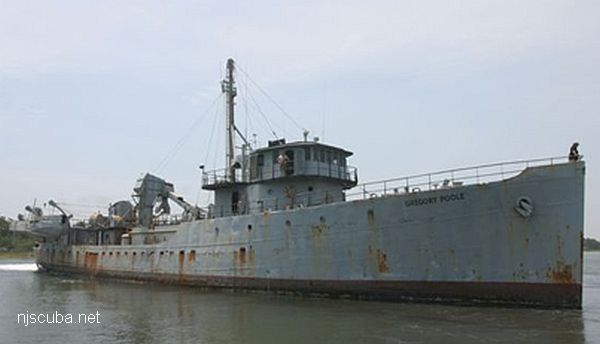
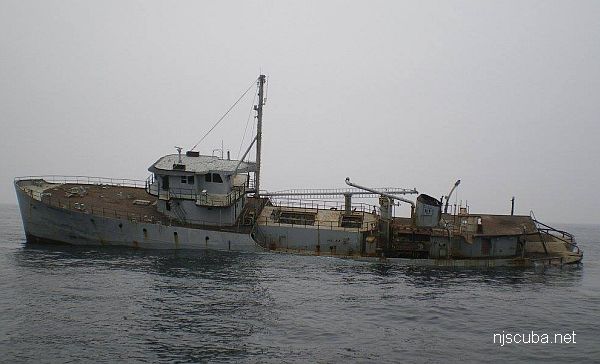
Prior to deployment to Delaware, the Gregory Poole was cleaned by Dominion Marine Group, Norfolk, Va., to remove all greases and buoyant materials that might be harmful to the marine environment. The U.S. Coast Guard inspected and approved the ship prior to transport to the reef site. The vessel was prepared for sinking by cutting holes above the waterline and installing soft patches in these holes. After the ship arrived and anchored at the site, the soft patches were removed and pumps were used to initiate flooding of the interior spaces. Water poured into the cut holes and accelerated the sinking process.
558835
Artificial Reef Sites, Artificial Reefs, Bunker Boats, Delaware Artificial Reef Sites, Delaware Artificial Reefs, DelJerseyLand Artificial Reef Inshore, Military Reefs, Omega Boats, Seiners,
DelJerseyLand Inshore Artificial Reef
26 Nautical Miles from Indian River Inlet, 1.51 sq miles
Depth: 120-140 ft [download]
More: DelJerseyLand Artificial Reefs ...
Cape May Chart
- Absecon Inlet
- USS Akron
- Alex Gibson
- Alexander
- Almirante
- American
- Astra
- Atlantus
- Azua
- Dorothy B Barrett
- Brigantine Beach Wreck
- USS Blenny
- boiler wreck
- Bonito
- Brian C
- Brigantine Inlet
- Brigantine Buoy Wreck
- Charles Morand
- Cape May Inlet
- Cassandra
- Cayru
- Champion
- USS Cherokee
- China Wreck
- City of Athens
- City of Georgetown
- Cleopatra
- Clermont
- Corson’s Inlet
- Crystal Wave
- William B Diggs
- dredge
- Admiral DuPont
- Elizabeth Palmer
- Elizabeth Warren
- Evening Star
- car float
- Florida
- Galimore's Cayru
- Gory Wreck
- Great Egg Inlet
- Gypsum Prince
- Hereford Inlet
- Hornet
- Hvoslef
- Independence Day
- India Arrow
- Indian River Inlet
- USS Jacob Jones
- John Marvin
- China Junk Wreck
- Kennebec
- King Cobra
- Lemuel Burrows
- Lake Frampton
- Lady Mary
- Linda Snow II
- Manhattan
- Marine Electric
- Miraflores
- Misty Blue
- Mohawk
- Montgomery
- USS Moonstone
- EF Moran
- Northern Pacific
- New Orleans
- USS Nina
- Nuphar
- Ocean Quest
- Oklahoma
- Patrice McAllister
- Pet Wreck
- Poseidon
- Ranald
- RJ Walker
- Southern Lillian
- USS S-5
- Salem
- Salem
- San Jose
- Sea Girt
- Sea Wolf
- Shookus
- Sindia
- Slabs
- General Slocum
- Southern Sword
- Townsend's Inlet
- Varanger
- Washingtonian
- Wayne
- Wily Fox
- YP-387
More: Cape May Dive Sites Chart ...

Omega Protein with fishing partner Ocean Harvesters have a long history of collaborating with government agencies and non-profit organizations to offer retired vessels to artificial reef programs. The vessels that have been submerged act as a habitat for marine life, promoting biodiversity and creating recreational fishing and diving opportunities. The former vessels that have been sunk include the F/V Reedville off of the coast of Delaware in 2020, the F/V Barataria Bay off the coast of Mississippi in 2015, the F/V Great Wicomico in the Gulf of Mexico in 2009, and the F/V von Rosenberg off the coast of Mississippi in 2000.
More: Omega Protein Artificial Reefs ...
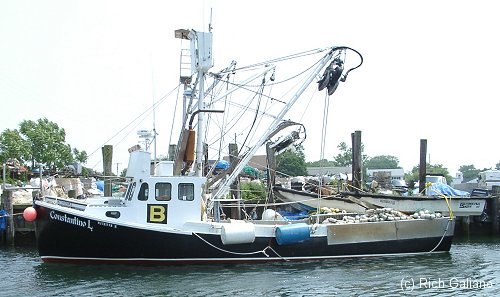
More: Purse Seiners & Gill-netters ...
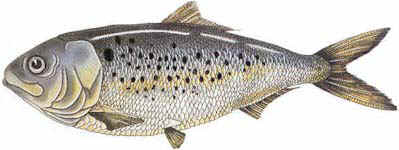
Scientific Name:
Brevoortia tyrannus
Atlantic Menhaden:
A Profile
Family:
Clupeidae
Size:
12"-15"
1 lb.
Common Names:
menhaden, bunker, mossbunker, pogy, fatback, alewife, bugfish, skipjack
Although this herring is generally considered unfit for human consumption, the menhaden fishery is one of the most important and productive fisheries on the Atlantic coast. For years, it has provided coastal communities with a stable source of employment and the nation with a major source of protein on a renewable and environmentally sound basis.
More: Atlantic Menhaden ...
Leo Robbins:
November 14, 2024 at 6:23 PM
This is pretty cool and fitting in a way. Those boats fished right there in that location for fish a many a season.Now they rest there for fish to call home. I was Captain of the Shearwater, Dempster and Atlantic Mist..all were great boats and made us plenty of money over the years. I fished around the GP in the fall in NC. I know both her Captains and they were some of the Best fisherman in the business.