
White Perch
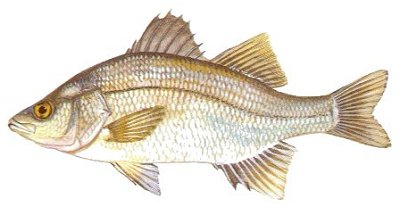
Morone americana
Size
to 19"
usually 8" - 10 "
The pale olive to silvery green sides of the White Perch lack the dark horizontal stripes present on other temperate basses. White perch also have a narrower tail. The deepest part of the body is at the front of the dorsal fin. On a white bass, the deepest part is near the middle of the back. Known to hybridize with Striped Bass. White Perch are actually members of the Temperate Bass family, not perch at all.
White perch can live in salt, brackish or fresh water. They thrive in inland lakes and reservoirs with expanses of warm, shallow water; in coastal rivers; and in lakes and ponds connected to estuaries. Preferred temperature range: 75 to 80 F.
White perch rely heavily on insects and crustaceans for food. Although they herd baitfish to the surface, especially on cloudy days, they feed this way less often than other temperate bass. In the evening, white perch can frequently be seen dimpling the surface as they take insects. Surface feeding often continues after dark. They seldom feed in winter.
White Perch spawn in spring at water temperatures from 50 to 6OF. White perch swim up tributary streams and randomly deposit their eggs over gravel shoals or on sparse submerged vegetation. They do not guard the eggs or fry.
White perch are slow-growing, but long-lived. The maximum age is about 17 years. Their high reproductive potential can create stunting problems if there are several good year classes in a row.
Freshwater gamefish such as trout and bass may not be taken by spear by divers. However, in some places, it may be legal to spearfish for carp, catfish, suckers, and other "rough" fishes - check local regulations.
More: Midwater Fishes ...