
Scotland
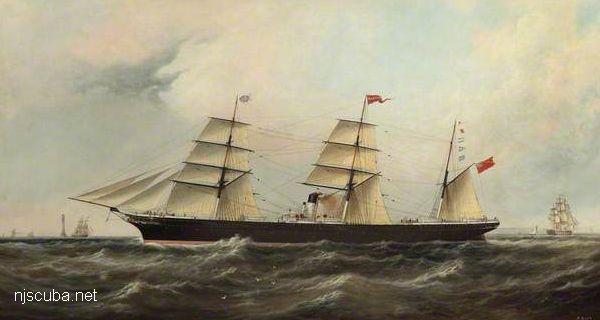
- Type:
- shipwreck, steamer, England
- Built:
- 1865, England
- Specs:
- ( 430 x 38 ft ) 3695 tons
- Sunk:
- Saturday December 1, 1866
collision with sailing ship Kate Dyer ( 1275 tons ) - Depth:
- 22 ft
The outward-bound Scotland ran down the much smaller in-bound Kate Dyer about sixty miles out of New York harbor. The Kate Dyer sank immediately, taking 13 of her 27 crew with her. The mortally wounded Scotland paused just long enough to pick up survivors from the sunken vessel, and then turned around and ran for New York. By the time she made it to the harbor approaches, the Scotland was foundering, so her captain ran her aground on a shoal off Atlantic Highlands rather than risk sinking in the channel.
A two-day storm broke the iron hull before she could be salvaged, and the Scotland was abandoned. The wreck was blasted literally flat by the government, but not for two years, during which time she posed a great danger to other vessels, so a lightship was placed to mark the location at night. After the wreck was demolished, the lightship was moved further offshore to mark the shoal, and later replaced by a buoy, which remains to this day - the Scotland Buoy. The lawsuits went on for decades.
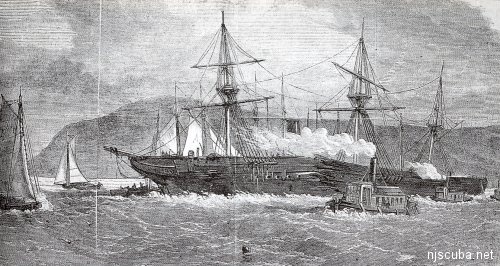
While the Scotland is probably no more than a rusty smudge on the bottom, the Kate Dyer is still out there somewhere, waiting to be identified.
Questions or Inquiries?
Just want to say Hello? Sign the .