
Charles Dunlap
- Type:
- shipwreck, schooner, USA
- Built:
- 1904, Millbridge ME USA
- Specs:
- ( 225 x 42 ft ) 1498 gross tons
- Sunk:
- July 22, 1919; ran aground in fog
- Depth:
- 25 ft
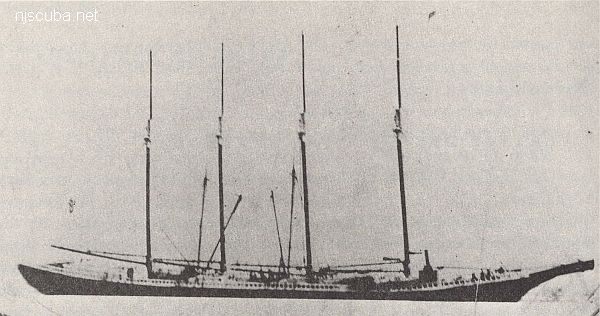
This wreck is also known as the Coconut Wreck. She was a four-masted schooner, launched as the Myrtle Sawyer, on November 24, 1904, in Millbridge, Maine, by the Warren Sawyer Co. She weighed 1,498 gross tons, was 224.8 feet long and 42 feet wide. A year later she was abandoned in an easterly gale and towed to Savannah. Many years later she was renamed Forest City. In 1916, the ship caught fire while in San Juan where her hulk was sold, rebuilt and renamed, Charles E. Dunlap.
On July 22, 1919, on her first voyage as the Charles E. Dunlap, while trying to enter New York harbor ending her voyage from San Juan, Captain Richard Crapsey lost his bearings due to a heavy fog and ran aground on Rockaway Shoal. Although there were calm seas, the Dunlap was unable to be saved. She remained on Rockaway Shoal until she broke up.
The Dunlap was carrying a cargo of coconuts during her last voyage, hence the name Coconut Wreck.
Dive Sites, Long Island West Dive Sites, New Jersey Dive Sites, New York Dive Sites, Sailing Ships, Sandy Hook Dive Sites,
Sandy Hook / Rockaway Inlet Chart
- Barge #10
- 3 Sisters
- Ambrose Buoy
- A Street - Shark River
- Acara
- Across
- Ajace
- Allenhurst Jetty
- Arnoff
- Arundo
- Asfalto
- Aurora
- Ayuruoca
- BA Wreck
- Shark River - Back Bay
- Balaena
- Bald Eagle
- BD1738
- USS Benson
- Beth Dee Bob
- Blue Boy
- Bronx Queen
- Bug Light
- Charles Dunlap
- Cecilia M Dunlap
- Chauncy Jerome
- Cornelia Soule
- Choapa
- coal (Lido)
- Continent
- crane barge
- Daghestan
- Dragger
- drydock
- Dryland
- Edwin Duke / Stone Barge
- dump
- Edmund Phinney
- East Rockaway Inlet
- Ed's Schooner
- Elberon Rocks
- Eureka
- Finance
- Fort Victoria
- German
- GL78
- Glen II
- I.P. Goulandris
- Gypsy
- Horseshoe Cove
- Alexander Hamilton
- Happy Days
- Howard
- Iberia
- Immaculata
- Inshore Schooner
- Jack I
- Jones Inlet
- Jones Tug
- Klondike Rocks
- Larsen
- Lizzie D
- Long Branch locomotives
- H.W. Long
- Macedonia
- Malta
- Margaret
- Mistletoe
- R.C. Mohawk
- Nautilus
- Navesink River
- Northeast Sailor
- New Reef
- New Deal
- New Era
- HMS Pentland Firth
- Long Branch Pier Rubble
- Pinta
- Pipe Barge
- Pliny
- Plymouth
- Pocopson
- Princess Anne
- Ruth Shaw
- Robert A Snow
- Ramos
- Ranger
- Relief Lightship
- Rickseckers
- Rjukan
- Rockaway Inlet
- Rockaway Belle
- Roda
- Rudder Wreck - Pocono
- Rusland / Adonis
- Scotland Buoy
- Sandy Hook Pilot Boat
- SC-60
- Shark River Inlet
- Shrewsbury Rocks
- Spring Lake Sailor
- Steel Wreck
- Stolt Dagali
- Sylvanus
- Tampa III
- USS Turner
- AWOIS 8087
- AWOIS 8097
- u11
- AWOIS 7509
- AWOIS 7932
- AWOIS 9768
- AWOIS 12966/11422
- AWOIS 1609
- AWOIS 8084
- AWOIS 7940
- AWOIS 7938
- AWOIS 8076
- AWOIS 4600
- AWOIS 8075
- Valerie E
- Vega
- Warrior
- Edward W Winslow
More: Long Island West Dive Sites Chart ...
- Type:
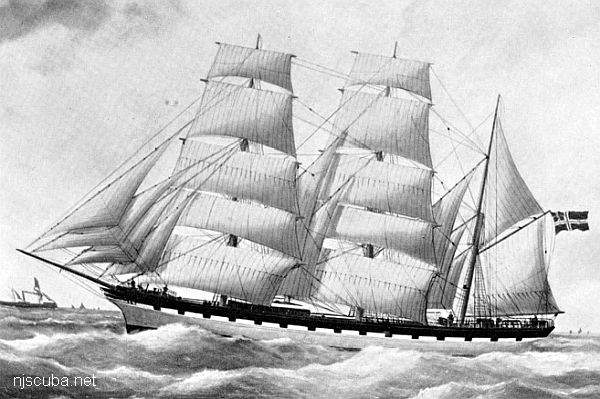
- shipwreck, schooner barge ( originally a bark )
- Built:
- 1876 as Parknook
- Specs:
- ( 199 x 32 ft ) 793 tons
- Sunk:
- Saturday September 12, 1931
foundered - GPS:
- 40°25.374' -73°52.828' (AWOIS 2013)
- Depth:
- 60 ft
More: Cecilia M. Dunlap ...
Questions or Inquiries?
Just want to say Hello? Sign the .