
New York Dive Sites (12/15)
Dive Sites - New York
More: New York Dive Sites ...
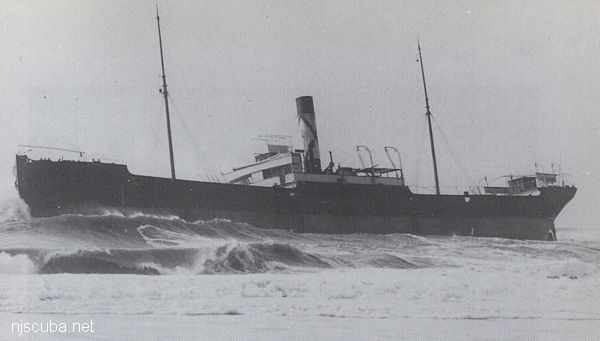
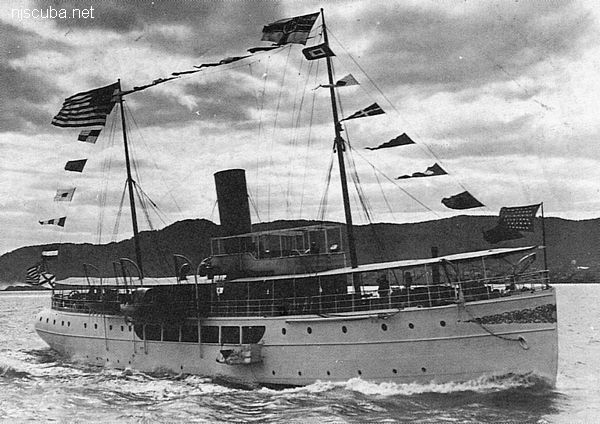
- Type:
- shipwreck, pilot boat, converted yacht, USA
- Built:
- 1902, Bethlehem Elizabethport, Elizabeth NJ USA, as Anstice, later Privateer
- Specs:
- ( 168 x 24 ft ) 361 gross tons, 26 crew & harbor pilots
- Sunk:
- Thursday April 27, 1939
collision with tanker Oslofjord ( 16500 tons) - no casualties - GPS:
- 40°27.556' -73°49.490' (AWOIS 1986)
- Depth:
- 100 ft
More: Sandy Hook Pilot Boat ...
Sandy Hook Artificial Reef
1.6 nautical miles off Sea Bright, 1.76 sq miles
Depth: 40-60 ft [download]
More: Sandy Hook Artificial Reef ...
- Type:
- shipwreck
- Depth:
- 95 ft
The "Seawolf", as she is called, is a large steel-hulled wreck that faces in an easterly direction. Her bow rises 14 ft or so off the bottom. Most of the wreck comes off the bottom only a few feet. She has a large fishing net draped over her midships.
More: Seawolf ...
Shark River Artificial Reef
15.6 Nautical Miles off Manasquan, 0.83 sq miles
Depth: 120-140 ft [download]
More: Shark River Artificial Reef ...
Shinnecock Inlet
The Shinnecock Inlet is located in the Hampton Bays on Long Island. The inlet is one of the only major inlets on the south shore and sees a great deal of boat traffic during the summer months. With that in mind, this inlet also sees a great deal of diver traffic as well.
More: Shinnecock Inlet ...
Shinnecock Artificial Reef (historical)
( 40.80139, -72.47293 )
2.0 Nautical miles south of Shinnecock Inlet, 0.55 sq miles
Depth: 76 - 84 ft
More: Shinnecock Artificial Reef ...
Shoreham Nuclear Power Plant
Now, most people would look at the heading on the page and think that I was crazy for diving near a nuclear power plant. Just to calm your fears, this power plant was never brought online, so there is no chance of getting radiated at this location (barring a nuclear war while you're diving). With that said, Shoreham can be a very interesting dive. Located on the north shore of Long Island (I don't know the name of the town, look on a map), it is a shallow dive with an average depth of around 16 ft. Visibility tends to be anywhere from 3 to 10 ft.
More: Shoreham ...
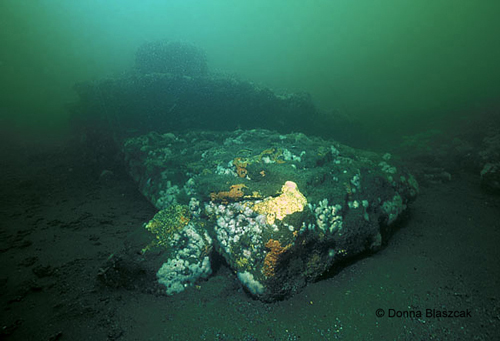
The Shrewsbury Rocks are a wide area of rocky bottom that stretches from fourteen feet of water out to the fifty-foot mark off of Monmouth Beach. Some of the formations are twenty feet tall or more and can be very pretty under good conditions, which are unfortunately seldom this far north. The stone itself is a type of sandstone known as Greensand.
More: Shrewsbury Rocks ...
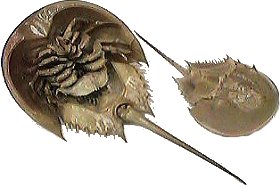
Horseshoe Crabs Limulus polyphemus are extremely common in the rivers and bays of this area. They are actually more closely related to spiders than to the other crustaceans on this page. In fact, technically they are not crustaceans at all. Despite their fierce-looking array of claws and spines, they are completely harmless.
They are also completely inedible - not even the native Indians would eat them except in the direst emergency. They are nonetheless threatened by man since vast numbers are collected commercially for fertilizer, bait, and other uses. Horseshoe Crabs are found from the water's edge down to 75 feet.
More: Atlantic Horseshoe Crab ...