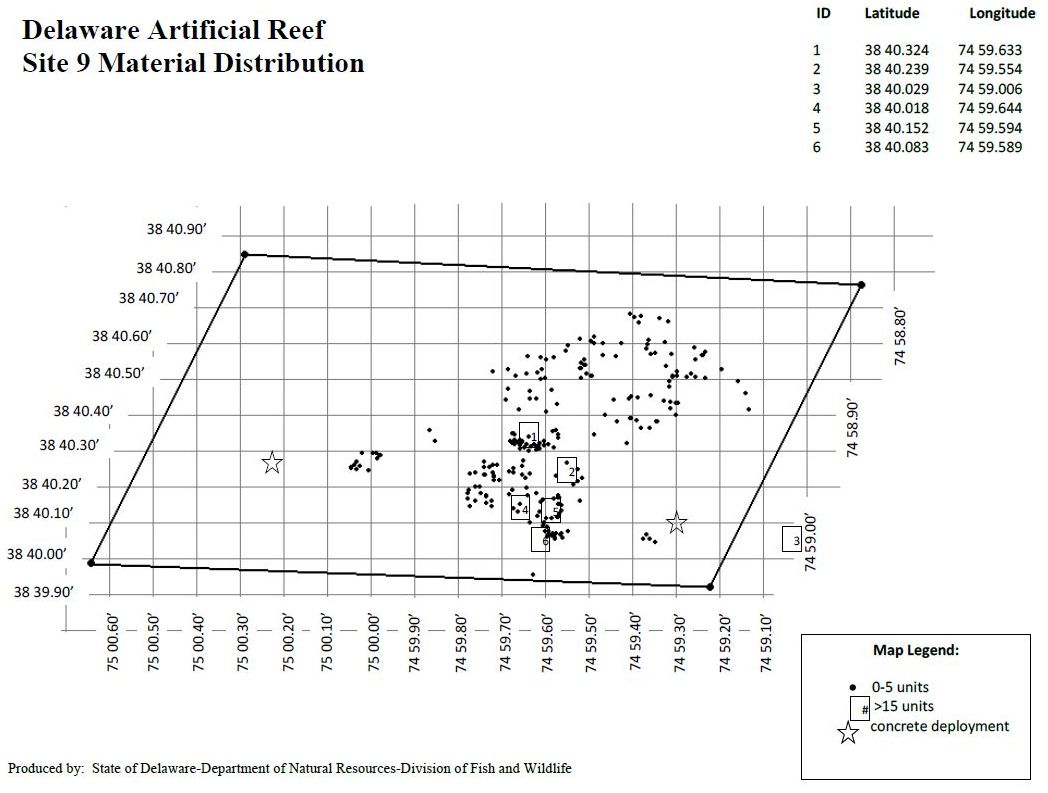
Delaware #09 Artificial Reef

Delaware #9 Artificial Reef

4.5 Nautical Miles from Indian River Inlet, 1.31 sq miles
Depth: 50-60 ft

Delaware #09 Artificial Reef

Nothing really of interest in this reef - just a lot of concrete and tire units that have been sinking down into the mud for over twenty years. But someday ...
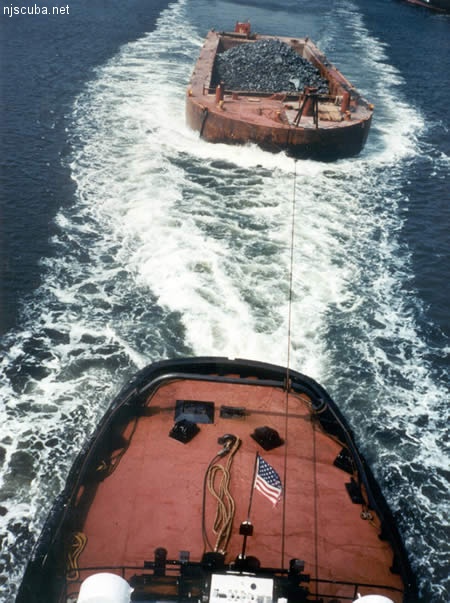
rock reef
A hopper barge full of rock

All manner of concrete, steel, and stone rubble from dredging, demolition projects, and other construction is used as artificial reef materials. This material is generally available at very low cost or free from construction companies who are more than happy to get rid of it. Transportation costs determine where this material is used by the Reef Program.


Klondike Rocks
The low, shelf-like structure of the rocks, which seldom rise
more than two feet above the bottom. Cunners

These low outcroppings appear in small to large patches over a two-mile area called the Klondike, and elsewhere, at depths ranging from 60 to 90 feet. The overhangs, crags, and holes afforded by the piles of rocks and boulders provide excellent homes for fish and lobsters. Visibility can be great here at times, but it is usually 10-20 ft, with a silty bottom in most places. The larger areas extend for many hundreds of feet, and an incautious diver can easily get lost. The stone itself is a type of sandstone known as Greensand, which occurs along the northern part of the New Jersey coast, and parts of Long Island, most famously as the Shrewsbury Rocks.