Jet Trader YO-167

Jet Trader reef
Type:
artificial reef, tanker
Built:
1944, Ira S. Bushey & Sons, Brooklyn NY USA
Specs:
( 156 x 30 ft ) 440 tons
Sponsor:
Cleanwater of New York
Sunk:
Friday September 2 2005 - Atlantic City Artificial Reef
GPS:
39°13.850' -74°12.510'
Jet Trader reef
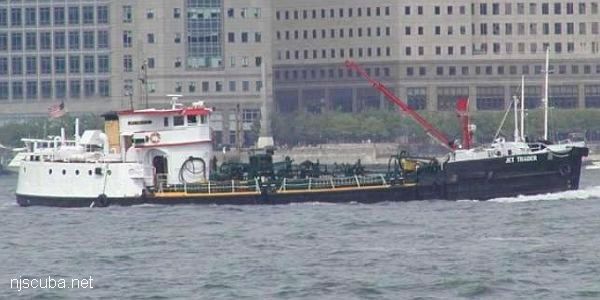
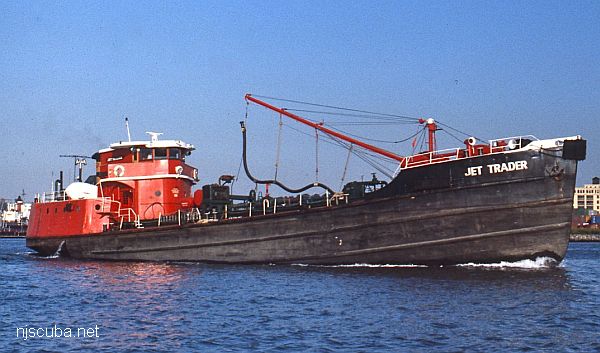
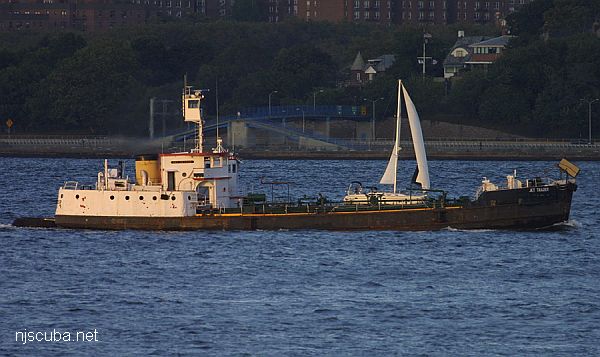
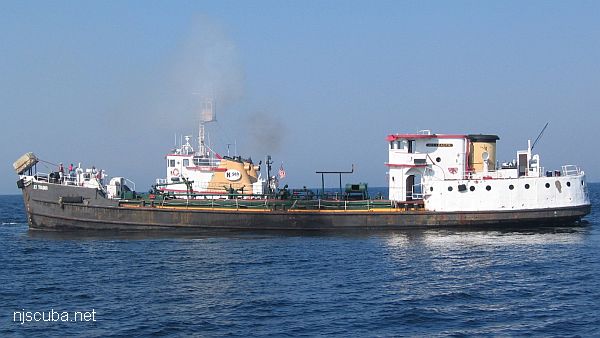
Jet Trader plied the Hudson River for many years, and there are quite a few photos of her

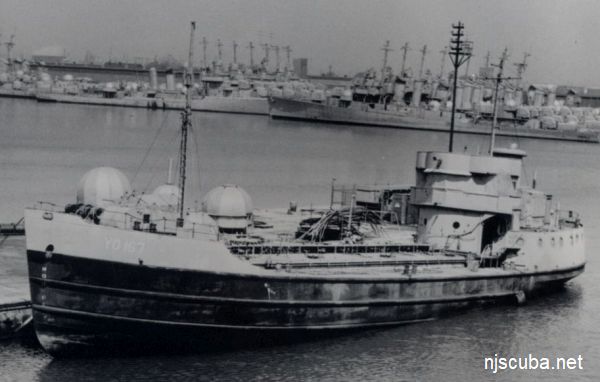
This former Navy YO-167 (Yard Oiler) was built in 1944 by Ira S. Bushey company in Brooklyn New York. In 1945, the tanker was allocated to 15th Naval District at San Juan, Puerto Rico. Postwar assigned to First Naval District at Casco Bay, ME. In 1965, she was acquired by the Eklof Marine Corporation of Staten Island, New York, and renamed Jet Trader. In 1993, the Eklof Marine Corporation was acquired by K-Sea Transportation Partnership Incorporated of Staten Island, New York. As a result of OPA '90 regulations that prohibited the transport of petroleum products by single-skin vessels, Jet Trader was "laid up" at the K-Sea Transportation Partnership's yard in Mariner's Harbor in Staten Island, New York in 2004. Jet Trader is a twin to "Helis".
Jet Trader reef
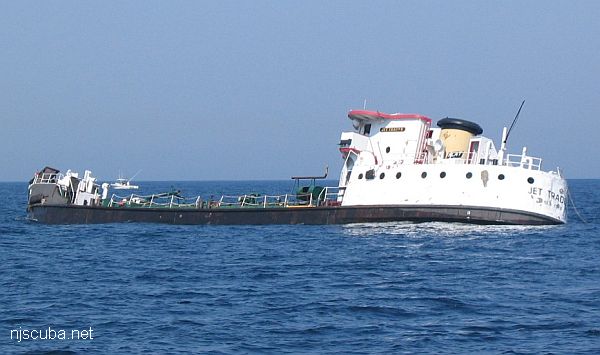
Jet Trader makes her final voyage
Jet Trader reef
Jet Trader reef
Notice the large concrete block on the bow in the first shot, and not in the second. Anchors this big are expensive! It is probably an old buoy mooring.
As Navy oiler YO-167 in reserve near Pier A,
Philadelphia Inactive Ships Maintenance Facilty, circa 1962-63

IMO 6709799

Comments on Jet Trader

Questions or Inquiries?

Just want to say Hello? Sign the .

Submit a Comment

Your email address will not be published. Required fields are marked *


Click image to replace if unable to read.

Enter the digits from the image above, except for the last one:

This site uses Akismet to reduce spam. Learn how your comment data is processed.


wreck reel

A wreck reel should be considered standard equipment on all but the easiest open ocean dives. Even if you aren't into wreck penetration, you can use the reel as a foolproof way of always knowing how to get home. Just clip it on, and off you go. This is much easier and more reliable than any other means of navigation, and is useful in many situations, especially in poor visibility. Among other things, a wreck reel will allow you to make explorations over featureless sand areas, and in confusing debris fields, like the Mohawk, as well as conduct organized searches, etc. In open water, a wreck reel is often more useful than a compass, although you should always carry one of those as well. On the other hand, there is no real use for a wreck reel in a typical inlet or jetty dive, whereas your compass will be extremely useful.

wreck reel